


5 Tips in Managing Acute Salicylate Poisoning
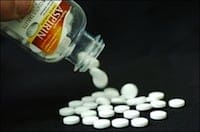
 Salicylate is among the top 25 substances that cause the greatest number of overdose fatalities in the United States. 1 Patients can present with a wide variety of complaints including tinnitus, dyspnea, vomiting, confusion, and coma. Significant toxicity occurs when a large amount of salicylate saturates the body’s protein-binding capacity and leaves free salicylate in the serum. 2 The American College of Medical Toxicology (ACMT) recently published a guidance document on management priorities in salicylate toxicity, and it’s definitely worth a read. 3 While not an official clinical guideline, it highlights some important concepts to consider when working up and treating patients after a significant salicylate exposure, and we’ll review five major concepts here and hopefully answer some questions that may cross your mind on shift.

 Imagine a consult service located IN the ED. The consultants are some of the friendliest people you’ve met and are there to help you. They tirelessly go out of their way to guide you through hospital protocols, help you with treatments, keep a close eye on your work, and ensure that you and your patients stay out of trouble. Not only are these consultants helpful to you, but also your residents, mid-levels, nurses, and the admitting teams. Everything they know, they teach you – and some are very active in FOAMed and emergency medicine research.
 Rob Bryant, MD (
 Intentional overdose patients are notorious for giving inaccurate histories. “I took 14 tablets of this and 8 capsules of that. No, wait. It was 3 tablets of this and a handful of capsules of that… This happened about 2 hours ago. Actually, I think it was last night.” Round and round the merry-go-round we go.