



Trick of the Trade: Subclavian line gone north
In patients requiring central venous access, which vein do you prefer? In descending order, I prefer subclavians, internal jugulars (IJ), and then femorals. There is increasing evidence that subclavian central venous lines are superior to femoral lines (JAMA 2001) with respect to iatrogenic infection and thrombosis rates. In 9% of subclavian lines, however, the line tip ends up in the ipsilateral IJ, instead of the superior vena cava (SVC) – see chest xray below. These lines are unusable in the long term because of the risk of cathether thrombosis in this low-flow area. The line must must be rewired. [+]
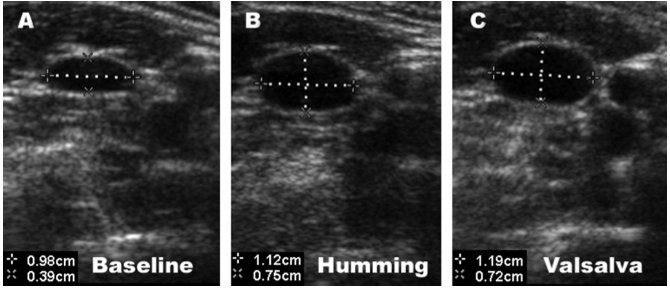
Trick of the Trade: Hum-out the jugular veins
Placing an IV in the external jugular vein requires venous distension maneuvers. This means having the patient perform a Valsalva maneuver or be placed in a Trendelenburg position. Have you ever had a patient who didn’t quite get the Valsalva maneuver concept, or couldn’t tolerate a head-down position? [+]

Trick of the Trade: The defensive arts against pimping
Thanks to Dr. Rob Roger’s podcast on EM-RAP Educator’s Edition series, I learned of one of the funniest publications EVER in a medical journal. It was published on April 1, 2009 in JAMA. The article focuses on teaching medical students the essential skill set– how to survive “pimping”. Pimping traditionally occurs when an attending physician poses a difficult question to a learner in a public forum, such as board rounds or in the operating room. As a student or resident, you know that this will happen during your training, and you should be prepared. If you think of pimping as [+]
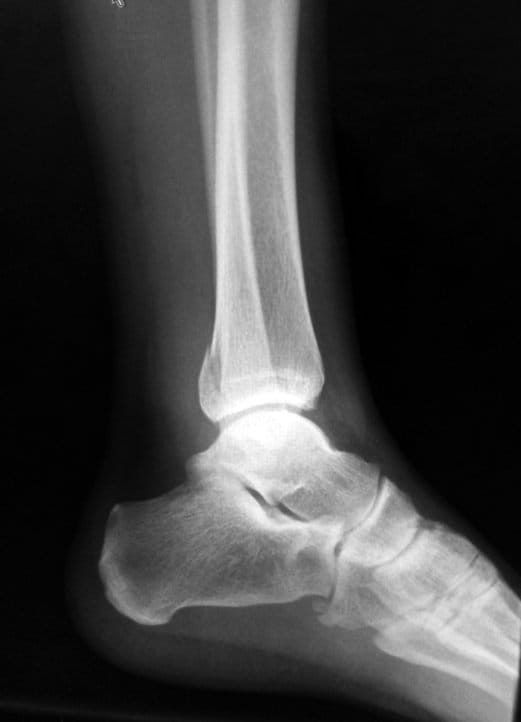
A radiology pearl: A subtle orthopedic diagnosis
A man recently presents with knee pain after pivoting and torquing his knee while falling. He complains of concurrent mild ankle pain. He presents with this tib-fib xray. Realizing that a proximal fibular fracture can present concurrently with a medial malleolus fracture or deltoid ligament rupture, we obtained xrays of the ankle. We were looking for a Maisonneuve fracture. Do you see an ankle injury in these four images? [+]
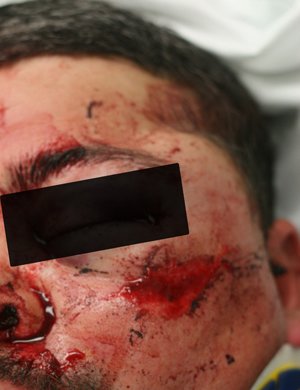
Trick of the Trade: Don’t have a mirror in the ED?
Several times in the ED, I have needed a mirror for patient care. Example 1 A moderately intoxicated patient presents with a facial or scalp laceration. S/he adamantly refuses to have it repaired in the ED, because of the disbelief of that there is indeed a laceration. You want to show the patient, using a mirror, but you don’t have one. [+]
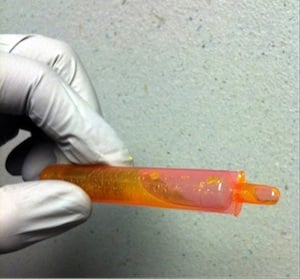
Trick of the Trade: Easy ocular application of fluoroscein
Gently instilling a fluorescein drop into a patient’s eye requires that the patient keep his/her eye still. What do you do for a patient who can’t quite stay still enough, such as an infant? This is an innovative trick of the trade, written by Dr. Sam Ko (Loma Linda EM resident) and Kimberly Chan (Loma Linda medical student). [+]
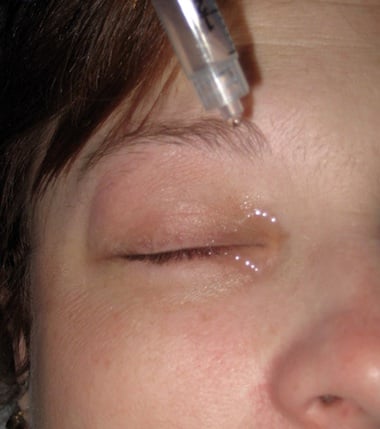
Trick of the Trade: Super-sensitive to eyedrops
We commonly encounter ocular complaints in the Emergency Department. Eye pain can result from chemical exposure, a foreign body, or infection. The first step involves instilling a few drops of topical anesthetics, such as proparacaine, to provide some pain relief. Occasionally, however, you encounter a patient who just can’t keep his/her eye open because of the fear of eyedrops. [+]

Tricks of the Trade: Low tech solutions to esophageal foreign bodies
Patients can present to Emergency Departments with esophageal foreign bodies. Recently, a patient presented with a doxycycline pill stuck in her esophagus at the mid-chest level. She was taking it for pneumonia. Despite drinking deluges of water for the past 12 hours, the pill remains stuck. You know that doxycycline (pills shown on right) is one of several medications (along with iron or potassium supplements, quinidine, aspirin, bisphosphonates) known for causing erosive pill esophagitis. She presents to your ED. What do you do? With so many direct visualization tools in the ED now available to emergency physicians such as Glidescopes [+]
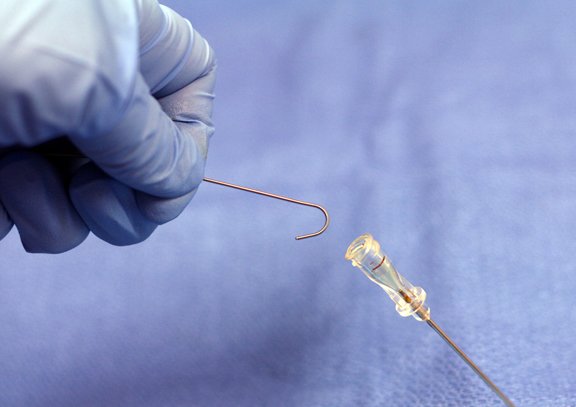
Trick of the trade: Straightening the guidewire
Did you know that a medical guidewire consists of a flexible central “ribbon wire” externally wrapped with a coil-spring wire? J-shaped guidewires are commonly used in many medical procedures, such as central lines, arterial lines, and pigtails for pneumothoraces. Knowing more about the guidewire makes it possible to carry out a unique Trick of the Trade. For example, let’s say that the plastic introducer is missing or unusable. Using one hand to stabilize the needle in the patient, how do you use your other hand to re-insert a curved guidewire tip into the hub of a needle? [+]

Trick of the Trade: Style points in pediatric orthopedics
With this hot summer season in California, kids have been running around and getting into all sorts of orthopedic troubles. Monkey bars are a common culprit. In treating pediatric patients in the ED, it's worth spending an extra few minutes on the subtle style points. Trick of the Trade: Splint the buddy bear You should consider keeping a stash of stuffed teddy bears in the ED for those patients, whom you splint or cast. It is a nice touch to have the patient go home with a teddy bear with the same "injury" and splint/cast. It's the little touches that [+]

Director of Growth, Strategic Alliance Initiative, Center for Innovation and Digital Health
Massachusetts General Hospital;
Chief Scientific Officer, Conductscience.com
Latest posts by Shuhan He, MD (see all)
- The Discharge Severity Index: Early Research on ED Readmission Risk Assessment - August 14, 2025
- Suboxone and the Emergency Physician: Get Waivered Training - August 12, 2022
- A Tale of Two Epidemics: COVID-19 and the Opioid Crisis - April 23, 2020