


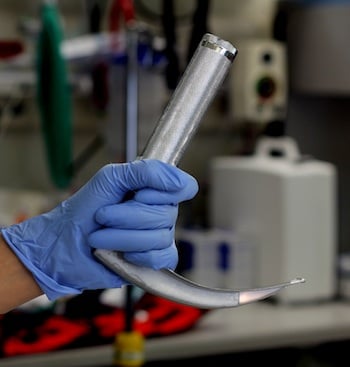
Paucis Verbis card: Rapid Sequence Intubation
The key to success in performing procedures is preparation. This is especially true for endotracheal intubations in the Emergency Department where things are chaotic. Strategic planning and anticipation of obstacles during rapid sequence intubation (RSI) are key principles to avoiding complications. PV Card: Rapid Sequence Intubation Go to ALiEM (PV) Cards for more resources.
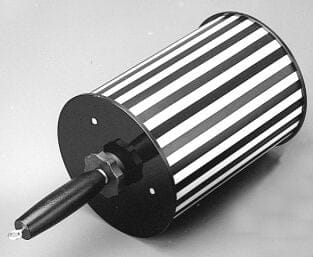
Trick of the Trade: OKN drum to test psychogenic coma
Occasionally, emergency physicians see patients who present because they are unresponsive despite normal vital signs and an otherwise normal exam. You detect no drugs or alcohol on board. You suspect a psychiatric or malingering etiology, but aren’t sure. They seem non-responsive to voice and minimally responsive to very painful stimuli. Is this a case of psychogenic coma or true coma (with bilateral hemispheric dysfunction)? What test can you do to reassure yourself that this may indeed be psychogenic coma? [+]

Paucis Verbis card: Penetrating abdominal trauma
When I did my residency training in Emergency Medicine and in the first few years as an attending, we regularly performed diagnostic peritoneal lavages in patients with stab wounds injuries to the abdomen. Patients also routinely went to the operating room for exploration. Now with the evolution of CT imaging technology and more clinical studies, there is now a role for a less invasive management approach. These are the Eastern Association for the Surgery of Trauma (EAST) guidelines. PV Card: Penetrating Abdominal Trauma Adapted from [1] Go to ALiEM (PV) Cards for more resources. Reference Como JJ, Bokhari F, Chiu WC, [+]

Trick of the Trade: Blowing out the candle
How do you teach pediatric patients, especially toddlers, how to cooperate with your pulmonary exam? How do you get them to take adequately deep breaths in and out? [+]

Director of Growth, Strategic Alliance Initiative, Center for [+]

Work NOT in progress: ACEP Tricks of the Trade column
Since 2006, I have been the ACEP News columnist on “Tricks of the Trade in Emergency Medicine.” Four years later, I’ve published and co-published 33 articles on various both low-tech and high-tech pearls. It’s official — I’ll be stepping down from the ACEP News columnist position and handing off the reins to someone with fresher ideas. Frankly, I’m running out of innovative ideas worth publishing about. [+]

Paucis Verbis card: Burn Wounds
Burn classification and management are key skills for ED providers to remember. Depending on the prevalence of burns in your ED, it may be hard for forget the details. So here is a PV reference card on the rule of 9's, different classifications of burns, and indications for burn unit referral. Update (April 22, 2016): This card was updated by Dr. Christian Rose (UCSF-SFGH) to reflect current evidence that topical antibiotics and honey are IN, while silver sulfadiazine is OUT for partial-thickness burns. PV Card: Burn Wounds Adapted from [1-3] Go to ALiEM (PV) Cards for more resources. References Gómez R, Cancio L. Management of burn wounds in the emergency department. Emerg [+]

Trick of The Trade: Peritonsillar Abscess Drainage 2.0
Back in September of 2009 Michelle shared valuable Tricks of The Trade regarding drainage of peritonsillar abscesses. Today we revisit the topic and add two more tricks to avoid hitting “big red” a.k.a. the internal carotid artery. [+]

Paucis Verbis card: Ascites assessment with paracentesis
A paracentesis procedure is often performed in the Emergency Department to rule a patient out for spontaneous bacterial peritonitis (SBP). Do you check coagulation studies before performing the procedure? How comfortable do you feel that the patient has SBP with an ascites WBC > 500 cells/microliter or ascites PMN > 250 cells/microliter? This installment of the Paucis Verbis (In a Few Words) e-card series provides an evidence-based review of the literature on topics related to the paracentesis procedure. Especially helpful is the pooled data of likelihood ratios. Like most everything in medicine, a lab test should be used in conjunction [+]

Trick of the Trade: Finding the subtle pneumothorax
Can you see the pneumothorax? Small pneumothoraces can be difficult to detect on chest xrays. Overlying ribs, other bony structures, and soft tissue can obscure subtle findings. For a patient at risk for a small pneumothorax, you can use your digital radiology PACS system to improve your ability to spot them. [+]
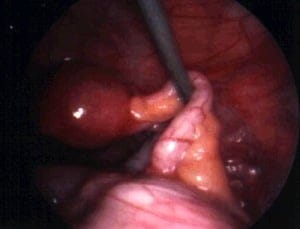
Paucis Verbis card: Appendicitis – ACEP Clinical Policy
Appendicitis is a common presentation in the Emergency Department. Dilemmas arise when deciding whether to image patients with equivocal symptoms and WBC lab results. Given the risk of ionizing radiation with CT scans, we should ideally minimize the number of CT scans ordered in these patients without mistakenly sending patients home with an early appendicitis. A perforated appendix places the patient at risk for bowel obstruction, infertility (in women), and sepsis. Where does the American College of Emergency Physicians (ACEP) stand on the critical issues surrounding the evaluation of appendicitis? This installment of the Paucis Verbis (In a Few Words) [+]
Director of Growth, Strategic Alliance Initiative, Center for Innovation and Digital Health
Massachusetts General Hospital;
Chief Scientific Officer, Conductscience.com
Latest posts by Shuhan He, MD (see all)
- The Discharge Severity Index: Early Research on ED Readmission Risk Assessment - August 14, 2025
- Suboxone and the Emergency Physician: Get Waivered Training - August 12, 2022
- A Tale of Two Epidemics: COVID-19 and the Opioid Crisis - April 23, 2020