



IDEA Series: Partnering with Pathology to Review Deaths in the ED
The Problem As part of their training, Emergency Medicine (EM) residents are required to perform patient follow up. However, there is currently no universal format in place. Additionally, there is often little follow-up information available on patients who die during the course of their Emergency Department (ED) visit, or shortly after admission to the hospital. [+]


I am Dr. Catherine Varner, Emergency Physician and Clinical Scientist: How I Stay Healthy in EM
Dr. Catherine Varner is an emergency physician and clinical scientist from Toronto, Canada. Being an emergency physician and a mother to two young ones, Dr. Varner’s schedule can fill up pretty quick. But despite her busy schedule, she still takes the time to take care of herself. Whether it’s tackling a running trail in the city, or exploring the forest off the beaten path, the outdoors allow her to escape from daily life. Here’s how she stays healthy in EM! [+]
NEW: 2nd Edition of In-Training Exam Prep Book (Sets 1-5)
Hot off the press! The 2nd edition to the ALiEM In-Training Exam Prep Book in Emergency Medicine book is already out less than 6 months from the first edition. This 2nd edition book includes fixes for broken links, spelling and grammar errors, and ambiguous questions. Many thanks to the readership for their feedback. This book is released again in iBook and PDF form for free. Congratulations to the editors-in-chief Dr. Michael Gottlieb, Dr. Rochelle Zarzar, and Philippe Bierny, as well as the previous editors-in-chief Dr. Dorothy Habrat, Dr. Margaret Sheehy, Dr. Samuel, and Zidovetzki from the first edition. To clarify, these 250 multiple-choice questions are designated as Question Sets [+]

PV Card: LVAD Complications
Patients with left ventricular assist devices (LVAD) often cause much anxiety amongst providers in the emergency department. This is understandable with all of the hardware, diminished or absent peripheral pulses at baseline, and potential for complications. To add to the already helpful reviews about LVADs at REBELEM and emDocs, this is a PV card set providing a methodical approach to troubleshooting LVAD complications, including a reproduction of an algorithm for managing the LVAD patient with altered mental status from EMCrit.1–3 [Download PDF] John Greenwood, MD Assistant Professor Department of Emergency Medicine Department of Anesthesiology and Critical Care Hospital of the University [+]
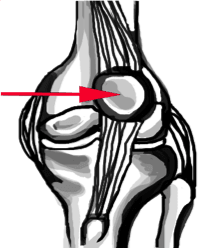
PV Card: Knee Injuries | Quick Reference Guide
Orthopedic injuries are commonly managed in the emergency department. Often a quick bedside reference card is needed to remind the clinician about the acute management decisions. This is the third of a series of orthopedic quick reference cards written by a team from the 2015-16 ALiEM Chief Resident Incubator. The first two were on ankle and hindfoot fractures and hip injuries. This card set covers knee injuries, specifically patella fractures, patella dislocation, and knee dislocation. These cards were expert reviewed by Dr. Scott Sherman, co-editor of the Emergency Orthopedics textbook (Amazon), and illustrations were created by Dr. Mary Haas. [+]

ALiEM Book Club: Creative Confidence
What is your definition of creativity? Are you innovative? Can doctors be creative and innovative? The authors Tom and David Kelley set out with their book “Creative Confidence” [Amazon link] to convince you of the importance of creativity and how to harness its power. For anyone who is looking for a little inspiration, “Creative Confidence” will not only change your perspective but also inspire you to go out and change the world through the introduction of Design Thinking. [+]

I am Dr. Sam Ko, Associate Medical Director: How I Stay Healthy in EM
Dr. Sam Ko (@drsamko) is an emergency physician from Southern California. Wellness is something very important to him, and it totally reflects on how present it is in his daily life. From practicing daily rituals to scheduling time for regular meditation, he always takes the opportunity to live in the now and be present. Here’s how he stays healthy in EM! [+]
Interview with Drs. Michael Callaham and Ellen Weber: Behind the scenes of journal peer review
As part of the ALiEM Faculty Incubator Program, Dr. Mike Callaham (Editor-in-Chief of Annals of Emergency Medicine) and Dr. Ellen Weber (Editor-in-Chief of Emergency Medicine Journal) participated in a Google Hangout where they provided expert advice on academic writing and peer review. We have summarized their wisdom below. [+]

Kory London, MD
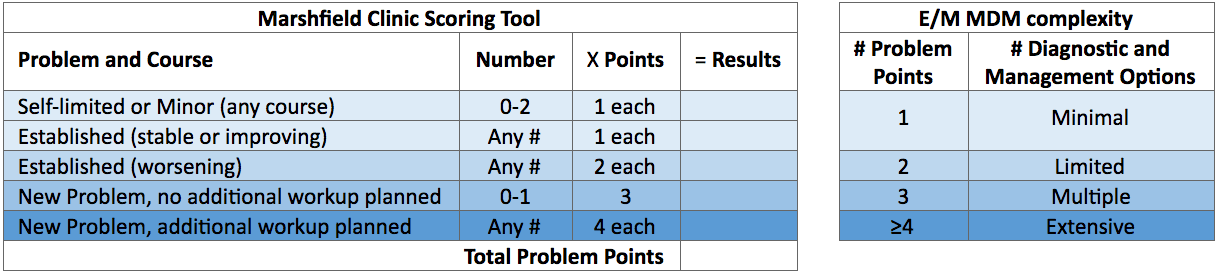
ED Charting and Coding: Medical Decision Making (MDM)
Editor’s Note (Jan 13, 2023): The new AMA CPT 2023 Documentation Guidelines have been published and the coding elements within the medical decision making section have been revamped. See the ACEP FAQ page on the 2023 Emergency Department Evaluation and Management (E/M) Guidelines. In this ED Charting and Coding Series, we have covered Introduction to ED Charting and Coding (PV Card); the History of Present Illness & Past Medical, Family, Social History; the Review of Systems; and the Physical Exam. At last we arrive at the crux of the chart: Medical Decision Making (MDM). In this final section, you show [+]

PV Card: Hip Injuries | Quick Reference Guide
Orthopedic injuries are commonly managed in the emergency department. Often a quick bedside reference card is needed to remind the clinician about the acute management decisions. This is the second of a series of orthopedic quick reference cards written by a team from the 2015-16 ALiEM Chief Resident Incubator. The first was on ankle and hindfoot fractures, and this card set covers hip injuries, such as hip dislocations and femur fractures. These cards were expert reviewed by Dr. Scott Sherman, co-editor of the Emergency Orthopedics textbook (Amazon), and illustrations were created by Dr. Mary Haas. [+]