



Trick of the Trade: Simple finger traps using gauze roll
Closed reduction of fractures or dislocations in the hand and wrist can be difficulty to achieve. Gravity can serve as an assistant. Commercial finger traps are available, but can sometimes be hard to find in the Emergency Department. An earlier trick of the trade describes the use of a gauze role to build your own finger trap setup. The following describes a simpler way to build finger traps using a gauze roll. [+]
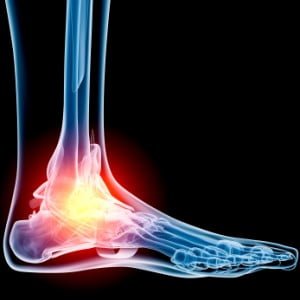
Radiograph-Negative Lateral Ankle Injuries in Children: Occult Growth Plate Fracture or Sprain?
An 7-year-old girl presents to your Emergency Department (ED) with an ankle inversion injury from while performing gymnastics. Plain films of her ankle show no fracture. It has been a long-held presumption that skeletally immature children with fracture-negative radiographs should be immobilized with a cast given the concern for an occult Salter-Harris 1 fracture. “Children do not get sprains” is a common teaching point. But a recent 2016 JAMA Pediatrics article challenges that premise in a prospective cohort study of 135 pediatric patients.1 Can these injuries be managed more like a sprain, utilizing a removable ankle brace? [+]

ALiEM Book Club: Beyond the ED – Recommendations by Dr. Ed Newton
“That is part of the beauty of all literature. You discover that your longing are universal longings, the you’re not lonely and isolated from anyone. You belong. ” – F. Scott Fitzgerald If the mark of a person are the people they have directly influenced, then Dr. Ed Newton is in rarefied company. He trained in Emergency Medicine at LAC+USC at a time where there were serious concerns about the legitimacy and the long-term future of the field. After finishing a fellowship in medical toxicology, he has held nearly every position in the LAC+USC Department of Emergency Medicine. He is a [+]

‘Treat and Release’ after Naloxone – What is the Risk of Death?
Often in the prehospital setting, naloxone is administered by EMS (or possibly a bystander) to reverse respiratory and CNS depression from presumed opioid overdose. The patient then wakes up, and not uncommonly, refuses transport to the hospital. The question is: Is it safe to ‘treat and release?’ Or, rather, what is the risk of death associated with this practice. Last updated: January 2, 2019 [+]

Trick of the Trade: Paraphimosis – Pour Some Sugar On Me
Paraphimosis occurs when a retracted foreskin can’t be reduced back over the glans of the penis. Risk factors for paraphimosis include scarring, vigorous sexual activity, chronic balanoposthitis, and forgetting to replace the foreskin after catheterization or manipulation. Paraphimosis can be a urological emergency as the tight ring formed by the foreskin can cause ischemia to the tip of the penis and eventually gangrene. Timely reduction is of high importance. Treatment involves gentle compression of the glans and gradual manual foreskin retraction.1 Unfortunately, as time goes on, more swelling occurs making traditional reduction techniques more difficult. [+]

ALiEM Bookclub: Beyond the ED – Recommendations by Dr. Louis Ling
“Words can be like X-rays if you use them properly — they’ll go through anything. You read and you’re pierced.” ― Aldous Huxley, Brave New World Dr. Louis Ling is currently Professor of Emergency Medicine and the Senior Vice President for Hospital Accreditation at the Accreditation Council for Graduate Medical Education (ACGME), however he is probably best known as one of the founders of Academic Emergency Medicine. He practiced for over 30 years at Hennepin County Medical Center (HCMC) where he ran the program in medical toxicology and served as the Associate Dean for Graduate Medical Education as well as the Chief [+]

I am Dr. Carl Alsup, Ultrasound Fellow: How I Stay Healthy in EM
Dr. Carl Alsup is an emergency physician and ultrasound fellow at Thomas Jefferson University. His loves for the outdoors keeps him active and fit. Despite being busy with academic commitments, Dr. Alsup maximizes his wellness by incorporating it into his daily routine. His attitude and strategies on maintaining mental wellness are refreshing, and are definitely worth checking out. Here is how he stays healthy in EM! [+]
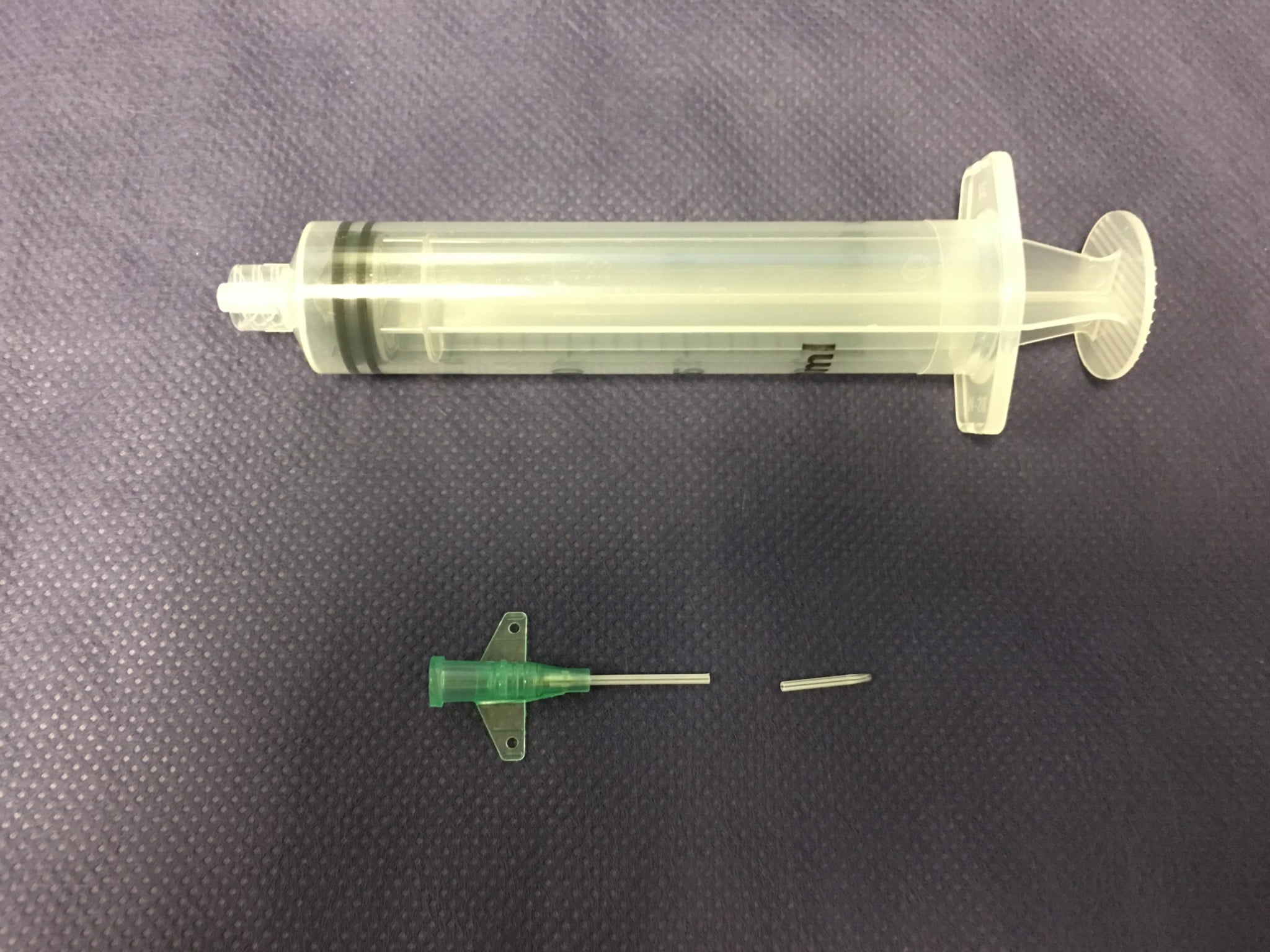
Trick of the Trade: Ear Irrigation in the Emergency Department
Ear irrigation is an important tool for adult and pediatric patients in the Emergency Department (ED) with ENT complaints. Irrigation can be used to clear ear cerumen, visualize tough-to-see tympanic membranes, and remove foreign bodies. This may reduce the need for subspecialist care and improve the patient’s hearing and quality of life.1 Commercial electronic and mechanical devices are available for irrigation and have been studied. Moulton and Jones presented the improved efficacy of foreign body removal using an electric ear syringe in an (ED) population.2 In this trick of the trade, we present a low cost and effective way of “ear-rigation” [+]
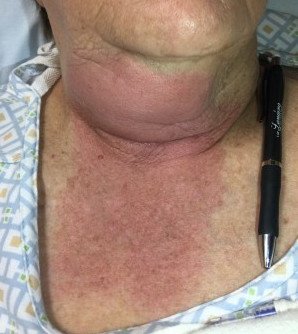
Diagnose on Sight: Case of a red, swollen neck
Case: A 78 year-old female with a past medical history of asthma and hypothyroidism presents with a three day history of sore throat and a two day history of a “lump” along the right side of her neck. The “lump” has now progressed to involve both sides of her anterior neck and is accompanied with erythema, tenderness to palpation, and swelling. In addition, the patient has developed a hoarse voice and odynophagia. The patient’s primary care physician referred her to an ENT specialist, who then referred the patient to the ED for urgent imaging due to the concern for a deep space [+]

PV Card: Introduction to ED Charting and Coding
Editor’s Note (Jan 13, 2023): The new AMA CPT 2023 Documentation Guidelines have completely revamped how the billing and coding for Emergency Department charts is done. See the ACEP FAQ page on the 2023 Emergency Department Evaluation and Management (E/M) Guidelines. What makes a good chart? How do you write a good chart quickly? How about a good, efficient, billable chart? On average, residents and practicing physicians report they did not receive adequate training in charting and coding [1–3] and resident charts are more often down-coded due to documentation failures than those of attendings and PAs [4]. Thankfully, resident [+]