



Whipped Cream Charger Abuse: The Toxicologist Mindset
The Toxicologist Mindset series features real-life cases from the San Francisco Division of the California Poison Control System. Case: A 39-year-old man, with no significant past medical history, was brought to the emergency department by family members, over three consecutive days, for anxiety, confusion, and ataxia. In the first two visits, his laboratory work-up, including complete blood cell count, chemistry panel, liver function tests, urine drug screen, and non-contrast head CT, were unremarkable. On his third visit, he was profoundly encephalopathic with confusion and poor concentration. He had bilateral lower extremity weakness and ataxia. He was admitted to the neurology [+]
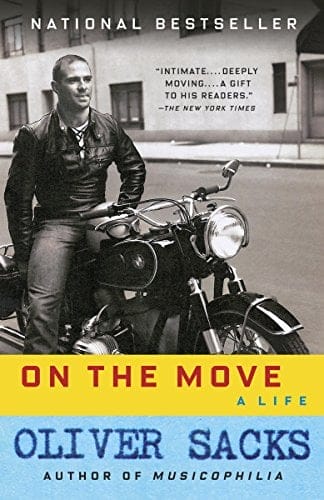
ALiEM Book Club: On The Move
“I am a storyteller, for better and for worse. I suspect that a feeling for stories, for narrative, is a universal human disposition, going with our powers of language, consciousness of self, and autobiographical memory.” —Oliver Sacks, On the Move Oliver Sacks has been many things in his life—physician, writer, researcher, drug addict, power lifter, motorcycle lover. He writes about all of these experiences as they have arced across the course of his much varied life in his memoir, On the Move [Amazon]. In this colorful autobiography, Sacks bobs and weaves through his own life, at times focusing in on [+]
Introducing CME for ALiEM via FOAMbase
Ever wish you could get Continuing Medical Education (CME) credit for the Free Open Access Meducation (FOAM) you already consume? We are excited to announce that 10 ALiEM articles are now available for AMA PRA Category 1 CME. This is a pilot program in collaboration with FOAMbase and EB Medicine. There is great content on trauma, geriatrics, pediatrics, critical care, and more. We think CME for FOAM is going to be a great way to increase sustainability for FOAM authors while keeping FOAM 100% free and open access. [+]
MEdIC: Case of Cognitive Overload – Expert Review and Curated Community Commentary
The Case of Cognitive Overload outlined a scenario of a junior resident dealing with the harsh realities of working in emergency medicine when she experiences the negative impacts of cognitive overload while caring for a sick patient. This month, the MEdIC team (Tamara McColl, Teresa Chan, Sarah Luckett-Gatopoulos, Eve Purdy, John Eicken, and Brent Thoma), hosted a discussion around this case with insights from the ALiEM community. We are proud to present to you the Curated Community Commentary and our 2 expert opinions. Thank-you to all participants for contributing to the very rich discussions surrounding this case! [+]

I am Dr. Alicia Pilarski – How I Promote Wellness in EM
Wellness is not the sole responsibility of each individual physician, rather it is something we have to foster as a community. Many if not most of the things that contribute to burnout or detract from wellness are systems-level problems. Therefore the solutions also need to be systems-based, which inspired us to launch this series on how to promote wellness in EM. The goal is to share ideas, practices, and programs that have worked at different institutions to promote wellness. Our hope is that in reading these posts, you will be inspired to take some of the ideas and implement them [+]
ALiEMU CAPSULES Module 7: Emergency Thyroid Disorders
We are proud to present CAPSULES module 7: Emergency Thyroid Disorders, now published on ALiEMU. Here is a summary of the key points from this outstanding module by Drs. Craig Cocchio and Colleen Martin. [+]
Director of Growth, Strategic [+]

I am Dr. Anand Swaminathan, Editor-in-Chief of Core EM: How I Stay Healthy in EM
Dr. Anand “Swami” Swaminathan (@EMSwami) is an emergency physician at the Ronald O. Perelman Emergency Department at NYU and Bellevue hospitals in New York City. He is the co-host and assistant editor of EM:RAP, course director for The Teaching Course, and editor-in-chief for the Core EM site. Despite being stretched among numerous projects, Swami does his best to stay sane and healthy by helping raise three children with his amazing wife, and finding time to exercise and eat well. Check out how he stays healthy in emergency medicine! [+]

Welcome to the FemInEM Job Board
The first question people ask when they hear about the new FemInEM job board is “Why would you have a job board just for women?” I smile briefly, and then I explain. The FemInEM job board is for ALL doctors in EM. I understand the confusion, after all, we are a website dedicated to discussing and discovering issues related to women working in emergency medicine. We publish articles on gender bias in the workplace, reflect on the needs of new mothers returning from maternity leave and discuss programs that help women become leaders in our field. And since we spend so much time [+]
New initiative: Wellness Think Tank for EM residents
The issues of wellness, burnout, and resiliency have snowballed across nearly all health professions. Emergency Medicine (EM) specifically was singled out as one of the specialties with highest risk for burnout at >60%.1 There has been much discussion around the general “UN-wellness” of medicine, and we now feel that there is a dire need for action. Instead of tackling the entire spectrum of wellness throughout medicine, we wanted to focus on EM residents. As a response to this need, we are proud to announce the launch of the ALiEM Wellness Think Tank, which is a private virtual community comprised of EM residents across North America. What better stakeholder group to [+]

MEdIC Case: The Case of the Cognitive Overload
Welcome to season 4, episode 1 of the ALiEM Medical Education in Cases (MEdIC) series! Our team (Drs. Tamara McColl, Teresa Chan, John Eicken, Sarah Luckett-Gatopoulos, Eve Purdy, and Brent Thoma) is pleased to welcome you to our online community of practice where we discuss the practice of academic medicine! In this month’s case, a junior resident deals with some of the harsh realities of emergency medicine when she experiences the negative impacts of cognitive overload when caring for a sick patient. [+]