SAEM/CORD slides: Social Media for Emergency Educators
As requested by an audience member at today’s talk at SAEM, Drs. Rob Cooney, Mike Bond, and I are sharing our slides and handout on Social Media for Emergency Medicine Educators with you here.



As requested by an audience member at today’s talk at SAEM, Drs. Rob Cooney, Mike Bond, and I are sharing our slides and handout on Social Media for Emergency Medicine Educators with you here.
You are handed an ECG for a 50 year old man with moderate chest pain for 2 hours now and no associated symptoms typical for ACS, PE, aortic dissection, or any other red flags of chest pain. He has no prior ECG’s on file.
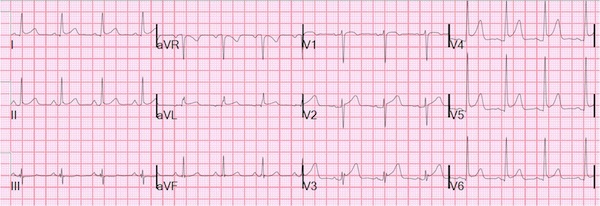
Image courtesy of Dr. Steve Smith at HQMedEd-ecg.blogspot.com
Here are some great literature-based pearls compiled by Dr. Jason West (@JWestEM), an EM resident from Jacobi/Montefiore.
Adapted from [1–7]
Go to ALiEM (PV) Cards for more resources.
Furthermore, there is a formula to differentiate early repolarization vs STEMI, per Dr. Smith’s publication6:
(1.196 x STE60V3) + (0.059 x QTc) – (0.326 x RA V4)
A result of > 23.4 is predictive of a LAD occlusion causing a STEMI, rather than early repolarization.
P.S. The above ECG image shows early repolarization.

Dr. Rahul Patwari discusses Salter Harris fractures in pediatric patients with a helpful mnemonic to help you remember the categories. He also poses several questions in the first video, which are answered in the second video.
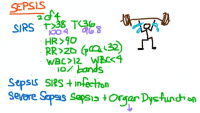
Do you know the protocol for early goal directed therapy (EGDT)? It’s all about IV fluids. Get the scoop here in this 12 minute video.
When doing nasogastric (NG) tubes and fiberoptic nasopharyngoscopy (NP) procedures, there many approaches in how patients can be locally anesthetized. Getting things pushed up your nose is so profoundly irritating that most patients only give you 1 or 2 changes to get it right.
One option is to use nebulized lidocaine, although it takes a while to prepare and anecdotally tends to numb mainly the hypopharynx, placing the patient at risk for aspiration later on. Another option is to use viscous lidocaine to coat the NG or NP tubing, but this is fairly messy and only mildly helpful. Commercial intranasal atomizers, which disperse lidocaine over the nasal mucosal surfaces well, are generally effective, but may not be available in some emergency departments.
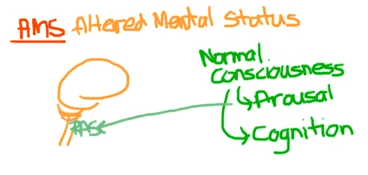 Get an organized approach on the broad chief complaint of “Altered Mental Status”. Learn about the AEIOU TIPS mnemonic om this 20 minute video by Dr. Rahul Patwari.

For the CORD Distinguished Educator’s Coaching Program, Dr. Gus Garmel has kindly offered to share his top 50 points to improve one’s speaking skills. These tips are great for anyone who plans to do public speaking. Thus far, this “be a great speaker” series has reviewed 40 pearls.