



MIA 2012: Levy P et al. Subclinical hypertensive heart disease in black patients with elevated blood pressure in an inner-city emergency department. Ann Emerg Med. 2012 Oct;60(4):467-74.e1.
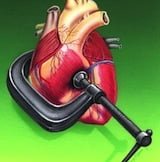 Bottom Line1
In asymptomatic black patients who presented to the ED with elevated blood pressure, subclinical hypertensive heart disease was detected in 9 of every 10 patients.
(more…)
MIA 2012: Canto JG et al. Association of age and sex with myocardial infarction symptom presentation and in-hospital mortality. JAMA. 2012 Feb 22;307(8):813-22.
 Bottom Line 1
Chest pain free MI is a very real phenomenon and it is associated with higher mortality – especially in younger women (NRMI study).
(more…)
MIA 2012: Campagna JD, et al. The use of cephalosporins in penicillin-allergic patients: a literature review. J Emerg Med. 2012 May;42(5):612-20
 Bottom Line 1
- For patients with penicillin (PCN) allergies, it is safe to administer third- and fourth-generation cephalosporins (CPN) with no fear of cross reaction.
- Use of first- and second-generation CPN should only be avoided when the penicillin antibiotic shares structurally similar R1 side chains.
(more…)
MIA 2012: Nishijima DK et al. Immediate and delayed traumatic intracranial hemorrhage in patients with head trauma and preinjury warfarin or clopidogrel use. Ann Emerg Med. 2012 Jun;59(6):460-8.e1-7.
 Bottom Line 1
CREST study: Patients presenting to the emergency room with blunt head trauma and preinjury warfarin or clopidogrel use have a high incidence of immediate intracranial hemorrhage, but a very low incidence delayed intracranial hemorrhage. Thus, if the initial head CT is negative, you should be able to discharge the patient home…
(more…)
MIA 2012: Hoffmann U et al. Coronary CT angiography versus standard evaluation in acute chest pain. N Engl J Med. 2012 Jul 26;367(4):299-308.
 Bottom Line 1
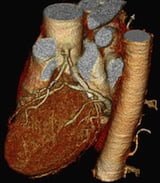
ROMICAT-II study: Coronary CT angiography (CCTA) is a safe and faster diagnostic strategy than the standard evaluation of low-to-intermediate risk chest pain patients. CCTA, however, results in higher radiation exposure and more downstream testing.
(more…)
MIA 2012: Backes D, et al. Time-dependent test characteristics of head computed tomography in patients suspected of nontraumatic subarachnoid hemorrhage. Stroke. 2012 Aug;43(8):2115-9
 Bottom Line 1
- 100% sensitive and specific if < 6 hours from headache onset
- 90% sensitive if after 6 hours
A noncontrast head CT can effectively rule out atraumatic subarachnoid hemorrhage (aSAH) in patients who present with acute headache within six hours after ictus. Those who present outside this time window or present atypically for SAH (ie neck pain) require further workup, including a lumbar puncture.