Paucis Verbis: Blunt cardiac injury

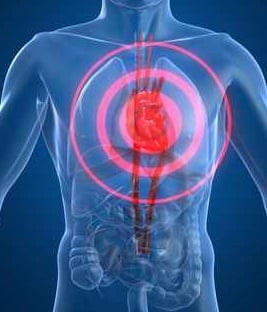
Do you always get a troponin for patients who sustain blunt chest trauma?
Hopefully your answer is no. Of note, it is also NOT indicated as a screening test for those in whom you suspect a blunt cardiac injury (BCI). It can be normal in the setting of arrhythmias and it can be falsely elevated in the setting of catecholamine release or reperfusion injury from hypovolemic shock.
The initial screening test should include an ECG and a FAST ultrasound exam. If you have abnormal ECG findings, then a troponin is warranted (in addition to hospital admission).
Below summarizes a suggested algorithm from the recent EM Clinics of North America publication series. Definitive statements are challenging because there is no gold standard to diagnose BCI.
PV Card: Blunt Cardiac Injury
Adapted from [1]
Go to the ALiEM (PV) Cards for more resources.
Reference
- Bernardin B, Troquet J. Initial management and resuscitation of severe chest trauma. Emerg Med Clin North Am. 2012;30(2):377-400, viii-ix. [PubMed]
Tricks of the Trade: Valsalva maneuver by using a 10 cc syringe
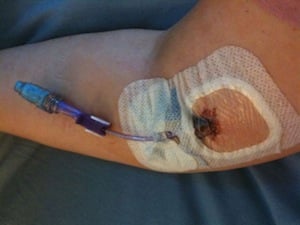
Last week, Dr. David Johnson shared his trick to elicit a Valsalva maneuver out of his patient. Here’s another trick that I saw one of our EM residents use in an attempt to break a SVT rhythm.
Paucis Verbis: Toxic alcohols – Isopropyl alcohol

Continuing on the theme of Toxic Alcohols (osmolal gap, ethylene glycol, methanol), this Paucis Verbis card focuses on isopropyl alcohol toxicity, which is commonly found in rubbing alcohols. In this toxic alcohol, fomipezole is actually NOT indicated because you want to have alcohol dehydrogenase convert the toxic parent compound (isopropyl alcohol) into the nontoxic metabolite (acetone).
Note that these are merely guidelines and you should tailor management plans with your toxicologist and nephrologist.
PV Card: Isopropyl Alcohol Toxicity
Adapted from [1, 2]
Go to ALiEM (PV) Cards for more resources.
References
Trick of the Trade: Valsalva maneuver by pressing on the abdomen
A patient presents to triage in rapid SVT rhythm. While you are trying to get an IV in the patient and drawing up adenosine, you have the patient perform a Valsalva maneuver to see if increased vagal tone itself will break the arrhythmia. Unfortunately, she is unable to understand your instructions.
Top 10 tips to building a productive academic team
I have been meaning to share this list of great tips about building a productive academic team. Major projects often require an interdisciplinary team of experts who are equally motivated towards a shared goal. I was recently at the 2012 Society of Academic Emergency Medicine where Dr. William McGaghie gave an inspiring CDEM keynote speech. He has been on a myriad of successful academic teams and he shared with us his top 10 list of pearls for team-building.(more…)
Paucis Verbis: Toxic alcohols – Methanol
Continuing on the theme of Toxic Alcohols (osmolal gap, ethylene glycol), this Paucis Verbis card focuses on methanol toxicity. Useful are the American Academy of Clinical Toxicologists recommendations on when to administer an antidote (fomipezole) and when to perform hemodialysis. I redrew the flowchart based on what’s relevant to the ED in the initial stages.