About Michelle Lin, MD

ALiEM Founder and CEO
Professor and Digital Innovation Lab Director
Department of Emergency Medicine
University of California, San Francisco

Paucis Verbis: EMTALA rules in the transfer of ED patients

NoDumping

In U.S. academic emergency departments, decisions to accept patients is typically easy, because you have ready access to on-call physicians. When in doubt, accept transfer patients and sort things out later.

  • What are the obligations for those transferring patients to other EDs?
  • What do the EMTALA (a.k.a. “anti-dumping”) rules say?
  • When can you transfer unstable patients?

As a general rule, the liability falls upon the transferring site and physician. So be sure that your patient won’t decompensate in the ambulance during transfer. So, don’t transfer that CP patient who is getting ruled-out for an MI or ACS no matter how good they look. Patients need to be stable for transfer.

Anyone with pearls to share?
Thanks to @EMurgentologist for tweeting me the idea!

PV Card: EMTALA Transfer Rules


Go to ALiEM (PV) Cards for more resources.

Further Reading:

By |2026-06-16T16:02:29-07:00Sep 14, 2012|Administrative, ALiEM Cards|

Trick of the Trade: Pass the mayo – getting off black tar

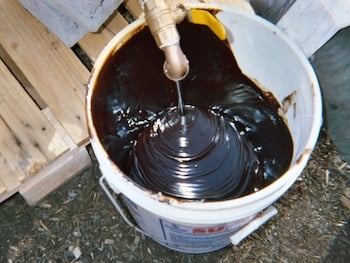
CoalTar

Industrial accidents sometimes involve hot coal tar stuck to a patient’s skin. Coal tar is notoriously challenging to remove once it has cooled and adhered to the skin. The tradition teaching is to apply large quantities of petroleum jelly to the black tar, let it sit for at least 60 minutes, and then diligently try to rub away the tar. Repeat as needed. What if you don’t have any petroleum jelly or petroleum-based products?

(more…)

By |2019-01-28T22:13:20-08:00Sep 4, 2012|Tricks of the Trade|

Paucis Verbis: Delayed sequence intubation

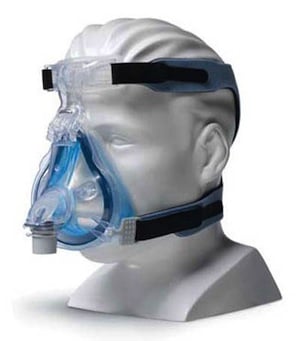
Bipap

A 40-year-old man presents with significant agitation and severe respiratory distress from a COPD exacerbation. His oxygen saturation is 75% on room air, and he has diffuse, tight wheezes on exam. You prepare to intubate the patient using a rapid sequence induction protocol: etomidate, succinylcholine, 8-0 endotracheal tube.

Or do you?

This pocket card discusses the delayed sequence intubation (DSI) protocol made famous by Dr. Scott Weingart and Dr. Rich Levitan.1 Thanks to Dr. Michelle Reina (EM resident at Univ of Utah) and Dr. Rob (Intermountain Medical Center in Utah) for designing this helpful card. Rob has even implemented a DSI protocol in his ED.

The card breaks down the reasoning and steps behind DSI. Anecdotally, ketamine has often calmed patients down enough during the preoxygenation phase to enhance oxygenation/ventilation so much so that intubation is not required.

PV Card: Delayed Sequence Intubation (DSI)


Go to ALiEM (PV) Cards for more resources.

Reference

  1. Weingart S, Levitan R. Preoxygenation and prevention of desaturation during emergency airway management. Ann Emerg Med. 2012;59(3):165-75.e1. [PubMed]
By |2022-04-05T15:07:58-07:00Aug 31, 2012|ALiEM Cards, Critical Care/ Resus|

Paucis Verbis: CHF likelihood ratios

senior with oxygen maskA 50 y/o man with a history of CHF and COPD is brought in by ambulance in severe respiratory distress. He is sitting upright with a RR 30 and O2 saturation of 79% on room air. Is this a CHF or COPD exacerbation? This is a common dilemma faced in the ED. Fortunately there are likelihood ratios to help you risk stratify using a Fagan nomogram.
Note that there are 3 tables:

  1. All-comer Emergency Department (ED) patients1
  2. ED patients WITH a known history of asthma or COPD2
  3. Summative LRs for BNP are provided in ED patients with or without a history of asthma/COPD1

See the blue font for the likelihood ratios ≥ 3.0.

PV Card: Does Your Dyspneic Patient Have CHF?


Adapted from [1, 2]
Go to ALiEM (PV) Cards for more resources.


References

  1. Wang C, FitzGerald J, Schulzer M, Mak E, Ayas N. Does this dyspneic patient in the emergency department have congestive heart failure? JAMA. 2005;294(15):1944-1956. [PubMed]
  2. McCullough P, Hollander J, Nowak R, et al. Uncovering heart failure in patients with a history of pulmonary disease: rationale for the early use of B-type natriuretic peptide in the emergency department. Acad Emerg Med. 2003;10(3):198-204. [PubMed]
By |2021-10-10T08:40:49-07:00Aug 24, 2012|ALiEM Cards, Cardiovascular|
Go to Top