Trick of the Trade: High volume irrigation of abscesses
 Large-sized abscess often have pus trapped in deep crevices and pockets. Irrigation can help express the pus. How can you set up a high-volume irrigation system?



Large-sized abscess often have pus trapped in deep crevices and pockets. Irrigation can help express the pus. How can you set up a high-volume irrigation system?
Are you at the 2012 American College of Emergency Physicians meeting in Denver this week? The who’s who of EM are there now teaching, learning, and networking. Here’s the moving video played at the opening session looking back at the Aurora mass casualty incident shooting.
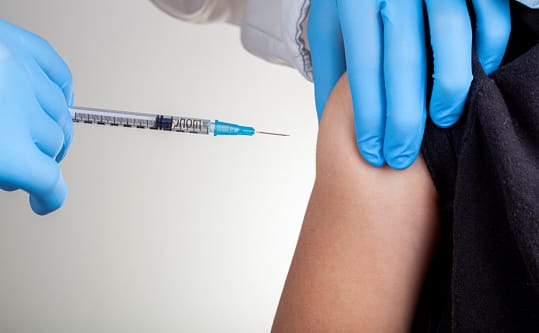
There doesn’t appear to be a true depot effect. IV and IM ceftriaxone have very similar pharmacokinetic profiles. Let me prove it to you, straight from the FDA-approved ceftriaxone package insert.
| Ceftriaxone route | 0.5 hr | 1 hr | 2 hr | 4 hr | 6 hr | 8 hr | 12 hr | 16 hr | 24 hr |
|---|---|---|---|---|---|---|---|---|---|
| IV | 82 | 59 | 48 | 37 | 29 | 23 | 15 | 10 | 5 |
| IM | 22 | 33 | 38 | 35 | 30 | 26 | 16 | unknown | 5 |
Table 1: Average plasma concentration (mcg/mL) as measured over time after 500 mg of ceftriaxone administration
| Ceftriaxone route | 0-2 hrs | 2-4 hrs | 4-8 hrs | 8-12 hrs | 12-24 hrs | 24-48 hrs |
|---|---|---|---|---|---|---|
| IV | 526 | 366 | 142 | 87 | 70 | 15 |
| IM | 115 | 425 | 308 | 127 | 96 | 28 |
Table 2: Average urine concentration (mcg/mL) as measured over time after 500 mg of ceftriaxone administration
If the patient already has an IV line, we can give IV ceftriaxone for gonorrhea instead of IM.
In fact, the Japanese Society for Sexually Transmitted Diseases has recommended monotherapy with a single IV dose of 1 g ceftriaxone since 2008. (Aoki 2021)
While most of the time patients with STD (or STI, if you prefer) complaints don’t have an IV line established, occasionally they do. My hospital stocks 1 gm and 2 gm premixed IV bags of ceftriaxone, so we could potentially just give 1 gm IV in these rare cases to ensure adequate levels (even 500 mg might be just fine).
Of course, the other way to avoid the painful injection is to mix the ceftriaxone with lidocaine… or avoid contracting gonorrhea altogether.
This post is intended for educational purposes to explore the kinetic data for IM and IV therapy. The CDC guidelines should be followed for treatment of STDs.
Original: October 9, 2012; Last Updated: August 10, 2026

Is this coin in the esophagus or the trachea?
The classic teaching for the Boards exam is:

The electrocardiogram can pick up all sorts of electrolyte abnormalities. The most common abnormalities revolve around high and low levels of potassium and calcium. Magnesium derangements typically have nonspecific findings. How do you keep things straight? To make things more complicated, multiple electrolyte derangements can occur at the same time, making ECG interpretation challenging.

La revista Academic Emergency Medicine ha creado una nueva función en su página web en la cual todos los resúmenes de los articulos seran traducidos al espanol. Felicidades a AEM por ser la primera revista americana en emergenciologia y unas de las primeras en medicina general por tomar en cuenta a la población de idioma español.

Having you had trouble seeing a pediatric patient’s tympanic membrane because of impacted cerumen? Scared from that last time you used a rigid curette and caused bleeding in the ear canal? The parents are worried that you hit the brain…