About Michelle Lin, MD

ALiEM Founder and CEO
Professor and Digital Innovation Lab Director
Department of Emergency Medicine
University of California, San Francisco

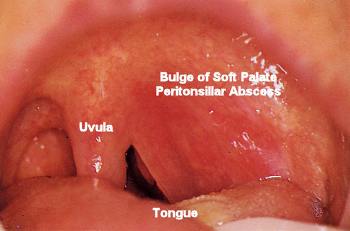
Trick of the Trade: Peritonsillar abscess aspiration technique using IV tubing

peritonsillar abscess aspirationA few weeks ago, I gave a Tricks of the Trade talk for the Stanford-Kaiser Emergency Medicine residents and faculty. I was overwhelmed by the great, creative ideas that came up during our discussion. An always popular topic is the drainage of peritonsillar abscesses. Sometimes it can be difficult to aspirate from a syringe using only one hand, especially with the awkward angle that you might encounter.

(more…)

By |2024-10-22T15:42:12-07:00Apr 17, 2012|ENT, Tricks of the Trade|

Paucis Verbis: GRACE score for ACS risk stratification

ChestPain grace risk score for ACS

Risk stratification of the undifferentiated chest pain patients in the Emergency Department continues to  plague emergency physicians. It’s partly the reason why I created a TIMI risk score card for unstable angina and non-ST elevation MI in 2010.
Have you heard of the 9-variable GRACE risk stratification score? Thanks to Jeff Bray (physician assistant in a rural critical access ED), I have now. He graciously shared his personal reference card on this with me, which I only minimally reformatted to fit my Paucis Verbis card dimensions.

GRACE stands for Global Registry for Acute Coronary Events. It supposedly outperforms the TIMI scoring slightly in accurately predicting complications in the short and long term. Instead of calculating this manually, which can be a pain, now there are calculators out there:

Anyone use this scoring system?

PV Card: GRACE Risk Score for ACS


Adapted from [1, 2]
Go to ALiEM (PV) Cards for more resources.

References

  1. Eagle K, Lim M, Dabbous O, et al. A validated prediction model for all forms of acute coronary syndrome: estimating the risk of 6-month postdischarge death in an international registry. JAMA. 2004;291(22):2727-2733. [PubMed]
  2. D’Ascenzo F, Biondi-Zoccai G, Moretti C, et al. TIMI, GRACE and alternative risk scores in Acute Coronary Syndromes: a meta-analysis of 40 derivation studies on 216,552 patients and of 42 validation studies on 31,625 patients. Contemp Clin Trials. 2012;33(3):507-514. [PubMed]
By |2021-10-10T19:05:05-07:00Apr 13, 2012|ALiEM Cards, Cardiovascular|

Video: How to make a screencast video

A reader, Mark, posted a question yesterday in the chat box about screencapture softwares out there. I personally use iShowU to capture such videos as my instructional video on linking your Evernote account (above) to automatically read and download my weekly public Paucis Verbis notebook. Mark also specifically asked about what Dr. Rob Rogers (Univ of Maryland) uses.
(more…)

By |2019-01-28T22:26:47-08:00Apr 11, 2012|Social Media & Tech|

Trick of the Trade: Urine pregnancy test without urine

pregnancy_tests_in_bulk
A 25 year old woman presents to the Emergency Department having syncopized in the waiting room, where she was triaged with the chief complaint of abdominal pain. Ectopic pregnancy immediately bubbles to the top of your differential diagnosis. The patient is too dizzy to walk to the bathroom to give you a urine specimen to check a urine pregnancy test. Plus, she admits that she just urinated in the waiting room bathroom a few minutes ago – so no urine now.

Trick of the Trade

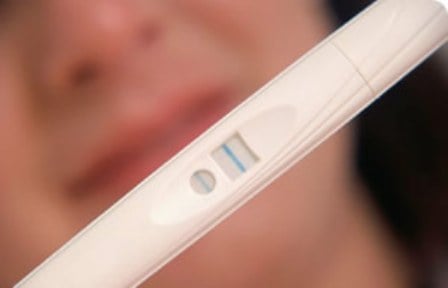
Apply several drops of whole blood (instead of urine) into the pregnancy test cassette. In the photo below, the patient was pregnant with a serum beta-HCG level of 250 mIU/mL whose urine and whole blood qualitative tests were both positive.

PregWholeBood

Did you know that most urine pregnancy test kits are approved for both urine and serum samples? On a quick Google search, I found that Accutest, Cardinal Health, ICON, OSOM, and Rapid Response all are approved for both. The question is whether this will work for whole blood.

One study 1 in the Journal of Emergency Medicine by Dr. Fromm from Maimonides Medical Center looked at exactly this issue. Whole blood pregnancy test performed extremely well, especially if positive:

  • Sensitivity 95.8%
  • Specificity 100%
  • Negative predictive value 97.9%
  • Positive predictive value 100%

In their study, very low beta-HCG values (<159 mIU/mL) occasionally yielded a false negative for whole blood pregnancy tests. The whole blood testing approach missed a total 9 of 425 pregnancies. Interestingly, the urine pregnancy test was also negative in 5 of those 9 and not performed in the other 4.

Bottom Line

Believe a positive test. Confirm all tests with a urine qualitative test or quantitative serum beta-HCG.

Tip

  1. Be sure to wait at least 5 minutes when using whole blood in the kit. It sometimes takes a while.
  2. Do not apply additional drops of water or saline to the whole blood sample. This causes unnecessary dilution. Just wait for the blood to osmose across the entire test strip.
  3. This is trick is ONLY for medical professionals and not the lay public. We are discussing an actual blood draw and not a simple cut on a finger to obtain blood.

Another example courtesy of Dr. Joe Habboushe (New York Hospital–Queens of Cornell University) and Dr. Graham Walker (Stanford) 2 :

Pregnancy1
Time: 1 minute
Pregnancy2
Time: 5 minutes

S = Sample well; T = Test specific (will show bar if +HCG); C = Control (will always have a bar)


References

  1. Fromm C, Likourezos A, Haines L, Khan A, Williams J, Berezow J. Substituting whole blood for urine in a bedside pregnancy test. J Emerg Med. 2012;43(3):478-482. [PubMed]
  2. Habboushe J, Walker G. Novel use of a urine pregnancy test using whole blood. Am J Emerg Med. 2011;29(7):840.e3-4. [PubMed]

Hot off the Press: Talking about Web 2.0 in Emergency Medicine

I am humbled to be included and quoted in a recent Annals of EM commentary about Web 2.0 in Emergency Medicine. Hey, my “street credibility” just went up just by having my name in the same article with the likes of:
You can read the whole article, which is free to download by the journal.
By |2019-01-28T22:34:16-08:00Apr 8, 2012|Medical Education, Social Media & Tech|

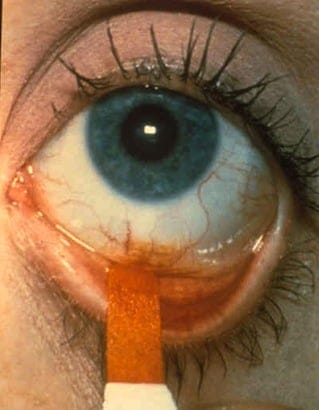
Trick of the Trade: Fluorescein eyedrops

FluoresceinStrip
This is a guest post by Dr. Ian Brown (Stanford):

The Roberts textbook describes the procedure of corneal fluorescein staining as touching a moistened fluorescein strip to the cornea.  Maybe it is an irrational fear of a paper cut to the sclera, or a fear of touching an already abraded cornea with the paper, but I try to find an alternative. I have seen physicians hold the eye open with one hand, hold the fluorescein with a second hand and then drip tetracaine on the paper and let it drip into the eye with a third hand. I, unfortunately, only have two hands.
(more…)

By |2019-01-28T23:36:28-08:00Mar 27, 2012|Ophthalmology, Tricks of the Trade|

Introducing a new blog: "Modern EM"

Peck_Timothy_059_2

Last month, I announced Dr. Timothy Peck (Beth Israel Deaconess EM resident) as one of the winners of the Blog Incubator Contest. Starting today and for the next 2 Mondays, he’ll be posting a 3-part series, which will eventually end up on his blog “Modern EM” at ModernEM.blogspot.com. His blog will feature examples of how Web 2.0 influenced the management of specific patient encounters. Also guests will be allowed to contribute mini-case presentations where they will report how a Web 2.0 activity changed how they managed a patient.

The blog is still in development phase. In the meantime, you are in for a treat. His upcoming blog entries are great examples demonstrating the impact of online and app-based clinical decision support tools in the ED.

Let’s welcome Tim to the blogging community!

By |2016-11-11T18:51:03-08:00Mar 26, 2012|Social Media & Tech|
Go to Top