About Michelle Lin, MD

ALiEM Founder and CEO
Professor and Digital Innovation Lab Director
Department of Emergency Medicine
University of California, San Francisco

Paucis Verbis: Influenza – To treat or not to treat?

SwineFlu-1 influenza

Influenza season typically peaks in the United States during the Jan-Feb months and can start as early as October. You can read about the 2011-12 seasonal flu data on the CDC website.

Should you give a patient with influenza an antiviral agent or just provide supportive therapy?

This Paucis Verbis card summaries the CDC’s Advisory Committee on Immunization Practices (ACIP) recommendations for this upcoming 2011-12 flu season. I also let patients with uncomplicated influenza who are going to be managed as outpatients know that a 5-day course of osteltamivir or zanamivir will cost them about $50-80. Often that sways them towards declining a prescription and “toughing out” an extra day of the flu.

PV Card: Influenza


Adapted from [1]
Go to ALiEM (PV) Cards for more resources.

Reference

  1. Centers for. Infectious disease. Antiviral agents for the treatment and chemoprophylaxis of influenza. Ann Emerg Med. 2011;58(3):299-303; discussion 303-4. [PubMed]
By |2021-10-12T15:44:24-07:00Oct 28, 2011|ALiEM Cards, Infectious Disease|

G-Advising: Using Google Hangout to advise medical students

GoogleHangout102411
Get an advisor.

Don’t try to navigate medical school and residency on your own.

This is key especially during medical school as you try to get through and around the mounds of reading, paperwork, options, and pitfalls. If you are interested in Emergency Medicine (EM) as a career, that means getting one or several great EM advisors. Don’t rely on non-EM faculty to give you any insight into EM. Inevitably, I have found that they give incomplete or slightly skewed perspectives about the pros and cons of EM.

(more…)

By |2016-11-11T18:51:55-08:00Oct 26, 2011|Medical Education, Social Media & Tech|

Trick of the Trade: Nasal cannula oxygenation during endotracheal intubation
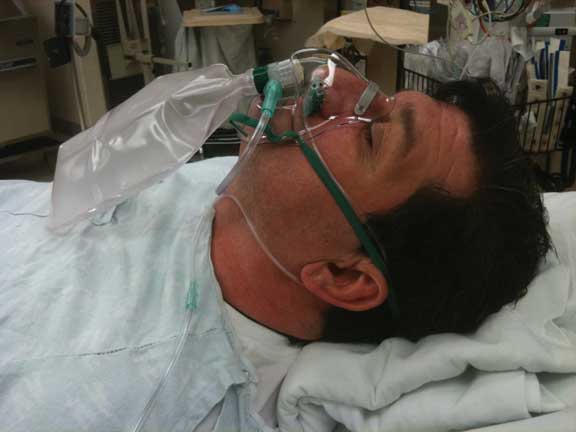
CloseUpHeadElevatedTrumpet

You are managing a 300-pound patient with a long history of severe COPD, who now requires intubation because of a pneumonia and COPD exacerbation. You anticipate that the patient may be a difficult airway intubation and may desaturate quickly during laryngoscopy. While you are setting up to orotracheally intubate this patient, you preoxygenate this patient as best as you can with a non-rebreather mask.

What can you do to prolong the patient’s time-to-desaturation so that you aren’t as rushed to place the endotracheal tube?

(more…)

By |2019-01-28T22:35:50-08:00Oct 25, 2011|Tricks of the Trade|

Paucis Verbis: Ventilator settings for obstructive lung disease

Ventilator

Following up with last week’s Paucis Verbis card on Ventilator Settings for Acute Lung Injury and ARDS, here is the card on Ventilator Settings for Obstructive Lung Disease. This is for patients who present with acute asthma or COPD exacerbation who require endotracheal intubation.

What initial ventilator settings should you set for these patients?


Go to ALiEM (PV) Cards for more resources.

Thanks to Dr. Jenny Wilson for the card and Dr. Scott Weingart for the original stellar podcast from which this card was derived.

By |2021-10-12T15:47:16-07:00Oct 21, 2011|ALiEM Cards, Pulmonary|

Paucis Verbis: Ventilator settings for acute lung injury and ARDS

VentilatorA patient presents with severe multilobar pneumonia and refractory hypoxia requiring endotracheal intubation. The respiratory therapist connects your patient to the ventilator.

“What settings would you like your patient on?”

Back in 2010, Dr. Scott Weingart posted a great podcast on “Dominating the Vent“. It’s such a fantastic distillation of the practical aspect of ventilator setting management of all intubated patients except those with an acute asthma or COPD exacerbation, Dr. Jenny Wilson and I thought this would be a great Paucis Verbis card to have in your peripheral brain.

Note: The tidal volume should be calculated based on Predicted Body Weight (PBW), which is based on patient gender and height. The calculation is at the bottom of the card. Using a patient’s actual weight might yield a tidal volume that is way too high. The initial vent settings in the example box are for a patient with a PBW of 70 kg. That’s basically a 5’9″ man or 5’11” woman.

PV Card: Ventilator Settings for Lung Protection


Adapted from [1]
See ALiEM (PV) cards.

Thanks to Dr. Jenny Wilson for the idea and writing this card, and Dr. Scott Weingart for a great podcast as always.

Reference

  1. Ventilation with lower tidal volumes as compared with traditional tidal volumes for acute lung injury and the acute respiratory distress syndrome. The Acute Respiratory Distress Syndrome Network. N Engl J Med. 2000;342(18):1301-1308. [PubMed]
By |2021-10-12T15:50:38-07:00Oct 14, 2011|ALiEM Cards, Pulmonary|

Paucis Verbis: Neutropenic fever in cancer patients

ThermometerA 65 y/o man with a history of prostate cancer presents to your ED from home appearing fairly well and a mild cough for 3 days. His vital signs are:
  • Temperature 39 C
  • BP 160/80
  • HR 60
  • RR 14
  • Oxygen saturation 99% on room air

His absolute neutrophil count (ANC) comes back at 300 cells/mm3. His chest xray shows a right middle lobe pneumonia and a central line catheter tip ending in the SVC.

  • Is this patient “high” or “low” risk per the Multinational Association for Supportive Care in Cancer (MASCC)?
  • Does this person require inpatient admission?
  • What antibiotics would you start on this patient?

Answers

  • The patient’s MASCC score is 5 (mild symptoms) + 5 (no hypotension) + 4 (no COPD) + 4 (solid tumor) + 3 (no dehydration) + 3 (outpatient) = 24 = LOW RISK
  • NOTE: “Burden of febrile neutropenia” is a subjective scoring of the patient’s symptoms
  • The patient is, however, ultimately HIGH RISK clinically because of the finding of pneumonia on CXR. Admit.
  • Abx = Cefipime + Vancomycin

FYI: Vancomycin is not always indicated in cancer patients with a neutropenic fever.

PV Card: Neutropenic Fever in Cancer Patients (IDSA 2010)


Adapted from [1]
Go to ALiEM (PV) Cards for more resources.

Thanks to Alissa and Hemal for suggesting the topic!

Reference

  1. Freifeld A, Bow E, Sepkowitz K, et al. Clinical practice guideline for the use of antimicrobial agents in neutropenic patients with cancer: 2010 update by the infectious diseases society of america. Clin Infect Dis. 2011;52(4):e56-93. [PubMed]
By |2021-10-12T15:54:10-07:00Oct 7, 2011|ALiEM Cards, Heme-Oncology, Infectious Disease|
Go to Top