About Michelle Lin, MD

ALiEM Founder and CEO
Professor and Digital Innovation Lab Director
Department of Emergency Medicine
University of California, San Francisco

Tricks of the trade: Intranasal fentanyl for pediatric patients

 
FemurFx1XRsm

Pediatric patients often receive inadequate pain control in the setting of orthopedic injuries. Because the child experiences fear, anxiety, and pain with needles, practitioners often shy away from ordering IV or IM pain medications. Oral agents, while easier to administer, usually provide inadequate pain control.

Trick of the Trade

Intranasal (IN) fentanyl

Thanks to my friend Dr. Ron Dieckmann (Editor-in-Chief for PEMSoft, Chairman of Board for KidsCareEverywhere, and Pediatric Director for Valley Emergency Physicians) for his tip about intranasal fentanyl:

It is imperative that the drug be administered in a nebulized form using an atomizer device — one half the volume in each nostril. Attach a 1 cc syringe to the end of the atomizer to administer fentanyl intranasally.
Back Camera
It is rapidly absorbed and provides excellent analgesia within minutes. It works just as well as IV morphine (1). If you just drop the liquid in the nose without using the atomizer, the child will swallow some of the drug, and onset and effect will be blunted significantly and titration is not possible.

The starting dose of 1.5 microgram/kg can be repeated in a dose of 0.5-1.5 microgram/kg IN in 5 minutes.  Be sure to use extreme caution in younger patients who are more susceptible to the respiratory depressant effects of all opiates; it has not been tested in children < 3 years of age at all, so I would not use in this age group. Put patients on a pulse oximeter. In the event that a child receives the drug and starts to desaturate, bag the patient, then just give naloxone 0.1 mg/kg/dose to a maximum of 2 mg intramuscularly, and the respiratory effects will be rapidly reversed.

Do you use intranasal fentanyl at your practice?

Reference
1. Borland M, Jacobs I, King B, O’Brien D. A randomized controlled trial comparing intranasal fentanyl to intravenous morphine for managing acute pain in children in the emergency department. Ann Emerg Med. 2007 Mar;49(3):335-40.


By |2016-11-11T19:00:24-08:00Oct 27, 2010|Pediatrics, Tricks of the Trade|

Article review: EM in medical schools

Similar to JAMA, which publishes an annual publication focusing on Medical Education, the Academic Emergency Medicine (AEM) journal just published a AEM-CORD/CDEM supplement focusing on EM education. I was fortunate to be involved with one of the papers published in this supplement.

This paper, written on behalf of the Clerkship Directors in EM (CDEM) and the Association of Academic Chairs of EM (AACEM), reviews the past, present, and future of EM in the U.S. medical school curriculum.

EM faculty members are playing an increasingly important role in both the preclinical and clinical curriculum. Our specialty teaches skills and knowledge, crucial for all medical students regardless of their eventual career choice. EM educators are a natural fit to teaching topics, such as the following:

  • Basic life support (BLS)
  • Advanced cardiac life support (ACLS)
  • Wound care
  • Splinting
  • Basic procedural skills
  • Simulation-based education
  • Bedside ultrasonography
  • Management of common emergencies

Furthermore, as medical schools are looking towards restructuring their overall curriculum to incorporate more clinical exposure from day 1, the diverse, high-volume environment of the Emergency Department (ED) makes it a perfect fit for students. Recall back to when you were a first-year medical student. How amazing would it have been to observe ED patients to reinforce your learning about pharmacology, anatomy, pathology, and heart sounds?

From an institutional standpoint, the EM clerkship fulfills many of the Liaison Committee on Medical Education (LCME) educational requirements. The LCME is the regulatory body that accredits U.S. and Canadian medical schools. The LCME recognizes that the ED provides students with an unparalleled learning opportunity. Consequently, more and more schools are making EM clerkships mandatory. In 2004, about 39% of U.S. medical schools had mandatory EM clerkships for third-year medical students. There’s an ongoing CDEM study to determine the more updated numbers (I’m guessing it’ll be closer to 50%).

Medical schools are increasingly depending on the EM specialty to help with teaching students at all levels of learning. For those of us invested in medical education, this is great news.

Reference
Wald D, Lin M, Manthey D, Rogers R, Zun L, Christopher T. (2010). Emergency Medicine in the Medical School Curriculum. Academic Emergency Medicine, 17 DOI: 10.1111/j.1553-2712.2010.00896.x
.

By |2016-11-11T19:00:24-08:00Oct 25, 2010|Education Articles, Medical Education|

Paucis Verbis card: Pediatric weight-based reference (5-34 kg)

Broselow

The foundation in any pediatric resuscitation is the length-based estimation of the patient’s lean body weight. Once determined, equipments and medications are sized and dosed, respectively, according to that weight. You can use electronic resources such as PEMSoft (Pediatric Emergency Medicine Software) or the more traditional paper-based Broselow tape.

If you have neither of these at your easy disposal, I thought I would create a multi-card reference which works best in electronic pdf form on your mobile device. Even if you DO have other available references, it’s still nice to have some redundant back-up sources just in case.

This data was collected by merging data from the Broselow tape and PEMSoft.

  • I created 30 individual cards for patients weighing between 5 kg and 34 kg.
  • I didn’t include whether endotracheal tubes should be cuffed or uncuffed. This is controversial currently. The traditional teaching is that patients younger than 8 years old should receive UNcuffed tubes.
  • D10W glucose should be given in patients younger than 1 year old. D25W glucose should be given for patients 1-2 years old. D50W glucose can be given to patients 2 years and older.
  • Please use these cards with caution. I’ve proof-read these cards multiple times, but there still may be some typos. Please let me know if you see any discrepancies.

PV Card: Pediatric Weight-Based Resuscitation Reference


Go to ALiEM (PV) Cards for more resources.


By |2021-10-17T09:30:51-07:00Oct 22, 2010|ALiEM Cards, Pediatrics|

Practicing Judo in the ED: Secret to success

JudoOK, you don’t actually practice Judo in the Emergency Department, but the principles in Judo are interestingly relevant in approaching our work in the ED.

Thanks to Garr Reynolds of Presentation Zen fame for introducing me to the 7 rules of judo practice by the great Judo master Kyuzo Mifune. In his blog post, Garr specifically talks about how these rules are relevant in the realms of leadership and public speaking.

These rules in fact are extremely relevant when you are a senior EM resident or an EM attending. These 7 simple rules really are the heart of maintaining respect, calm, and efficiency in the ED.

By |2016-11-11T19:00:24-08:00Oct 21, 2010|Medical Education|

Paucis Verbis card: C3-C7 spinal fractures

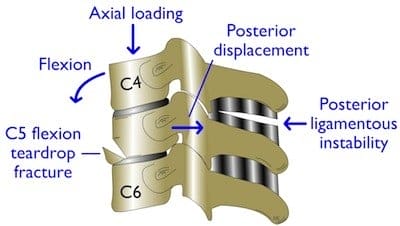
Fig9E Fx FlexTear anatomy cervical spine fracture

This is the second Paucis Verbis card on cervical spine fractures. Part 1 covered C1 and C2 fractures. This card covers the lower cervical spine fractures. These two tables are part of my chapter on “Spine and Spinal Cord Injury” in the textbook Emergency Medicine by Dr. Jim Adams (Northwestern EM Chair).

PV Card: C3-C7 Fractures and Injuries


Go to ALiEM (PV) Cards for more resources.

By |2021-10-18T09:59:44-07:00Oct 8, 2010|ALiEM Cards, Orthopedic|
Go to Top