About Michelle Lin, MD

ALiEM Founder and CEO
Professor and Digital Innovation Lab Director
Department of Emergency Medicine
University of California, San Francisco

Paucis Verbis card: When murmurs need echo evaluation

Cardiac Echocardiography

Have you been in a situation where you are the first to detect a cardiac murmur in a patient? If you are hearing it in a busy, loud Emergency Department, I find that it’s at least a grade III.

Should you order an echocardiogram for further outpatient evaluation? It depends on the grade and characteristic of the murmur, in addition to the patient’s symptoms. For instance, all diastolic murmurs require an echo. There is a useful ACC/AHA algorithm which helps you decide.

PV Card: When Murmurs Need Echocardiography Evaluation


Adapted from [1]
Go to ALiEM (PV) Cards for more resources.

Thanks to Amy Kinard, an Emergency RN and aspiring Family Nurse Practitioner, for drafting this useful Paucis Verbis card for me during her studies. Keep the great ideas coming, everyone!

Reference

  1. Bonow RO, Carabello BA, Chatterjee K, et al. 2008 Focused Update Incorporated Into the ACC/AHA 2006 Guidelines for the Management of Patients With Valvular Heart Disease: A Report of the American College of Cardiology/American Heart Association Task Force on Practice Guidelines (Writing Committee to Revise the 1998 Guidelines for the Management of Patients With Valvular Heart Disease): Endorsed by the Society of Cardiovascular Anesthesiologists, Society for Cardiovascular Angiography and Interventions, and Society of Thoracic Surgeons. Circulation. 2008;118(15):e523-e661. doi: 10.1161/circulationaha.108.190748
By |2021-10-18T10:05:29-07:00Sep 17, 2010|ALiEM Cards, Cardiovascular|

Trick of the trade: I got ultrasound gel in my eye!

OcularUltrasoundProbeBedside ultrasonography is increasingly being used in the ED to examine the eye. For instance, it can be used to detect a retinal detachment, vitreous hemorrhage, and high intracranial pressure. The technique involves applying ultrasound gel on the patient’s closed eyelid. A generous amount of gel should be used to minimize the amount of direct pressure applied on the patient’s eye by the ultrasound probe.

Sometimes, however, no matter how careful you and the patient are, some gel accidentally contacts the eye itself.

(more…)

By |2019-01-28T23:23:16-08:00Sep 15, 2010|Tricks of the Trade, Ultrasound|

New favorite blog: Wishful thinking in medical education

Wishful Thinking in Medical Education

I recently came upon this great blog by Dr. Anne Marie Cunningham, a general practitioner and Clinical Lecturer at Wales, UK. She has some really insightful posts about education, its future, and the use of new technologies. This blog has been in existence since 2008. Just as interesting are the tons of comments that she gets from a spectrum of readers. Check it out!

She is also extremely active on Twitter with over 2,000 followers (@amcunningham).

 
By |2016-11-11T18:41:00-08:00Sep 7, 2010|Medical Education, Social Media & Tech|

Article Review: Student documentation in the chart

MedicalRecord

Do you have medical students rotating in your Emergency Department? Are they allowed to document in the medical record?

Charting in the medical record is the cornerstone of clinical communication. You document your findings, your clinical reasoning, and management plan. The medical record allows communication amongst providers. Chart documentation is a crucial skill that every medical student should know, as stated by the Association of American Medical Colleges (AAMC).

(more…)

By |2016-11-11T19:00:30-08:00Sep 6, 2010|Education Articles, Medical Education|

Paucis Verbis card: Pertussis

Pertussis Organism

Is your Emergency Department administering Tdap immunization boosters instead of dT boosters? Patients with wounds are getting updated not only for tetanus and diphtheria, but also now for pertussis.

Apparently there has been sharp rise in the national incidence of pertussis (Bordetella pertussis shown in image) in 2010. The infection has been documented in both infants (underimmunized less than 3 months old) and adolescents/adults (loss of immunity after 10 years). In fact, the CDC has issued an epidemic warning in California.

How do you diagnose pertussis ? What are the classic symptoms? Better yet, how do you rule-it out clinically?

You won’t like the answer. It often presents like the common cold and clinical symptoms are minimally helpful in making the diagnosis. So, according to the American Academy of Pediatrics, you should treat anyone under the age of 3 months in whom you suspect pertussis. Complications from pertussis in infants include apnea, seizures, secondary pneumonia, and death. That means any with an innocent cough should be treated with azithromycin!

The following is a meta-analysis article from JAMA on diagnosing pertussis in adolescents and adults.

PV Card: Pertussis


Adapted from [1]
Go to ALiEM (PV) Cards for more resources.

Reference

  1. Cornia P, Hersh A, Lipsky B, Newman T, Gonzales R. Does this coughing adolescent or adult patient have pertussis? JAMA. 2010;304(8):890-896. [PubMed]
By |2021-10-18T10:07:39-07:00Sep 3, 2010|ALiEM Cards, Infectious Disease, Pulmonary|

Trick of the Trade: "Pour some sugar on me" | Reducing a rectal prolapse


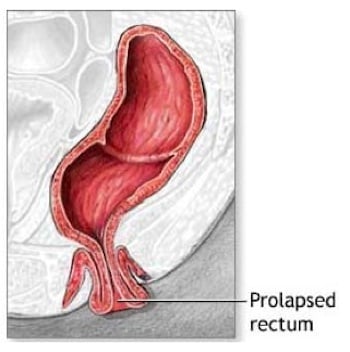
Rectal prolapse sugar for edema reductionRectal prolapses are typically caused by weakened rectal muscles, continued straining, stresses during childbirth, weakened ligaments, or neurological deficits.

How do you fix them? You can attempt manual reduction of the prolapse by using direct pressure. On the other extreme, corrective surgery can be performed from either an abdominal or perineal approach.

Trick of the Trade: Pour some sugar on it.

Def Leppard may have been right. Rectal prolapses often are associated with quite a bit of rectal mucosal edema. Sprinkle granulated sugar onto the area. Wait 15 minutes. The sugar reduces the edema by osmotically drawing out the fluid. The prolapse often reduces spontaneously or with gentle manual pressure.


References

  1. Ramanujam PS, Venkatesh KS. Management of acute incarcerated rectal prolapse. Dis Colon Rectum. Dec 1992;35(12):1154-6.
  2. Coburn WM III, Russell MA, Hofstetter WL. Sucrose as an aid to manual reduction of incarcerated rectal prolapse. Ann Emerg Med. Sep 1997;30(3):347-9.


By |2021-03-01T09:25:47-08:00Sep 1, 2010|Gastrointestinal, Tricks of the Trade|
Go to Top