Paucis Verbis card: TIMI risk score
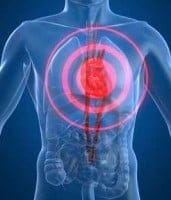 How do you risk-stratify undifferentiated chest pain patients in the Emergency Department? There are a multitude of causes for chest pain. We are always taught to think of the 5 big life-threats: ACS, PE, aortic dissection, tension pneumothorax, and pericardial tamponade.
So how do YOU risk-stratify your patients for unstable angina (UA) and non-ST elevation myocardial infarction (NSTEMI)? STEMI’s are usually obvious. UA and NSTEMIs — not so much.
Fortunately a 2000 JAMA article and a followup Academic Emergency Medicine 2006 study have solidified the TIMI risk scoring system as a reasonable risk-stratification tool for all-comer ED patients with chest pain requiring an ECG.
Generally there is an upslope in risk at a TIMI score of 3 and greater.
PV Card: TIMI Risk Score
Adapted from [1, 2]
Go to ALiEM (PV) Cards for more resources.
References
- Pollack C, Sites F, Shofer F, Sease K, Hollander J. Application of the TIMI risk score for unstable angina and non-ST elevation acute coronary syndrome to an unselected emergency department chest pain population. Acad Emerg Med. 2006;13(1):13-18. [PubMed]
- Antman E, Cohen M, Bernink P, et al. The TIMI risk score for unstable angina/non-ST elevation MI: A method for prognostication and therapeutic decision making. JAMA. 2000;284(7):835-842. [PubMed]