The Discharge Severity Index: Early Research on ED Readmission Risk Assessment

discharge severity index DSI

From Triage to Discharge: As an emergency medicine clinician, you’ve likely become comfortable using the Emergency Severity Index (ESI), a critical tool helping triage patients entering the ED. But what happens when these patients leave your care? How can we anticipate who might need extra support to avoid readmission?

Let’s discuss why ED discharge risk stratification matters, the landscape of existing tools, and introduce a new effort called the Discharge Severity Index (DSI), in the context of this evolving conversation.

History of Emergency Severity Index (ESI)

As emergency medicine clinicians, we’ve all become comfortable with using the ESI. It’s simple, intuitive, and has revolutionized triage since its introduction in the late 1990s. ESI stratifies our incoming patients quickly and reliably based on anticipated resource needs and hospitalization risks, making it easy to decide who gets seen first. Over the years, ESI has gone through multiple iterations to better reflect evolving clinical priorities, workflows, and patient populations [1–4]. It became a living tool that is as dynamic and adaptive as emergency care itself.

However, as powerful as ESI is, it addresses only half the equation: what happens when patients arrive. But what about when they leave?

Discharge: More than a Binary Decision

Currently, ED discharge is largely treated as a binary decision—admit or discharge. But think about admissions: we never treat admissions as simple “yes/no” decisions. Patients can go to observation, a floor bed, step-down units, or the ICU. Each has varying resource needs and follow-up intensities. So why don’t we apply this nuanced thinking to discharge?

ED discharges aren’t straightforward. Almost 14% of patients discharged from EDs return within 30 days, often due to issues that could be preventable with better follow-up [5]. Many face barriers like misunderstanding discharge instructions, inadequate social support, and difficulty accessing outpatient care. We have powerful new follow-up tools available (e.g., nursing callback programs, telehealth, remote patient monitoring) but we often lack a clear, systematic way of figuring out which patients truly need them.

Existing Tools and Their Limitations

Multiple scoring systems have attempted to predict post-discharge adverse outcomes. Some prominent examples include:

  • LACE Score:
    • Length of stay
    • Acuity of admission
    • Comorbidities
    • Emergency visits
  • HOSPITAL Score:
    • Hemoglobin level
    • Oncology diagnosis
    • Sodium level
    • Procedure during hospitalization
    • Index admission type
    • Admissions in previous year
    • Length of stay

Yet, many of these tools weren’t specifically designed for the ED population. Our recent scoping review highlighted significant variability, limited ED-specific validation, and complexity that can hinder practical use [6].

Introducing the Discharge Severity Index (DSI): An Early-Stage Tool

Recognizing this gap, our team developed the DSI, an initial attempt at ED-specific discharge risk stratification. The idea behind DSI is to use straightforward, quickly accessible ED data points to identify patients who might benefit from enhanced follow-up.

Our single-center retrospective study analyzed ED visits, dividing the data into the derivation (75%) and validation (25%) cohorts [7]. We attempted to stratify risk based on the DSI score and measuring their 7-day readmission rates.

Our DSI score was calculated using 5 key clinical factors (0=lowest risk, 7=highest risk):

  1. Age > 65 years = 1 point
  2. Heart rate at discharge > 100 bpm = 1 point
  3. Oxygen saturation at discharge < 96% = 1 point
  4. Length of ED stay > 3 hours = 2 points
  5. Active medications > 5 during hospital stay = 2 points

Here’s what we found:

DSI LevelScore7-day Approximate Readmission Risk
1 (highest risk)6-75%
254%
33–43%
41–21%
5 (lowest risk)0<0.5%

A patient scoring a DSI 1 might benefit from immediate follow-up with telehealth, home health visits, and/or increased outpatient support. Conversely, a DSI 4 or 5 patient might safely manage standard outpatient care with minimal risk.

How is DSI Different Existing Scoring Systems?

Unlike the LACE or HOSPITAL scores, the DSI was built specifically for the ED context. It uses data readily available at discharge, allowing rapid identification of patients who may require more intensive post-discharge follow-up. It’s meant for nursing or automated tools to assign this to the patient, without requiring more provider resources.

But, let’s be clear: the DSI is not perfect. We intentionally started simple (similar to how ESI began) to get people thinking about stratifying discharge risks. For instance:

  • Length of Stay (LOS): Right now, LOS includes waiting room times, boarding delays, and other systems-level issues, making it an imperfect measure of medical complexity.
  • Vital Signs at Discharge Only: Using only discharge vitals doesn’t account for patients who had unstable earlier vitals during their ED stay.
  • Missing Comorbidities: The current DSI doesn’t explicitly factor in comorbidities or past medical history, which we know affect patient outcomes.

Why This Matters to You

It’s important to grasp the complexity behind discharge decisions just as clearly as they understand triage. Discharge isn’t simply sending patients home; it’s anticipating what happens next and appropriately preparing patients to succeed.

Implementing structured discharge risk stratification not only supports better clinical outcomes but also helps teach clinicians to think about care beyond the ED walls. With more accurate identification of high-risk patients, residents can be better prepared to integrate innovative follow-up resources into patient care.

Where do we go from here?

The DSI represents an early, evolving concept. We don’t expect it to be adopted widely and imminently. Rather, we hope it sparks a broader conversation similar to the early years of the ESI. ESI began as a simple triage tool and matured through iterative development, field testing, and adaptation across varied ED environments. It became more robust, nuanced, and integrated into daily clinical operations over time. We envision a similar trajectory for the DSI.

Future iterations of the DSI will undoubtedly incorporate additional clinical variables, operational data, and even social determinants of health. But before we get there, the next step is clear: we must operationalize the DSI and test it in multiple real-world settings. Its utility must be validated not just in theory or retrospective data, but in the dynamic, complex ecosystem of actual emergency departments.

We encourage EM educators and residency programs to join us in refining the conversation about ED discharge stratification.

Whether it’s integrating DSI into discharge planning discussions, piloting it during teaching rounds, or evaluating it in post-discharge follow-up workflows, there is now an opportunity to take this idea from concept to practice for the benefit of our patients.

Let’s build upon this first step, creating tools that are practical, teachable, and clinically meaningful. Together, we can ensure that the decision to discharge is just as thoughtful, nuanced, and patient-focused as the decision to admit.

References

  1. Wuerz RC, Milne LW, Eitel DR, Travers D, Gilboy N. Reliability and validity of a new five-level triage instrument. Acad Emerg Med 2000;7(3):236–42.
  2. Wuerz RC, Travers D, Gilboy N, Eitel DR, Rosenau A, Yazhari R. Implementation and refinement of the emergency severity index. Acad Emerg Med 2001;8(2):170–6.
  3. Eitel DR, Travers DA, Rosenau AM, Gilboy N, Wuerz RC. The emergency severity index triage algorithm version 2 is reliable and valid. Acad Emerg Med 2003;10(10):1070–80.
  4. Elshove-Bolk J, Mencl F, van Rijswijck BTF, Simons MP, van Vugt AB. Validation of the Emergency Severity Index (ESI) in self-referred patients in a European emergency department. Emerg Med J 2007;24(3):170–4.
  5. Characteristics of 30-Day All-Cause Hospital Readmissions, 2016-2020 [Internet]. [cited 2025 Jul 7].
  6. Jaffe TA, Wang D, Loveless B, et al. A Scoping Review of Emergency Department Discharge Risk Stratification. West J Emerg Med 2021;22(6):1218–26. PMID 34787544
  7. Kijpaisalratana N, El Ariss AB, Balk A, et al. Development and validation of the discharge severity index for post-emergency department hospital readmissions. Am J Emerg Med. 2025;94:125-132. doi:10.1016/j.ajem.2025.04.045. PMID 40288325
By |2025-08-09T13:19:36-07:00Aug 14, 2025|Administrative, Beyond the Abstract|

ALiEM AIR Series | Vascular Module (2025)

ALiEM AIR Certified seal and Vascular 2025 module shield badge


Welcome to the AIR Vascular Module! After carefully reviewing all relevant posts in the past 12 months from the top 50 sites of the Digital Impact Factor [1], the ALiEM AIR Team is proud to present the highest quality online content related to related to HEENT emergencies in the Emergency Department. 8 blog posts met our standard of online excellence and were approved for residency training by the AIR Series Board. More specifically, we identified 3 AIR and 5 Honorable Mentions. We recommend programs give 4 hours of III credit for this module.


AIR Stamp of Approval and Honorable Mentions


In an effort to truly emphasize the highest quality posts, we have 2 subsets of recommended resources. The AIR stamp of approval is awarded only to posts scoring above a strict scoring cut-off of ≥30 points (out of 35 total), based on our scoring instrument. The other subset is for “Honorable Mention” posts. These posts have been flagged by and agreed upon by AIR Board members as worthwhile, accurate, unbiased, and appropriately referenced despite an average score.


Want asynchronous Individualized Interactive Instruction (III) credit?
Take the AIR quiz at ALiEMU. Free, 1-time login required.

Take the Vascular Module →

Highlighted Quality Posts: Vascular 2025


SiteArticleAuthorDateLabel
EMCritPulmonary embolism diagnosis and treatment of low-risk PEDr. Josh FarkasMarch 5, 2024

AIR

EMCritAortic dissectionDr. Josh FarkasSeptember 28, 2024AIR
EMDocsAcute chest syndromeDr. Rachel BridwellJune 27, 2024AIR
EMCritApproach to chest painDr. Josh FarkasJanuary 15, 2024HM
Rebel EMDon’t forget the IO in the critically ill patientDr. Kristen WileyApril 29, 2024HM
RCEMlearningCervical artery dissectionDr. Jason LouisJanuary 22, 2024HM
CanadiEMIs IO cannulation an underutilized method of emergency vascular accessDr. Ming LiOctober 15, 2024HM
PedEM MorselsKounis syndromeDr. Christyn MagillMarch 22, 2023HM


(AIR = Approved Instructional Resource; HM = Honorable Mention)


If you have any questions or comments on the AIR series, or this AIR module, please contact us!

Reference

    1. Lin M, Phipps M, Chan TM, et al. Digital Impact Factor: A Quality Index for Educational Blogs and Podcasts in Emergency Medicine and Critical Care. Ann Emerg Med. 2023;82(1):55-65. doi:10.1016/j.annemergmed.2023.02.011, PMID 36967275


When Research Meets Social Media Expertise: Lessons from the PECARN-ALiEM Partnership

PECARN - ALiEM partnership twitter X
From Pipe Dream to Proven Strategy: How a 4-year partnership between PECARN and ALiEM created a replicable framework for evidence-based research dissemination

Sometimes the best collaborations begin with simple questions. Following Dr. Nathan Kuppermann’s grand rounds presentation in 2018, I had the opportunity to discuss an idea with him as PECARN’s Steering Committee Chair: might there be untapped potential in using social media platforms like Twitter to amplify PECARN’s research impact? Five years later, that initial conversation has grown into a reality with a systematic approach and measurable outcomes.

Social media is not just about fads and marketing. In fact, it represents the foreseeable future for information dissemination, even in scientific research, because it meets learners and providers where they already are. Rather than hoping clinicians would stumble upon publications in traditional journals, we should actively bring the research to the platforms they frequently check.

Why Organizational Social Media Requires Strategic Planning

Organizational social media for research dissemination can’t just “do social media.” This endeavor requires fundamentally different approaches than personal academic accounts. While individual faculty might share insights casually or build personal brands, research organizations need systematic frameworks that ensure consistency, maintain academic rigor, and deliver measurable impact.

The critical distinction: institutional social media isn’t about intuition or viral content—it demands rigorous planning, dedicated resources, and iterative optimization based on analytics. Just as we wouldn’t launch a research study without proper methodology and oversight, we shouldn’t approach organizational research dissemination without strategic frameworks and quality control systems.

The Partnership Model: When Research Meets Social Media Expertise

Our approach began with recognizing a fundamental truth: most research organizations lack the specialized expertise needed for effective social media presence. Rather than building these capabilities from scratch, PECARN partnered with ALiEM, leveraging our existing social media infrastructure and experience. What started as an experimental collaboration became a four-year case study, which we recently published in JMIR Formative Research [1]. We share our processes, outcomes, and lessons learned to provide a replicable framework and roadmap for other research organizations considering similar initiatives on Twitter/X (or alternative social media platforms).

The Foundation: Building Sustainable Infrastructure

Organizational Inputs:

  • Research Organization (PECARN) – content expertise and credibility
  • Social Media Experts (ALiEM) – Twitter/X platform knowledge and audience understanding
  • Funding & Leadership Support – executive champions and resource allocation
  • Technical Infrastructure – analytics tools, scheduling platforms, communication systems

The 5-Person Dream Team:

  • Content Writers (2): Physician-researchers who understand both clinical context and platform constraints
  • Peer Reviewers (2): Quality control experts ensuring academic rigor
  • Account Monitors (2): Daily engagement specialists building community
  • Analytics Manager (1): Data scientist tracking performance and optimization
  • Graphic Designer (1): Visual content specialist (added after 2 years based on data)

We created 2-person teams for key roles to ensure sustainability and backup coverage. Faculty have competing priorities, and redundancy ensures consistent output despite scheduling challenges.

pecarn ALiEM twitter X partnership research dissemination architect

What the Numbers Taught Us

The key to our success wasn’t guesswork—it was rigorous analytics tracking and iterative evidence-based improvement. Over the 4 years (2020-23), 569 tweets were published, 99 PECARN journal publications were featured, and we grew an audience of over 2,000 followers.

Tweet-Level Analytics: The Strategy Elements That Actually Work

Through multiple linear regression analysis, we identified 3 characteristics with statistically significant impact on both impressions and engagement:

  1. Polls (β = 0.278): Our most impactful discovery was that interactive polls became our strongest engagement driver. we used polls to introduce clinical scenarios related to featured research, allowing audiences to test their knowledge before revealing study findings.
  2. Graphics (β = 0.195): Professional graphics significantly boosted engagement, leading us to add a dedicated graphic designer to the team after 2 years. This wasn’t cosmetic—it was a data-driven personnel decision.
  3. URL Links (β = 0.173): Links to full articles didn’t just drive traffic; they contributed to increased Altmetric Attention Scores, providing measurable academic impact beyond social media metrics.

Surprisingly, emojis showed a negative correlation with engagement in our academic audience. We hypothesize that these emojis may have not resonated with our academic and healthcare professions audience— a reminder that strategies must be tailored to the desired audience.

research dissemination architect pecarn ALiEM twitter X

Lessons Learned for Building Research Dissemination Architecture

1. Analytics Are Non-Negotiable

Don’t guess about what works. Track impressions, engagement, click-through rates, and downstream academic metrics. What gets measured gets optimized.

2. Quality Control Maintains Credibility

Our peer review process for each tweet provided academic rigor for accuracy and quality, treating social media content with the same methodological care we apply to research publications. This approach strengthened PECARN’s digital credibility and built trustworthiness with our professional audience who expect evidence-based content even in 280 characters.

3. Team Redundancy Ensures Sustainability

Faculty have complex schedules. Build systems that work despite individual availability challenges.

4. Visual Content Isn’t Optional

Professional graphics aren’t “nice to have”—they’re proven engagement drivers in the era of information overload. They are worth the investment.

New Academic Role: Research Dissemination Architect

What began as grassroots FOAM (Free Open Access Medical education) with individual bloggers and social media educators has evolved into something more substantial: the emergence of the “Research Dissemination Architect” as a legitimate, potentially funded position within academic institutions and research organizations.

This represents a fundamental shift in how we think about knowledge translation careers. We’re no longer talking about faculty “doing social media on the side”—we’re talking about dedicated professional positions with specific expertise, measurable outcomes, and institutional recognition. Our recent publication in JMIR Formative Research documents our journey in this evolution. The ALiEM-PECARN partnership wasn’t just about Twitter success; it was about demonstrating that research dissemination can be a systematic, professional discipline worthy of institutional investment and academic recognition.

Conclusion

The PECARN-ALiEM partnership demonstrates that academic rigor and social media success aren’t mutually exclusive—they’re synergistic when approached systematically. Through this collaboration, we’ve contributed to establishing systematic approaches to research dissemination as a pathway toward accelerated knowledge translation.

Research Dissemination Architects represent an emerging career pathway that bridges traditional academic expertise with digital communication skills. As medical education continues evolving toward digital-first approaches, faculty who develop competency in evidence-based social media are positioning themselves at the forefront of this evolution. The framework we’ve developed offers one approach to professional research dissemination. As more organizations experiment with similar roles, we’ll undoubtedly see diverse models emerge, each contributing to our collective understanding of effective academic digital scholarship.

We hope our experience can inform others exploring this space. Whether you adapt our specific approach or develop entirely different methods, the opportunity to advance how research reaches its intended audiences has never been greater.

Reference

  1. Hooley GC, Magana JN, Woods JM, et al. Research Dissemination Strategies in Pediatric Emergency Care Using a Professional Twitter (X) Account: A Mixed Methods Developmental Study of a Logic Model Framework. JMIR Form Res. 2025;9:e59481. Published 2025 Jun 24. doi:10.2196/59481. PMID 40554778

PEM POCUS Series: Pediatric Cardiac

PEM POCUS pediatric cardiac

Read this tutorial on the use of point of care ultrasonography (POCUS) for pediatric cardiac evaluation. Then test your skills on the ALiEMU course page to receive your PEM POCUS badge worth 2 hours of ALiEMU course credit.

Module Goals

  1. List the indications and limitations of pediatric cardiac point-of-care ultrasound (POCUS)
  2. Describe the technique for performing cardiac POCUS
  3. Identify anatomical landmarks accurately on cardiac POCUS
  4. Interpret abnormal findings on cardiac POCUS
  5. Describe the basic literature behind pediatric cardiac POCUS

Case Introduction: Child with respiratory distress

You are in the emergency department evaluating a 2-month-old full-term male infant presenting with worsening respiratory distress over the past few days. He has had no fever, rhinorrhea, congestion, or cough. He is feeding poorly and has only had two wet diapers in the past 24 hours.
On arrival, his vital signs are:

Vital SignFinding
Temperature36.4 C
Heart rate190 bpm
Blood pressure97/63
Respiratory pate62
Oxygen saturation (room air)95%

Exam

He is ill-appearing. The cardiac exam is notable for tachycardia and 2+ femoral pulses. There is no appreciable murmur. Pulmonary exam shows tachypnea, clear lungs, and mildly increased work of breathing. The abdomen is mildly distended with a liver palpable 2 cm below the costal margin. Capillary refill is 2 seconds.

Diagnostics and Management

You order a chest x-ray and labs, and order blood and urine cultures. You start a fluid bolus and empiric antibiotics. While waiting for your initial work-up, you perform a cardiac POCUS.

Cardiac POCUS can help providers rapidly identify significant cardiac pathology and drastically change management. The major POCUS questions are qualitative evaluation of:

  1. Ventricular function
  2. Pericardial effusion
  3. Relative chamber sizes
  4. Fluid tolerance (or volume status)

In the context of cardiac arrest, POCUS can assess the presence of cardiac activity. Additionally, performing repeat cardiac POCUS exams can help providers gauge response to interventions.

Limitations

Cardiac POCUS is NOT a replacement for comprehensive echocardiography. A number of applications are beyond the scope of cardiac POCUS and should be evaluated by comprehensive echocardiography, including:

  • Valvular pathology
  • Structural abnormalities
  • Congenital heart defects
  • Quantitative measurements (i.e., quantitative ventricular function, flow measurements)

Like other POCUS applications, sonographer skill and experience can influence the sensitivity/specificity of the exam to detect abnormalities.


  • Supine positioning as tolerated. Raise head of bed if needed for comfort.
    • Left lateral decubitus position can improve the A4CH and parasternal views.

Figure 1. Phased array ultrasound probe

  • Phased array probe: Smaller footprint for intercostal windows and useful for moving objects.
  • Cardiac setting on the machine (if available). Can improve temporal resolution of the images.
  • Tips for young children:
    • If fearful of staff, consider seating the child in the guardian’s lap.
    • Distract the child with a video or toy.
    • Obtain the subxiphoid view last (as this sometimes requires pressure).
    • Warmed gel can be very helpful!

A cardiac POCUS includes five standard views of the heart and inferior vena cava (below). Sonographers should recognize each of the ideal views and limitations of suboptimal views.

  • Parasternal long axis (PSLA or PLAX)
  • Parasternal short axis (PSSA or PSAX)
  • Apical four chamber view (A4CH)
  • Subxiphoid view (SUBX)
  • Inferior vena cava (IVC)

A note on probe marker orientation:

Probe marker orientation varies across pediatric disciplines, including cardiology, pediatric emergency medicine, critical care, and neonatology. This especially differs for the parasternal long axis view (discussed in more detail below). This may result in an image that appears “flipped,” or rotated 180 degrees, on the screen. Practice obtaining the views in your local environment, but also gain comfort interpreting a flipped image.

(Although all views can be used to evaluate gross ventricular function and for pericardial effusion, highlights of each view are listed below.)

Highlights of View

  • Excellent overall assessment
  • Gross LV function
  • Pericardial effusion
  • General chamber sizes

Probe Placement

Figure 2 PSLA probe placement

Figure 2. PSLA probe placement with phased array probe. (Image from Dr. Margaret Lin-Martore)

  1. Place the probe to the left of the sternum, near the 3rd-4th intercostal space.
  2. Point the probe marker towards the patient’s left hip.
  3. Slide the probe up and down intercostal spaces to obtain an ideal window.
  4. Make subtle adjustments to optimize the view.

In this image and the ones below, note that the probe is larger than a typical phased-array probe (Figure 1).

Note: The direction of the probe marker, especially for the parasternal long axis, may vary across specialties and institutions. Some specialties point the probe marker towards the left hip and others towards the right shoulder. This may result in an image that appears “flipped” (or rotated 180 degrees) on the screen.

Normal View and Landmarks

normal pediatric cardiac POCUS PSLA view

Video 1: Normal PSLA cardiac view (Image from thepocusatlas.com. Images: Dr. Lindsay Davis, Dr. Hanna Kopinski. Image Editing: Michael Amador and Dr. Matthew Riscinti)

Color labels in video:

  • Right ventricle (green)
  • Left ventricle (violet)
  • Left atrium (teal)
  • Mitral valve (yellow-brown), visualize both leaflets with the anterior leaflet centered and hitting or nearly hitting the septum
  • Aortic valve (pink)
  • Descending aorta (black circle behind pericardium)
  • Pericardium (pink), note tapering anterior to the descending aorta

Troubleshooting and Tips

  • If the left ventricle is oblique (and not horizontal across the screen), slide up a rib space.
  • The patient can hold breath in exhalation to decrease lung artifact.
  • Ensure adequate depth to see the descending aorta.
  • Try subtle micro-adjustments (fan and rotate the probe until you obtain the ideal image).
  • If the lung is obscuring the view, try rolling the patient into the left lateral decubitus position.

Normal Ultrasound Video (PSLA)

Video 2. Normal PSLA view

Highlights of View

  • Gross LV function
  • Interventricular septum position

Probe Placement

PSSA probe placement

Figure 3. Probe placement for PSSA. From the PLSA view, center the left ventricle (LV) on the screen then rotate the probe 90° clockwise towards the right hip.


Normal View and Landmarks

video normal PSSA view

Video 3: Normal PSSA view (Image from thepocusatlas.com – Dr. Lindsay Davis, Dr. Hanna Kopinski. Image editing: Michael Amador and Dr. Matthew Riscinti.)


Color labels in video:

  • Left ventricle (red)
  • Mitral valve (blue)
  • Right ventricle (top of the screen)

The ideal view is at the mid-papillary level, meaning both papillary muscles are visible in the LV at approximately 4 and 8 o’clock.  Note that this video starts with the “fish mouth” view of the mitral valve and ends with the mid-papillary view.

Additional views: Fanning through the PSSA view, starting at the apex → mid-papillary view → “fish mouth” view of the mitral valve → “Mercedes-Benz” view of the aortic valve (video 3A).

 Video 3a. Troubleshooting the PSSA view with the “PSSA sweep”


Troubleshooting and Tips

  • If you see the “fish mouth” view of the mitral valve, fan the probe towards the apex to visualize the papillary muscles.
  • If you only see one papillary muscle, anchor that side of the probe and move the other side of the probe back-and-forth (like a windshield wiper) until you find the second papillary muscle.
Video 3b. Troubleshooting the PSSA View -The Windshield Wiper:
If you cannot find the view, try sliding the probe towards the apex. Alternatively, you can return to the PSLA view and rotate from there. Rock the probe to center the LV on the screen.


Video 3c. Troubleshooting the PSSA view: Rocking the probe

Normal Ultrasound Video (PSSA)

Video 4. Normal PSSA view

Highlights of View

  • Gross chamber sizes
  • Interventricular septum position

Additional Uses:

  • Global assessment of function
  • Another view for pericardial effusion
  • Can be useful in cardiac arrest during active compressions (though SUBX most commonly used)
  • Pro tip: often helpful for advanced applications (calculations and evaluation for valvular dysfunction)

Probe Placement

Probe placement for apical 4-chamber view (A4CH)

Figure 4. Probe placement for apical 4-chamber view (A4CH). Image from Dr. Margaret Lin-Martore.

  1. From the PSSA view, slide the probe towards the apex of the heart, keeping the probe marker towards the patient’s right hip.
  2. Flatten the probe to point it towards the right shoulder.
  3. For patients with breast tissue, place the probe near the inframammary line.

Normal View and Landmarks

Normal A4CH view

Video 5: Normal A4CH view (Image from thepocusatlas.com. Images: Dr. Lindsay Davis, Dr. Hanna Kopinski. Image Editing: Michael Amador and Dr. Matthew Riscinti.)

Color labels in video:

  • Left ventricle, left atrium, mitral valve (blue, screen right)
  • Right ventricle, right atrium, tricuspid valve (red, screen left)
  • A5CH view includes the aortic outflow tract (video 5 above initially shows the A5CH view before becoming the A4CH view)
Normal A4CH view with labels

Figure 5. Normal A4CH view with labels

Troubleshooting and Tips

Ventricle differentiation: Regardless of probe marker orientation, you can still differentiate the 2 ventricles in a number of ways:

  1. The tricuspid valve inserts more apically (towards the top of the screen) than the mitral valve.
  2. The LV connects to the aortic outflow tract.
  3. The LV occupies the most apical point of the heart.
  4. The RV contains the moderator band near the apex.
Figure 5 Probe placement A4CH left lateral decub

Figure 6. Left lateral decubitus positioning for A4CH probe positioning

Optimize views:

  1. Roll the patient onto their left side (left lateral decubitus) to bring the heart towards the chest wall and decrease lung artifact (figure 5). This maneuver improves PSLA and PSSA views too, but can be essential to acquire the A4CH view.
  2. If the heart appears oblique, you are likely too medial.
    1. Slide laterally.
    2. Flatten the probe.
    3. Point the probe towards the right shoulder.

Normal Ultrasound Video

Video 6. Normal apical 4-chamber (A4CH) views

Highlights of View

  • Pericardial effusion (most sensitive view)
  • Cardiac arrest (most commonly used)

Probe Placement

Figure 6 subxiphoid view probe

Figure 7. Subxiphoid view probe placement (Image from Dr. Margaret Lin-Martore)

  1. With the probe marker pointing to the patient’s right, place the probe inferior to the xiphoid process.
  2. Switch to an overhand grip, flatten the probe, apply adequate pressure, and point towards the patient’s left shoulder.

Normal View and Landmarks

Video 7 SUBX view normal

Video 7. Normal subxiphoid view (Image from thepocusatlas.com by Dr. Lindsay Davis, Dr. Hanna Kopinski. Image Editing: Michael Amador and Dr. Matthew Riscinti)

Anatomy in video:

  • Liver (top of the screen)
  • Left ventricle and atrium (red)
  • Right ventricle and atrium (blue) (RV = most anterior chamber)

Troubleshooting and Tips

  • Position the patient supine if possible.
  • Have the patient bend knees to relax abdominal muscles.
  • Have the patient hold breath in inhalation to move the heart inferiorly.
  • Slowly apply moderate pressure to displace bowel gas. Sometimes children cannot tolerate the pressure needed for an adequate view.
  • Using the liver as an acoustic window, try sliding the probe to the patient’s right and pointing the probe towards the patient’s heart through the liver.

Pro tip: Sweeping through this view can allow further assessment for pericardial effusions

Normal Ultrasound Video

 Video 8. Normal subxiphoid view

Highlights of View

  • Rough estimate of fluid tolerance / volume status
  • Adjunct to overall hemodynamic assessment

Probe Placement

Figure 7. Probe placement for IVC transverse view

Figure 8. Probe placement for IVC transverse view. Tilt the probe perpendicular to the patient in a similar location as the subxiphoid view with probe marker to patient’s right. (Image from Dr. Margaret Lin-Martore)

Figure 8. Probe placement IVC sagittal

Figure 9. Probe placement for IVC sagittal view. Center the IVC on the screen, then rotate the probe 90 degrees with probe marker to patient’s head. Slide the probe cephalic until you see the IVC entering the right atrium.  (Image from Dr. Margaret Lin-Martore)

Notes:

  • It is important to evaluate the IVC at its maximum diameter. If you are off-axis in this view, the IVC may appear artificially narrower.
  • Practice obtaining both views, as occasionally it can be difficult to obtain one of the two views depending on patient comfort and the presence of bowel gas.

Normal View and Landmarks

Figure 9. IVC transvere view with anatomy labels

Figure 10. IVC transverse view with anatomy labels. Locate the spinal column (shadowing posteriorly). This shadowing can be seen even in a patient with a larger body habitus. Just anterior to the spinal column, locate the IVC (screen left, patient right) and abdominal aorta (screen right, patient left).

Figure 10 IVC sagittal view labelled

Figure 11. IVC sagittal view with anatomy labels. Visualize the IVC entering into the right atrium (note the hepatic vein draining into the IVC). Examine for collapsibility just distal to the hepatic vein.

Measurements

Various IVC measurements exist, including IVC collapsibility index and IVC-aorta ratio.

1. IVC Collapsibility Index

In the sagittal plane at the level of the IVC just distal to the entry of the hepatic vein, measure the maximum and minimum IVC diameters. A collapsibility index of >50% may represent volume responsiveness.

  • IVC collapsibility index = [Max IVC diameter – Min IVC diameter] / Max IVC diameter

2. IVC-Aorta Ratio

In the transverse plane near the entry of the renal vein, measure the maximum IVC and aorta diameters. Numerous cutoffs for IVC/Ao ratio exist, and can vary by patient age. An IVC/Ao ratio < 0.8 may be suggestive of dehydration.

  • IVC/Ao ratios vary by age, ranging from 0.83 (young infants) to 1.22 (older children) [1].

Please see Facts and Literature Review section for more information on IVC and volume status.

Troubleshooting and Tips

Transverse

  • Many structures can be mistaken for the IVC, including the aorta, portal vessels, and gallbladder. Locate the IVC using the spinal column (shadowing deep on the screen). In a patient without situs inversus, the IVC will be located on screen left (patient right), and the aorta is located on the other side. Both vessels may appear pulsatile, and the IVC shape can change depending on a variety of hemodynamic factors.

Sagittal

  • A common mistake is misidentifying the aorta as the IVC. The aorta is located more to the patient’s left and dives more posteriorly as it crosses the diaphragm. “Prove” that the vessel is the IVC by showing:
    1. The IVC entering the right atrium
    2. The hepatic vein draining into the IVC
  • Because the IVC is a cylindrical structure, it can look like it is completely collapsing if you are located on the edge of the vessel.

Serial IVC Exams:

  • Repeating the IVC exam after interventions (like giving a fluid bolus) can be more helpful than evaluating the IVC at a single point in time.

Normal Ultrasound Video

Video 9: Inferior vena cava (transverse view)
Video 10. Inferior vena cava (sagittal view)

Cardiac POCUS is used primarily to detect significant abnormalities, including:

  1. Gross ventricular dysfunction
  2. Pericardial effusion +/- cardiac tamponade
  3. Gross chamber dilation
  4. Completely collapsed or plethoric IVC

Left Ventricular Systolic Dysfunction

  •     Goal is to identify clinically significant moderate/severe dysfunction.
  •     Qualitative assessment is sufficient, and pattern recognition is important!
  •     As with any diagnostic test, clinical correlation is key
  •     Views: Best assessed on PSLA and PSSA
  •     PSLA:
    • Qualitative assessment of overall “squeeze,” including wall thickening and decrease in chamber size
    • Anterior leaflet of mitral valve excursion: The anterior leaflet should touch or nearly touch the interventricular septum during diastole. Adult POCUS commonly measures this distance, known as EPSS (E-point septal separation); however, age-specific norms are not yet defined in children.
      • Pitfall – An oblique view can underestimate mitral valve movement.
  •     PSSA: 
    • Qualitative assessment of overall “squeeze.”
    • The LV chamber diameter should shorten by ~1/3 and have uniform concentric contraction.

Note: Lung POCUS views may show diffuse B-lines. These vertical white lines originating from the pleura can suggest pulmonary edema in the presence of heart failure. Please see ALiEM PEM POCUS Series: Pediatric Lung Ultrasound for more information.

Ultrasound videos of severe LV dysfunction

Video 11. PSLA view – Severe LV dysfunction in a teenager with new diagnosis of cardiomyopathy. Note the poor overall squeeze, poor excursion of the anterior leaflet of the mitral valve, and lack of thickening of the LV free wall.


Video 12. PSSA view in the same patient – note the poor concentric squeeze of the left ventricle


Video 13. PSLA view – Severe LV dysfunction in a young infant presenting with failure to thrive and ALCAPA (anomalous left coronary artery from the pulmonary artery). Again note the poor overall squeeze, poor excursion of the anterior leaflet of the mitral valve, lack of thickening of the LV free wall, and dilation of the LV.


Video 14. PSSA view – Again note the poor concentric squeeze of the LV and the LV dilation.
  • Views: An effusion should be visible on multiple views.
  • SUBX view:
    • Most sensitive view
    • Pericardial effusion is located between the liver and the right ventricle.
  • PSLA view:
    • Both pericardial and pleural effusions can be seen posterior to the heart.
    • Pericardial effusions track anterior to the descending aorta.
    • Pleural effusions stop posterolateral to the descending aorta and do not cross anteriorly.

Figure 12. Pericardial and pleural effusion on PSLA view

Beware of 2 potential false positives when evaluating for pericardial effusion.

1. Pericardial fat pad

In the PSLA view, this looks like a hypoechoic rim anterior to the heart (closest to probe marker) but NOT posterior to the heart. Typically a fat pad will move in sync with the heart while an effusion does not.

Video 15. Pericardial fat pad and effusion (From thepocusatlas.com by Dr. Dimitri Livshits; Dr. Jane Belyavskaya; Dr. Chris Hanuscin)

2. “Myocardial dropout”

Myocardial dropout occurs when ultrasound waves strike cardiac muscle fibers at specific angles, causing alterations in echogenicity. This acoustic phenomenon can result in the myocardium appearing as a hypoechoic rim. It’s important to note that this rim represents actual myocardial tissue rather than an external collection such as a pericardial effusion. By adjusting the probe angle during the examination, the echogenicity of the myocardium will correspondingly shift, confirming that the hypoechoic area is indeed myocardial tissue rather than a fluid collection (e.g., pericardial effusion).

Figure 13. “Myocardial dropout” effect with asterisks marking drop out area – Changes in echogenicity of the myocardium can sometimes look like a hypoechoic rim. This rim is within the myocardium and not external to the heart as expected for a pericardial effusion. (Image: Dr. Margaret Lin-Martore)

Ultrasound videos of pericardial effusion

Video 16. Pericardial effusion (PSLA view) – The anechoic pericardial effusion is anterior to the heart and also posterior to the heart, tapering just in front of the descending aorta.
Video 17. Pericardial effusion (PSSA view) – Note the circumferential pericardial effusion. A pathologic pericardial effusion should be visualized in multiple views.
Video 18. Pericardial effusion (A4CH view) – Note the pericardial effusion at the apex, right, and left sides of the heart.
Video 19. Pericardial effusion (SUBX view) – Note the pericardial effusion between the liver and the heart. This effusion also surrounds the apex of the heart. Remember that the subxiphoid view is the most sensitive view for detecting pericardial effusion.
Video 20. Trace pericardial effusion (PSLA view) – There is a trace pericardial effusion between the LV free wall and the pericardium. A trace effusion will disappear during part of the cardiac cycle.
Video 21. Pericardial and plerual effusions (PSLA view) – Note both the pericardial and pleural effusions. The pericardial effusion tapers anteriorly to the descending aorta. The pleural effusion stops laterally / posteriorly to the descending aorta.

Definitive diagnosis of cardiac tamponade is beyond the scope of this module, and immediate specialist consultation is recommended if there is clinical concern. However, some concerning ultrasound features would include:

Features:

  1. Circumferential pericardial effusion
  2. Right atrial systolic collapse (earliest sign)
  3. Right ventricular diastolic collapse (*most specific*)
  4. Plethoric IVC

Views:

  • Any view can be used, but the A4CH view shows right-sided structures best.
Video 22. Cardiac tamponade (A4CH view)

Right ventricular function assessment is beyond the scope of this module and typically cardiac POCUS is used as a general assessment. If there is clinical concern for this, specialist consultation is recommended.

Etiologies include pulmonary hypertension, pulmonary embolism, and right heart failure.

  • Increased RV size can suggest increased right heart pressures.
  • Views: Best assessed on A4CH and PSSA.
  • A4CH:
    • A dilated RV will be equal to or larger than the LV
    • Increased RV pressures cause flattening or bowing of the interventricular septum.
  • PSSA view:
    • Increased RV pressures cause flattening of the interventricular septum.
    • “D-sign” = The LV looks like the letter “D” from septal flattening

Figure 13. The D-sign (Image from thepocusatlas.com by Drs. Ronald Rivera, Elizabeth Hanson, Melanie Malloy, Kelly Maurelius, Kings County/SUNY Downstate Emergency Medicine.)

Pitfall:

Beware the “Pseudo D-Sign”. If only one papillary muscle is in view due to probe rotation, the interventricular septum may appear artificially flattened.

Figure 14. Pseudo D-Sign

Video 23. Pseudo D-Sign mimicking right ventricular dilation
Video 24. Right ventricular dilation (PSSA view) – Note the dilation of the right ventricle and flattening of the interventricular septum (D-sign).
Video 25. Right ventricular dilation (A4CH view) – Although this video is intermittently off axis, you can still appreciate right ventricular (RV) dilation. Note the enlarged right ventricle and bowing of the inter ventricular septum into the left ventricle. In a normal heart, the RV should be approximately 2/3 the size of the LV in the apical four chamber view. In infants, the RV can be equal to the size of the LV.
Video 26 RV dilation PSLA

Video 26. RV dilation (PSLA view) – Note the enlarged right ventricle at the top of the screen.

Video 27 McConnells sign PE

Video 27. McConnell’s sign in acute massive pulmonary embolism, showing akinesia of the lateral wall of the right ventricle and hypercontractility of the apical wall. (Image from thepocusatlas.com by Dr. Kelly Maurelus, Matthew Riscinti – Kings County Emergency Medicine)

In general, IVC assessment is most useful at the extremes:

  • Completely collapsed: Walls touch with inhalation.
    • Suggests the patient may benefit from fluid resuscitation.
    • Could be consistent with hypovolemia or distributive shock.
  • Completely plethoric (full): Minimal respiratory variation.
    • Suggests the patient may not need or tolerate significant fluid resuscitation.
    • May consider other medications or treatment.
    • Could be consistent with cardiogenic or obstructive shock.

When evaluating the IVC, it is important to interpret in the overall context of the patient’s presentation. For example, a plethoric IVC with minimal XXX

Video 28. Plethoric IVC – The IVC is very large and does not change in size with respiration.
Video 29. Flattened IVC – The IVC is flat and the walls completely collapse during inspiration.

Cardiac POCUS Literature

Much of the foundation for pediatric cardiac POCUS use is extrapolated from adult studies. Marbach et al. provide an excellent summary of the adult literature and highlights that cardiac POCUS improves clinicians’ bedside diagnostic accuracy, which influences management decisions, expedites time to diagnosis, and decreases resource use [2].

Pediatric-specific studies are summarized below. In general, cardiac POCUS demonstrates adequate sensitivity and specificity in evaluating for pericardial effusion and left ventricular systolic dysfunction [3]. POCUS may even be a promising adjunct to cardiology consultation for children with a variety of preexisting cardiac conditions [4]. These studies are primarily retrospective and warrant further future study.

In pediatric septic shock, cardiac POCUS can help clinicians characterize hemodynamics and often changes clinical management [5].

When it comes to interpretation errors, learners struggle more with evaluation for cardiac dysfunction and ventricle abnormalities than for pericardial effusion [6]. Additionally, novice trainees are more likely to make interpretation errors in real-time at the bedside than when reviewing images remotely [7]. These studies may inform future educational curricula surrounding pediatric cardiac POCUS.

YearAuthorsStudy Type, N, AgesFindings
2021Hamad et al. [9]Case series

  • 10 cases
  • Age 0-21 years
Examples of acute heart failure in children
2022Miller et al. [3]Retrospective review, single center (2015-2017)

  • 456 scans
  • Median age 14.7 years (IQR 9.1-17.5)
Test characteristics for cardiac POCUS interpretation by pediatric emergency medicine (PEM) physicians for detection of pericardial effusion (16 cases) and LV systolic dysfunction (18 cases)

PEM physicians compared to POCUS experts:

  • Pericardial effusion: Sn 100% / Sp 99.5%
  • LV dysfunction: Sn 100% / Sp 99.5%

PEM physicians compared to echocardiography done within 96 hours:

  • Pericardial effusion: Sn 88% / Sp 89%
  • LV systolic dysfunction: Sn 79% / Sp 96%
2024Hoffman et al. [4]Retrospective review,
single center (2015-2017)

  • 104 scans
  • Median age 16.3 years (IQR 8.6-20.1)
Test characteristics for cardiac POCUS interpretation by (PEM physicians for detection of pericardial effusion and LV systolic dysfunction in children with preexisting cardiac disease, including:

  • Congenital heart disease
  • Acquired cardiac disease
  • Arrhythmias

PEM physicians compared to POCUS experts:

  • Pericardial effusion: Sn 100% / Sp 98%
  • LV dysfunction: Sn 100% / Sp 99%

PEM physicians compared to echocardiography done within 96 hours:

  • Pericardial effusion: Sn 88% / Sp 87%
  • LV systolic dysfunction: Sn 100% / Sp 96%

Test characteristics were lower when including technically limited studies (5/104 studies).

Limitations:

  • Possible selection bias: POCUS may have been avoided in more complex cardiac patients
  • Exams with uninterpretable images were excluded (though were not common)
  • Only 1 patient with single ventricle included
2024Scott et al. [9]Retrospective review (pilot study)

  • 21 cases (9 POCUS)
  • Median age 11.8 years (IQR 4.9-16.8)
Examined time-based metrics if POCUS used in ED for pediatric heart failure.

  • Trend towards faster time to 1st IV heart failure medication (p<0.1).
  • No difference in ED or CICU length of stay.
Table 4. Key published studies on pediatric cardiac POCUS

IVC Literature

The evidence is highly variable for using IVC measurements (size, collapsibility index, IVC/Ao ratio) in isolation for predicting fluid responsiveness or central venous pressure [11-13]. A systematic review and meta analysis suggested IVC respiratory variation did not seem to reliably predict fluid responsiveness (AUC 0.71, Sn 71%, Sp 75%) [14]; however, this review also acknowledged high study heterogeneity.

Below are a few best practices when using the IVC assessment in your clinical care:

  • Avoid using the IVC in isolation. It is a data point in the overall clinical picture of your patient.
  • IVC size is most likely helpful at the extremes (completely plethoric or completely collapsing).
  • Serial (repeated) IVC assessments can help evaluate the patient’s response to your interventions.

Case Resolution

Your cardiac POCUS (5 videos below) shows severe left ventricular dysfunction and dilation.


PSLA view

PSSA view

A4CH view

SUBX view

IVC view

The chest X-ray shows cardiomegaly with pulmonary edema. Labs are notable for severe hypocalcemia to 4.2 mg/dL (thought to be secondary to congenital hypoparathyroidism in the setting of 22q11 syndrome). The labs are otherwise unremarkable.

You suspect his cardiac dysfunction is secondary to severe hypocalcemia, give him calcium gluconate, and emergently transfer him to the nearest pediatric center with cardiac intensive care.

Note: The IVC view does have some respiratory variation, although we more commonly see a plethoric IVC in the setting of heart failure. This is a reminder to avoid making decisions based solely on the IVC view. It’s an extra data point in the overall context of the other POCUS views.

Learn More…

References

  1. Mannarino S, Bulzomì P, Codazzi AC, et al. Inferior vena cava, abdominal aorta, and IVC-to-aorta ratio in healthy Caucasian children: Ultrasound Z-scores according to BSA and age. J Cardiol. 2019;74(4):388-393. https://doi.org/10.1016/j.jjcc.2019.02.021
  2. Marbach JA, Almufleh A, Di Santo P, et al. A Shifting Paradigm: The Role of Focused Cardiac Ultrasound in Bedside Patient Assessment. Chest. 2020;158(5):2107-2118. PMID: 32707179 DOI: 10.1016/j.chest.2020.07.021
  3. Miller AF, Arichai P, Gravel CA, et al. Use of Cardiac Point-of-Care Ultrasound in the Pediatric Emergency Department. Pediatr Emerg Care. 2022;38(1):e300-e305. doi:10.1097/PEC.0000000000002271
  4. Hoffmann RM, Neal JT, Arichai P, et al. Test Characteristics of Cardiac Point-of-Care Ultrasound in Children With Preexisting Cardiac Conditions. Pediatr Emerg Care. 2024;40(4):307-310. doi:10.1097/PEC.0000000000003050
  5. Arnoldi S, Glau CL, Walker SB, et al. Integrating Focused Cardiac Ultrasound Into Pediatric Septic Shock Assessment. Pediatr Crit Care Med. 2021;22(3):262-274. doi:10.1097/PCC.0000000000002658
  6. Kwan C, Weerdenburg K, Pusic M, et al. Learning Pediatric Point-of-Care Ultrasound: How Many Cases Does Mastery of Image Interpretation Take?. Pediatr Emerg Care. 2022;38(2):e849-e855. doi:10.1097/PEC.0000000000002396
  7. Thomas-Mohtat R, Sable C, Breslin K, et al. Interpretation errors in focused cardiac ultrasound by novice pediatric emergency medicine fellow sonologists. Crit Ultrasound J. 2018;10(1):33. Published 2018 Dec 9. doi:10.1186/s13089-018-0113-4
  8. Hamad A, Ng C, Alade K, D’Amico B, et al. Diagnosing Acute Heart Failure in the Pediatric Emergency Department Using Point-of-Care Ultrasound. J Emerg Med. 2021 Sep;61(3):e18-e25. doi: 10.1016/j.jemermed.2021.03.015. Epub 2021 Jun 4. PMID: 34092442.
  9. Scott C, Alade K, Leung SK, Vaughan RM, Riley AF. Cardiac Point-of-Care Ultrasound and Multi-Disciplinary Improvement Opportunities in Acute Systolic Heart Failure Management in a Pediatric Emergency Center. Pediatr Cardiol. 2024;45(6):1353-1358. doi:10.1007/s00246-023-03125-w
  10. Ng L, Khine H, Taragin BH, Avner JR, Ushay M, Nunez D. Does bedside sonographic measurement of the inferior vena cava diameter correlate with central venous pressure in the assessment of intravascular volume in children?. Pediatr Emerg Care. 2013;29(3):337-341. doi:10.1097/PEC.0b013e31828512a5
  11. Modi P, Glavis-Bloom J, Nasrin S, et al. Accuracy of Inferior Vena Cava Ultrasound for Predicting Dehydration in Children with Acute Diarrhea in Resource-Limited Settings. PLoS One. 2016;11(1):e0146859. Published 2016 Jan 14. doi:10.1371/journal.pone.0146859
  12. Via G, Tavazzi G, Price S. Ten situations where inferior vena cava ultrasound may fail to accurately predict fluid responsiveness: a physiologically based point of view. Intensive Care Med. 2016;42(7):1164-1167. https://doi.org/10.1007/S00134-016-4357-9
  13. Orso D, Paoli I, Piani T, Cilenti FL, Cristiani L, Guglielmo N. Accuracy of Ultrasonographic Measurements of Inferior Vena Cava to Determine Fluid Responsiveness: A Systematic Review and Meta-Analysis. J Intensive Care Med. 2020;35(4):354-363. https://doi.org/10.1177/0885066617752308

Additional Reading

  • Marbach JA, Almufleh A, Di Santo P, et al. Comparative Accuracy of Focused Cardiac Ultrasonography and Clinical Examination for Left Ventricular Dysfunction and Valvular Heart Disease: A Systematic Review and Meta-analysis. Ann Intern Med. 2019;171(4):264-272. doi:10.7326/M19-1337

By |2025-05-20T23:09:38-07:00May 21, 2025|Cardiovascular, Pediatrics, PEM POCUS|

SAEM Clinical Images Series: Pain and Swelling in a Roofer’s Right Wrist

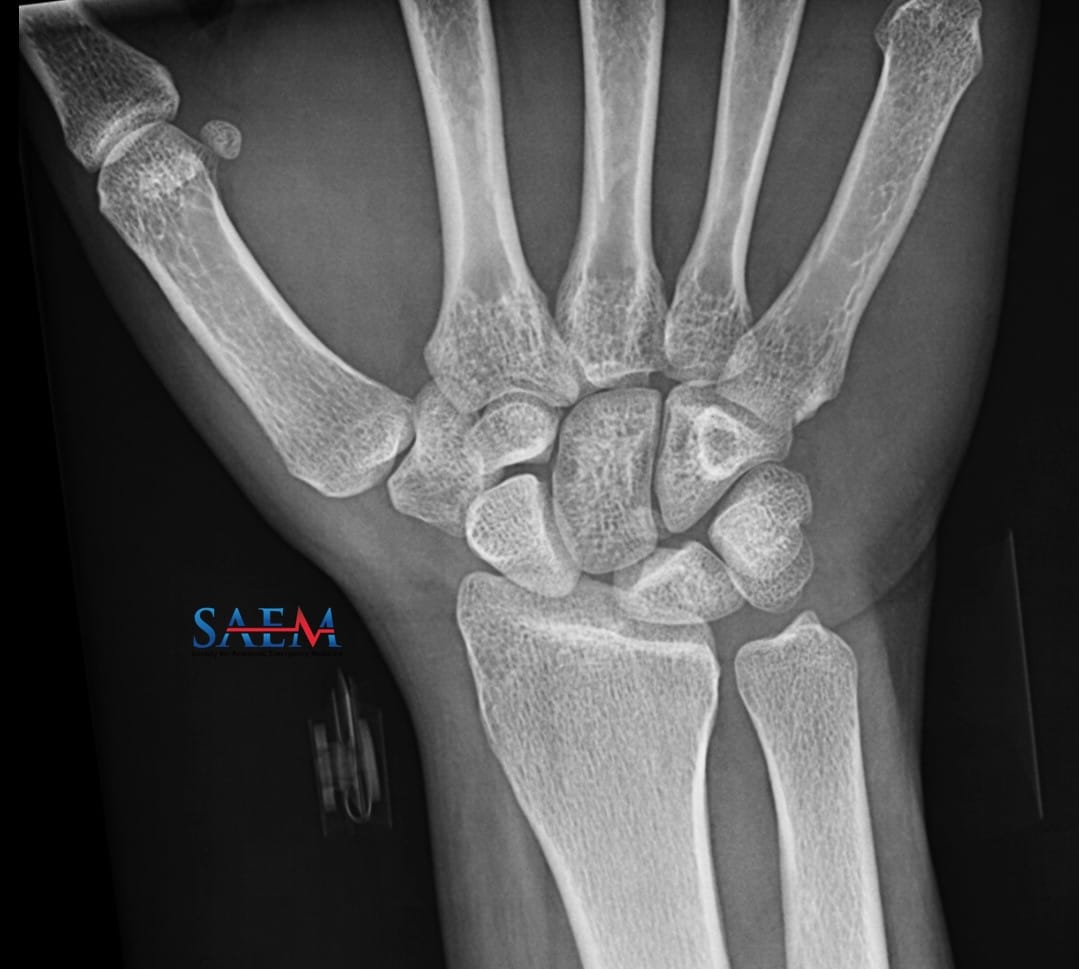
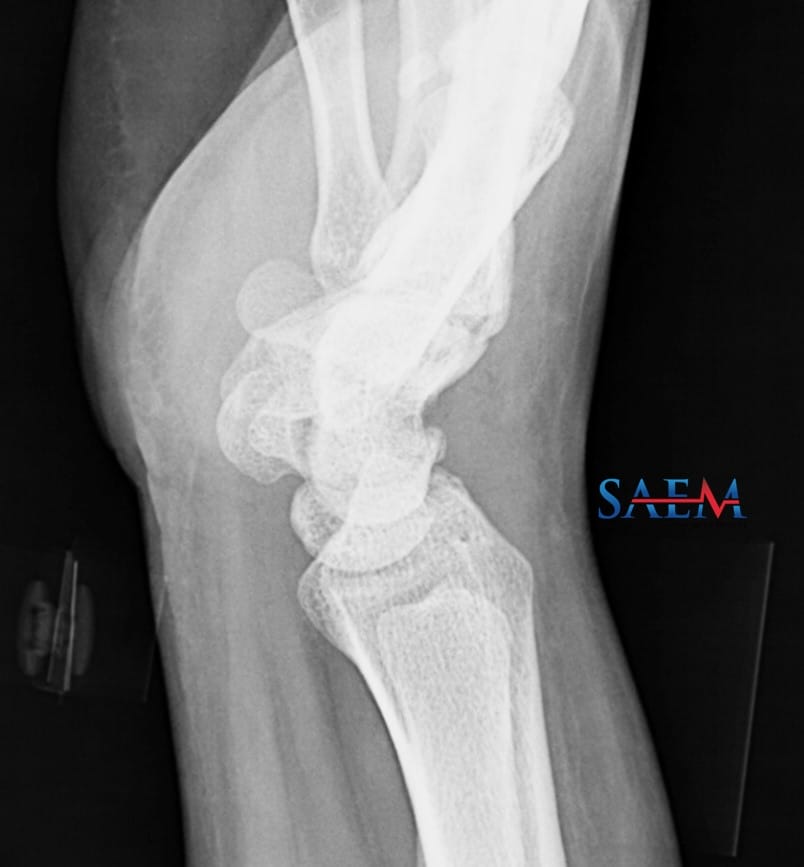
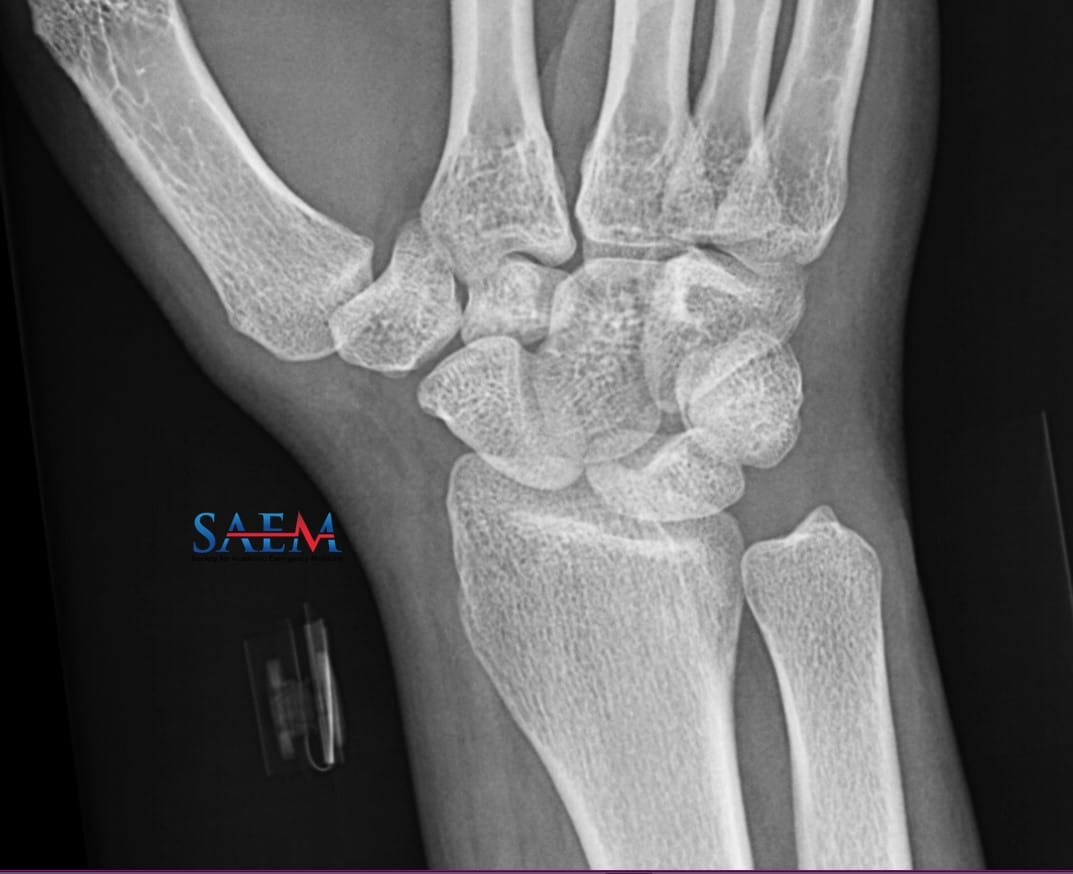
A 27-year-old male with no significant past medical history presented to the ED due to right hand pain and swelling. The patient reported that he works as a roofer and felt severe, sharp pain in his right hand immediately after using a nail gun this morning. The pain was followed by gradual swelling of the right wrist and hand. There was no loss of sensation or bleeding from the injury site. He additionally denied any injury from the nail itself. The patient was in moderate pain but hemodynamically stable while in the ED.

Vitals: Temp 36.6 °C; BP 155/99; HR 71; RR 18; SpO2 99%

General: Alert, mild distress.

Musculoskeletal: No gross deformities to right hand, reduced right hand flexion/extension due to pain, normal ROM of right shoulder and elbow, pain with right forearm supination/pronation, swelling of right hand and fingers and diffusely tender carpal bones.

Non-contributory

Comminuted lunate fracture. Lunate fractures, especially comminuted lunate fractures, usually result from high-energy trauma, with an incidence ranging from only 0.5% to 6.5% of carpal fractures. Up to one-third of wrist fractures appear to be overlooked on traditional radiography. Further imaging should be warranted for patients who are clinically suspicious of wrist fractures in the ED. Multidetector Computed Tomography (MDCT) with multiplanar reformat capability is a useful method to identify occult wrist fractures.

The blood supply of the lunate bone comes from the palmar and medial arteries of the carpometacarpal branch of the radial artery. Damage to the artery may lead to avascular necrosis (Kienböck disease). Comminuted lunate fractures may result in severe intraosseous destruction of vasculature, increasing the risk of lunate bone necrosis. An at-risk nerve is the median nerve, which runs through the carpal tunnel. If the lunate is fractured or displaced, it may compress or damage the median nerve, resulting in pain, paresthesia, or sensory loss in the palmar surface of the thumb, index, and middle fingers and radial half of the ring finger.

Take-Home Points

  • Associated risk factors for a lunate fracture include occupations or sports involving repetitive pressure to the base of the hand with the wrist in extension (eg, roofer, gymnast, jack-hammer operator).

  • Due to complex carpal anatomy, traditional radiography may not be sufficient to detect lunate fractures.

  • At-risk structures that require evaluation in the case of lunate fracture include the palmar and medial branches of the radial artery and the median nerve.

  • Li, Jun, et al. “Comminuted lunate fracture combined with distal radius fracture and scaphoid fracture: A case report.” Medicine, vol. 102, no. 29, 2023, https://doi.org/10.1097/md.0000000000034393.

  • Balci, Ali, et al. “Wrist fractures: Sensitivity of radiography, prevalence, and patterns in MDCT.” Emergency Radiology, vol. 22, no. 3, 2014, pp. 251–256, https://doi.org/10.1007/s10140-014-1278-1.

  • Geissler, William B. “Carpal fractures in athletes.” Clinics in Sports Medicine, vol. 20, no. 1, 2001, pp. 167–188, https://doi.org/10.1016/s0278-5919(05)70254-4.

By |2025-04-28T14:39:34-07:00May 2, 2025|Orthopedic, SAEM Clinical Images|
Go to Top