



Unleashing Creativity
Creativity is at the core of process improvement necessary for the advancement of the medical profession. We need to unleash our creativity to meet the rapidly changing needs of graduate medical education. Think of that one person in your department who always seems to be coming up with the newest trick for doing a procedure or a creative method of delivering medical education. What if there was a way for you to become that creative person? The good news is that creative thinking can be learned, and with practice, can become a habit to where it comes naturally. Collect [+]
SplintER Series: My Foot Doesn’t Work Right
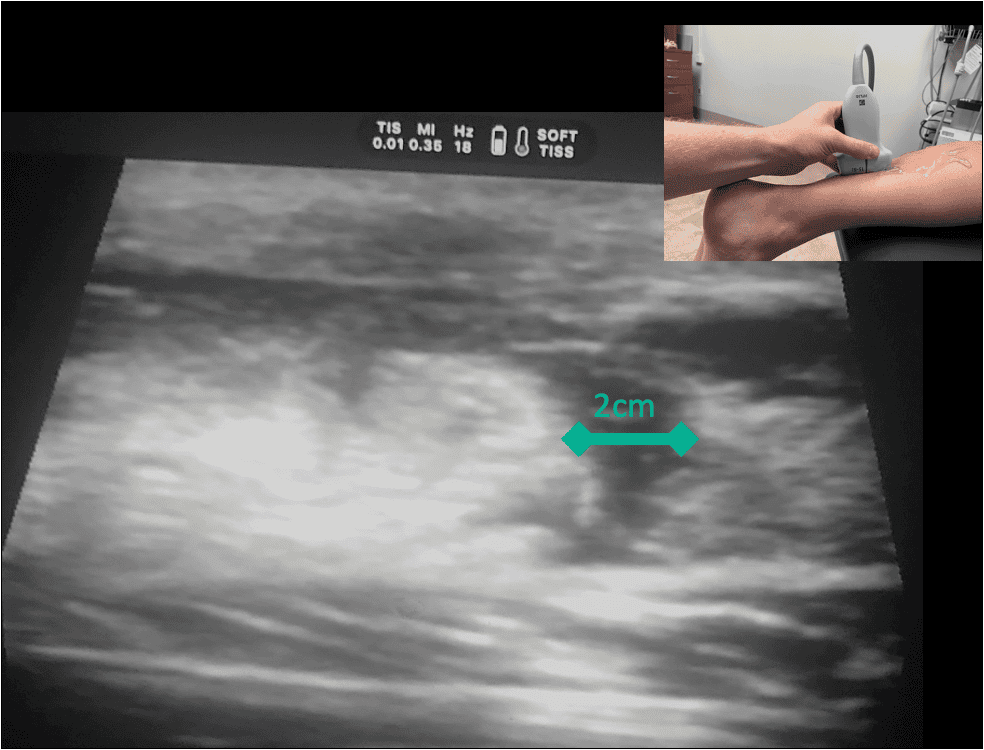
A 35-year-old male felt a painful “pop” in his posterior left lower leg while playing football. Afterward, his “foot didn’t work right anymore.” X-ray of the left ankle and tib/fib was normal but he was unable to ambulate. You plan an ultrasound over the area of maximal tenderness and discover the above image (Image 1.Ultrasound of the left posterior ankle 11cm proximal to the calcaneal insertion of the Achilles tendon. Case courtesy of Robert Lystrup.) [+]

SAEM Clinical Image Series: Sudden Onset of Facial Petechiae in Kindergartener
A 6-year-old boy with no past medical history presented when his parents noticed facial petechiae after picking him up from school. He had a series of four recent upper respiratory infections within four months since starting public kindergarten. He occasionally also complains of leg pain. General: Non-toxic, cooperative child Skin: Petechial rash in periorbital and infra-auricular areas HEENT: Normal; no lymphadenopathy Musculoskeletal: Normal strength and range of motion Hemoglobin: 12.6 g/dL White blood cell (WBC) count: 6.7x10³/mL Platelets: 352,000/mL Increased pressure in the dermis from actions such as extended Valsalva maneuver, vomiting, [+]

SplintER Series: Fracture After a Fall From a Bunk Bed
A 6-year-old male presents to the ED after a fall from his 5 foot high bunk bed causing elbow trauma. On exam, there is significant focal swelling, ecchymosis, and tenderness at the lateral left elbow. The forearm, wrist, hand and shoulder are nontender. He is neurovascularly intact. You suspect a fracture and obtain x-rays (Figures 1 and 2). Figure 1: Initial radiographs in the ED with the elbow slightly flexed. Figure 2: AP and lateral radiographs of the elbow. [+]
SplintER Series: Case of the Swollen Finger
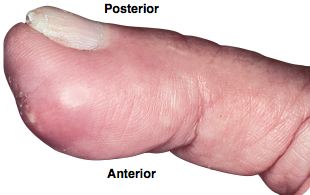
An 18-year-old male presents with a painful and swollen left thumb. He removed a splinter from his finger a few days ago however, 2 days after removal, he began to experience edema and pain that has progressively gotten worse. An image of his finger is shown above (Image 1. Picture courtesy of Rosh Review [1]). [+]
Kayla Prokopakis, DO
SAEM Clinical Image Series: Facial Edema
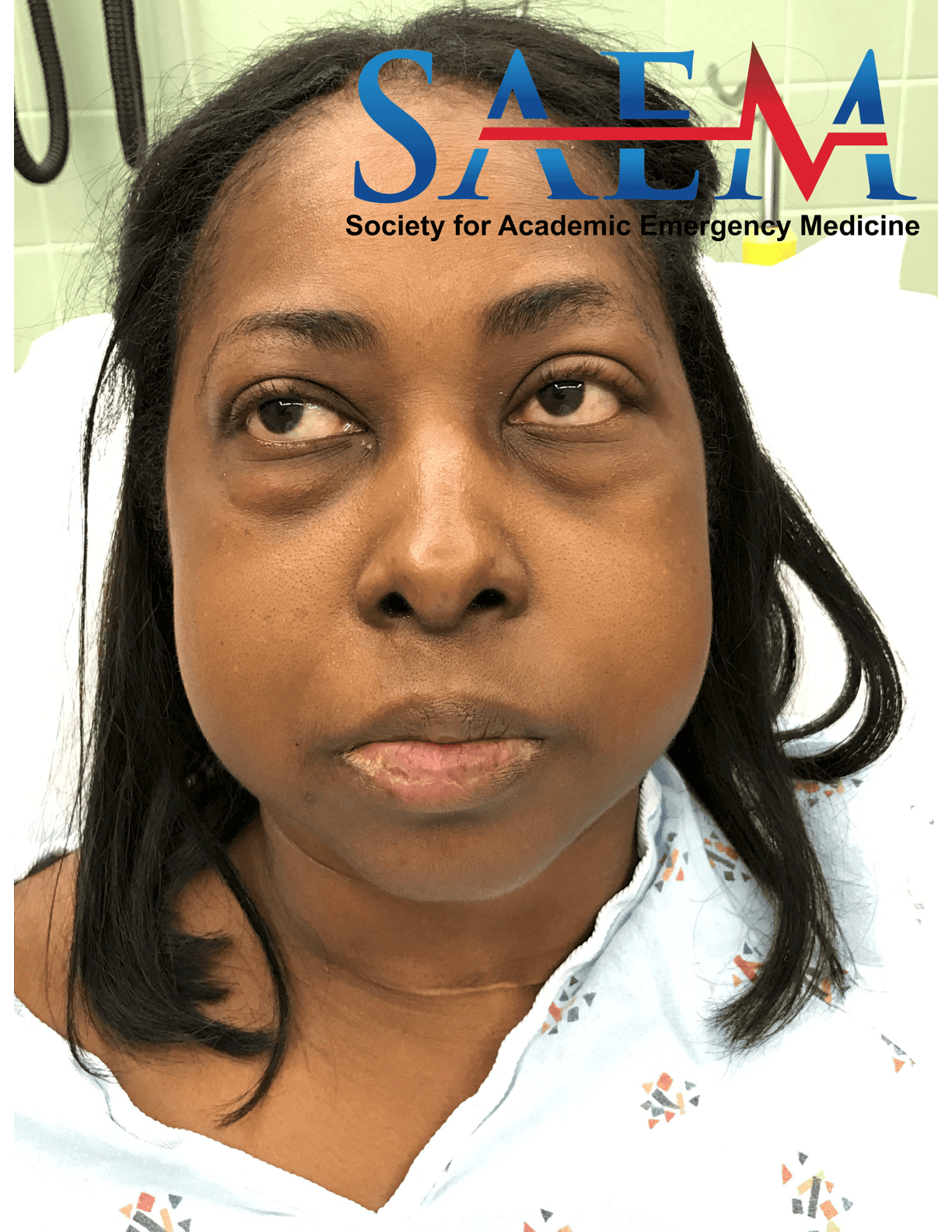
A 44-year-old female presents to the emergency department after noticing swelling of her tongue and face, specifically the cheeks and periorbital area. She states the swelling began two weeks ago and has progressively worsened. She also complains of redness. Vitals: T 38.6°C; BP 135/78; HR 90; RR 18 General: Lying in bed, somewhat anxious appearing HEENT: Significant edema of bilateral cheeks and periorbital areas Thinning of hair along scalp and lateral aspect of eyebrows Mild macroglossia Skin: Yellow tinge to patient’s skin Horizontal scar noted on the anterior aspect of the neck TSH: 31.27 mU/L Free [+]

Succinylcholine and the Risk of Hyperkalemia
Background Succinylcholine is frequently used in the ED to facilitate intubation, but it may be avoided in some cases due to the risk of hyperkalemia. The underlying physiology of this effect appears to be directly related to its therapeutic mechanism of action. When succinylcholine binds to and activates acetylcholine receptors, it leads to an influx of sodium and calcium and and an efflux of potassium into the extracellular space [1]. Additionally, when these acetylcholine receptors are immature or denervated, it seems that these channels may stay open significantly longer, allowing for an increased amount of potassium to exit the cell, [+]

How I Work Smarter: Katie Holmes, DO FACEP
One word that best describes how you work? Hustle Current mobile device iPhone 12 Pro Computer Macbook Air What is something you are working on now? Updated Curriculum for our EM Clerkship, VSAS, Conference Material, Intern Orientation planning, and more How did you come up with this Idea/Project? We are always trying to improve our curriculums to make them better based off of feedback from previous years! What’s your office workspace setup like? My kitchen counter or my office at the hospital. What’s your best time-saving tip in the office or home? Keep a To Do list and divide [+]
EM Match Advice: Program Directors Reflect on the 2021 Residency Match
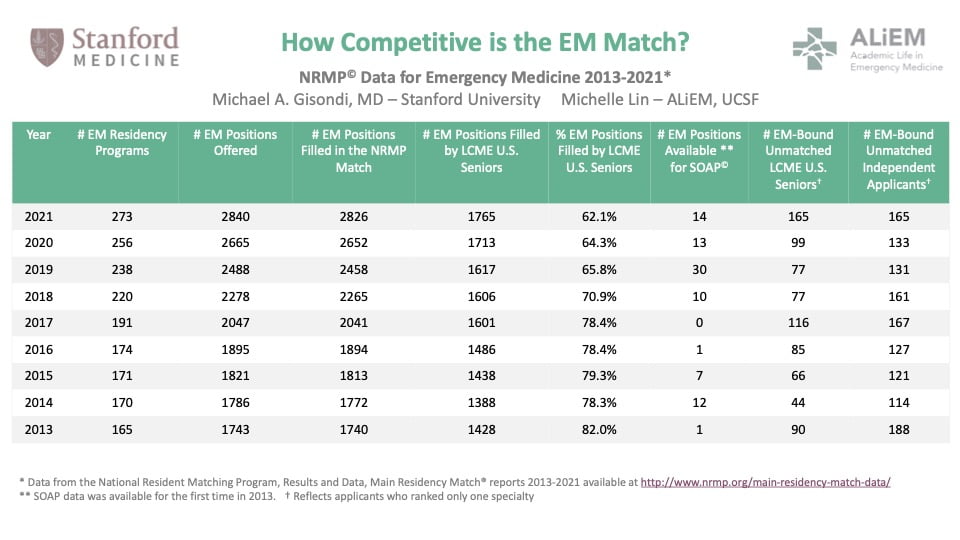
Dr. Mike Gisondi and Dr. Michelle Lin return for their annual review of the most recent Match in emergency medicine (EM) in latest episode of EM Match Advice. They were joined by a panel of 3 outstanding program directors, Dr. Jacob Ufberg (Temple), Dr. Amita Sudhir (University of Virgina), and Dr. William Caputo (Staten Island Medical Center). Was the EM Match more competitive this year? That’s a complicated question and you need to listen to the podcast discussion for the nuanced answer. The Slide: The Nitty Gritty Annual Numbers of the EM Match "The Slide" above is a summary of [+]
Education Theory Made Practical: Listen to the New Podcast Series
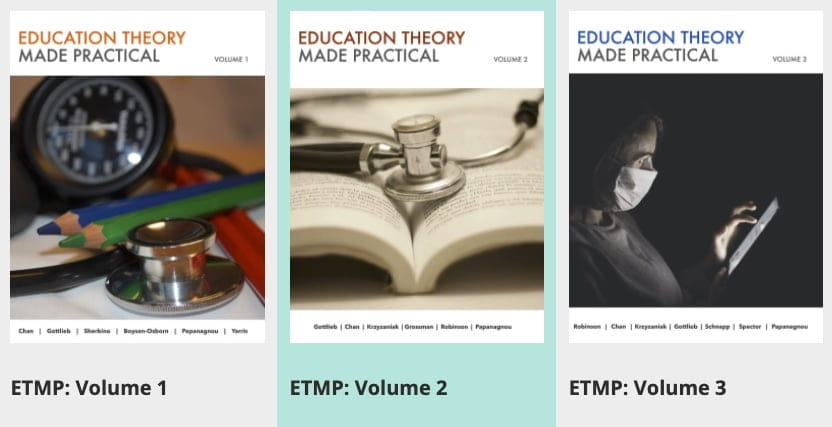
The Education Theory Made Practical (ETMP) set of 3 e-books were published starting 2017, reviewing key education theory principles and practically framing the abstract into practical scenarios. This series was produced by the ALiEM Faculty Incubator in collaboration with the International Clinician Educator (ICE) blog. These e-books can be downloaded for free in the ALiEM Library. We were surprised, humbled, and honored that Dr. Daniel Harper wanted to convert the popular e-books into a podcast series, with each chapter turned into short 10-20 minute podcast. As a pilot test, he converted Volume 1 into a set of 10 podcasts. Take [+]