


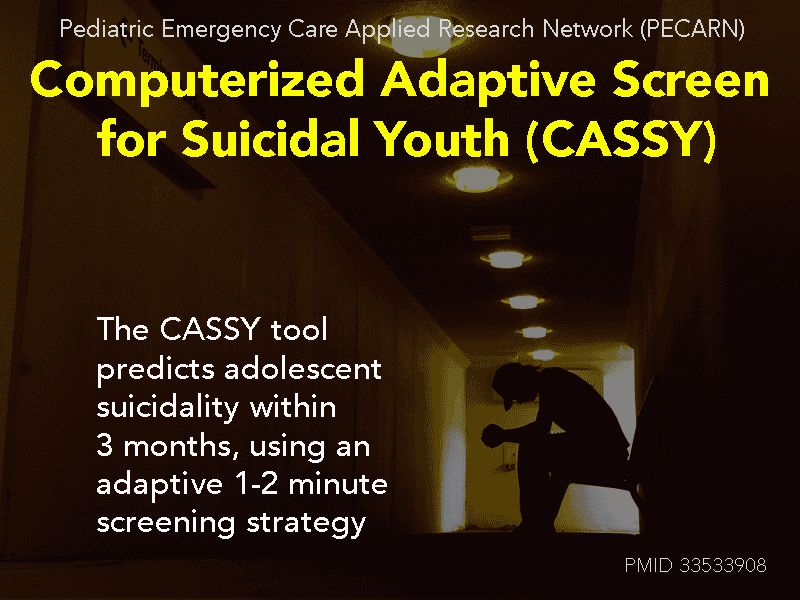
Computerized Adaptive Screen for Suicidal Youth (CASSY) study
Adolescent suicide rates in the United States, partly augmented by the COVID-19 pandemic, are steadily increasing [1, 2]. A commonly used screening tool is the 4-question Ask Suicide-Screening Questions (ASQ) instrument, which has a sensitivity and specificity of 60% and 92.7%, respectively, in predicting suicide-related events within 3 months. This was derived from a retrospective study of 15,003 pediatric patients (age 10-18 years) [3]. Given the morbidity and mortality associated with suicide attempts, is there a better screening tool with a higher sensitivity than 60%, while also maintaining adequate specificity? A higher sensitivity rate ensures that we have fewer misses. [+]
SplintER Series: Keep Your Knees Up
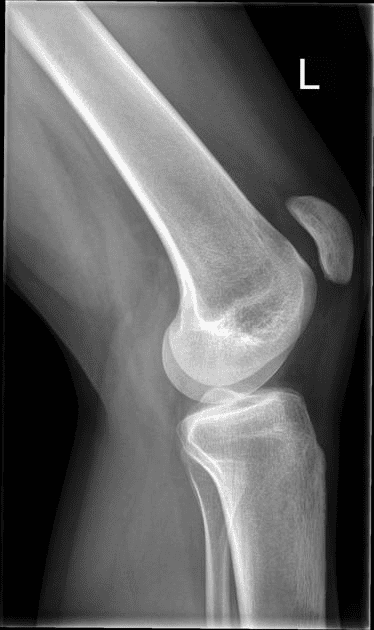
A 27-year-old female presents with left knee pain after a low-speed motor vehicle collision in which her knee hit the dashboard. She is tender over the patella without significant effusion and has an intact extensor mechanism. The above x-ray was obtained (Image 1. X-ray left knee. Case courtesy of Dr. M. Mourits, Radiopaedia.org, rID: 14476). [+]

How I Work Smarter: Rodney Fullmer, DO, MBS
One word that best describes how you work? Passionately Current mobile device Samsung Galaxy 9 (sorry not an apple/mac guy) Computer PC- Dell XPS What is something you are working on now? I am working on two very cool education projects right now within our ED. I am creating a new curriculum for our senior ED residents at Swedish called MastER's Class. The curriculum aims to prepare senior ED residents for life post-residency; looking at everything from contracts, litigation, finances, wellness, the business side of EM, job opportunities outside of the ED, and many more. Resident T-ED talks. Swedish ED [+]
SplintER Series: A Temporary Pain in the Neck
An 18-year-old football player presents to the Emergency Department after an episode of transient numbness, tingling, and inability to move his right upper extremity after making a tackle. He continued playing without recurrence. The above imaging was obtained (Figure 1. Lateral cervical spine x-ray. Case courtesy of Dr Andrew Dixon, Radiopaedia.org, rID: 32505). [+]

SAEM Clinical Image Series: What’s This Thing on My Face?
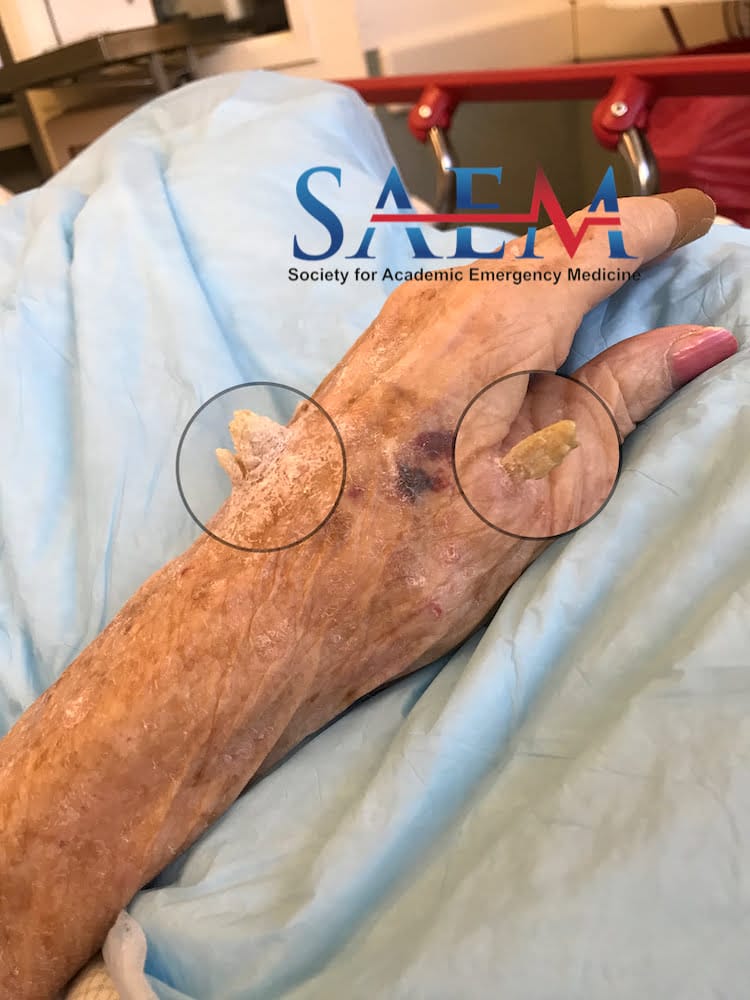
A 91-year-old female patient presented with her family after concern for multiple new lesions on her face and hands. The patient thinks the lesions grew over the course of a few months. There is no pain at the sites, no erythema, and no pruritis. She has caught the lesions on clothing and bedding, which has irritated the lesions on occasion, and the family is concerned/embarrassed by the growths on her face, which are harder to conceal than those on her hand. [+]
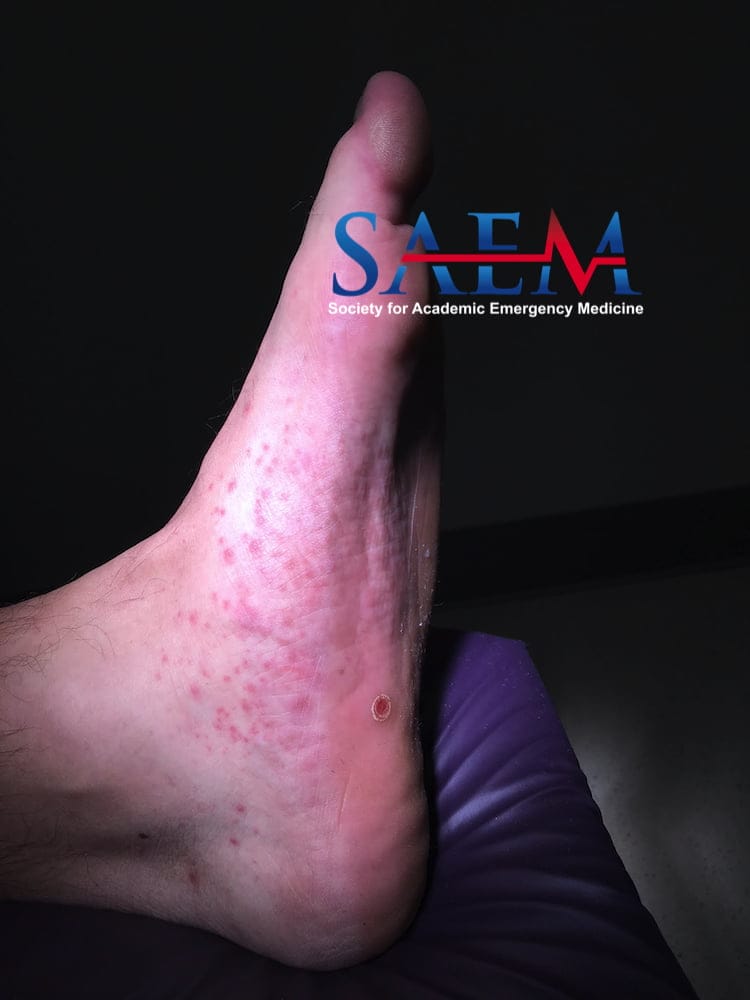
SAEM Clinical Image Series: Guess Who’s Back?
A 27-year-old male with no significant past medical history presented to the emergency department with one week of progressively worsening, non-pruritic, and intermittently painful rash to his bilateral dorsal and plantar feet. The patient also described lesions to his left inguinal region and scrotal sac. There was no fever, chills, nausea, vomiting, chest pain, or shortness of breath. The patient was sexually active with men and women, with inconsistent condom use. [+]

Adverse Events from IV Olanzapine for Agitation in the ED
The ability to safely and effectively sedate agitated patients in the emergency department (ED) is paramount to provide prompt medical care and protect ED staff. Intravenous (IV) antipsychotics are frequently utilized, instead of other routes, given their more rapid onset of action. Similar to haloperidol, olanzapine can be used safely via the IV route despite both being FDA-approved for intramuscular (IM) administration only. What is the adverse event profile for IV olanzapine when administered for agitation in the ED? The table below summarizes the primary data evaluating IV olanzapine in the ED [1-5]. While IV olanzapine is a safe option [+]

Tricks of Trade: Benign paroxysmal positional vertigo | Beyond the Basics
Clinical Case A 63-year old female presents to your ED with positional dizziness since rising out of bed from a nap this afternoon. She says she had a similar episode in the past and reports, “they took the stones out of my ear by making me lay down and move my head a few times.” Based on your assessment of the patient’s history and physical exam you determine she has peripheral vertigo, likely BPPV. However, despite multiple attempts with the Epley Maneuver, the patient is still symptomatic. What next steps could you consider? Benign paroxysmal positional vertigo: The basics Benign [+]
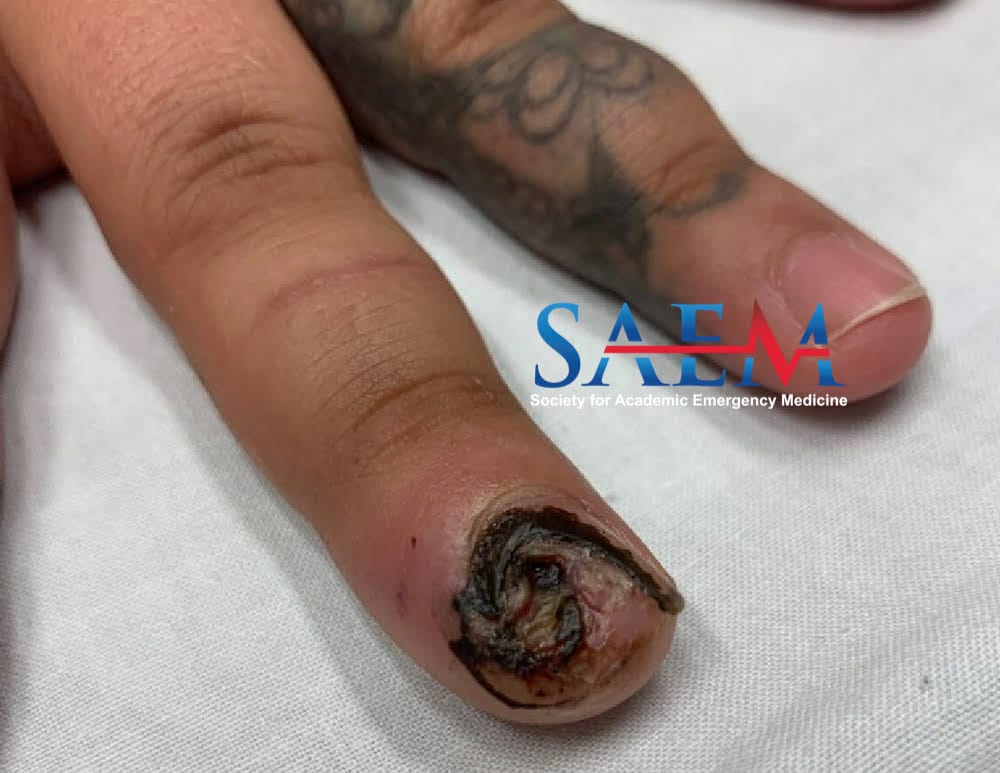
SAEM Clinical Image Series: Finger Pain
The patient is a 24-year-old female who presents to the emergency department for left middle finger pain and swelling. She is right hand dominant and works in a kitchen. The patient states that ten days ago she avulsed the distal tip of the left middle finger, including the majority of the nail. At that time, the patient was evaluated at an outside hospital where the wound was cauterized with silver nitrate due to soft tissue bleeding. Since then, the patient states that she has had swelling over the dorsal distal phalanx. [+]

How I Work Smarter: Megan Stobart-Gallagher, DO
One word that best describes how you work? Innovative Current mobile device Galaxy S10 Computer Lenovo Yoga (my 2nd one!) What is something you are working on now? I wish I could say something wonderfully innovative, but I am mostly just working on tying up numerous projects with our medical education fellows that resulted from the global shift to virtual learning. However, I have had a blast over the last few months building an asynchronous Toxicology curriculum with one of my fellows and a new EMS curriculum for our interns. My next project as chair of our clinical competency committee [+]