



ALiEM AIR Series | OB/Gyn 2021 Module
Welcome to the AIR OB/Gyn Module! After carefully reviewing all relevant posts from the top 50 sites of the Social Media Index, the ALiEM AIR Team is proud to present the highest quality online content related to OB/Gyn emergencies in the Emergency Department. 8 blog posts met our standard of online excellence and were curated and approved for residency training by the AIR Series Board. We identified 2 AIR and 6 Honorable Mentions. We recommend programs give 4 hours (about 30 minutes per article) of III credit for this module. AIR Stamp of Approval and Honorable Mentions In an effort to truly emphasize [+]

SplintER Series: I Declare a Thumb War
A 39-year-old female presents to the emergency department with right thumb pain after falling in a skiing accident. On exam, there is mild swelling and tenderness on the ulnar aspect of the 1st MCP joint. Additionally, there is laxity with valgus stressing of the 1st MCP joint. An x-ray is obtained and shown above (Image 1. Provided by Alex Tomesch, MD). [+]
![Ko, MD, [+]</p></body></html>](https://api.typeform.com/responses/files/77f6bb74c78b32f09f44a39e28bfcf8cda84b99b246a6d3bc93a1802c5bf6652/Ko_Justine_photo.JPG)
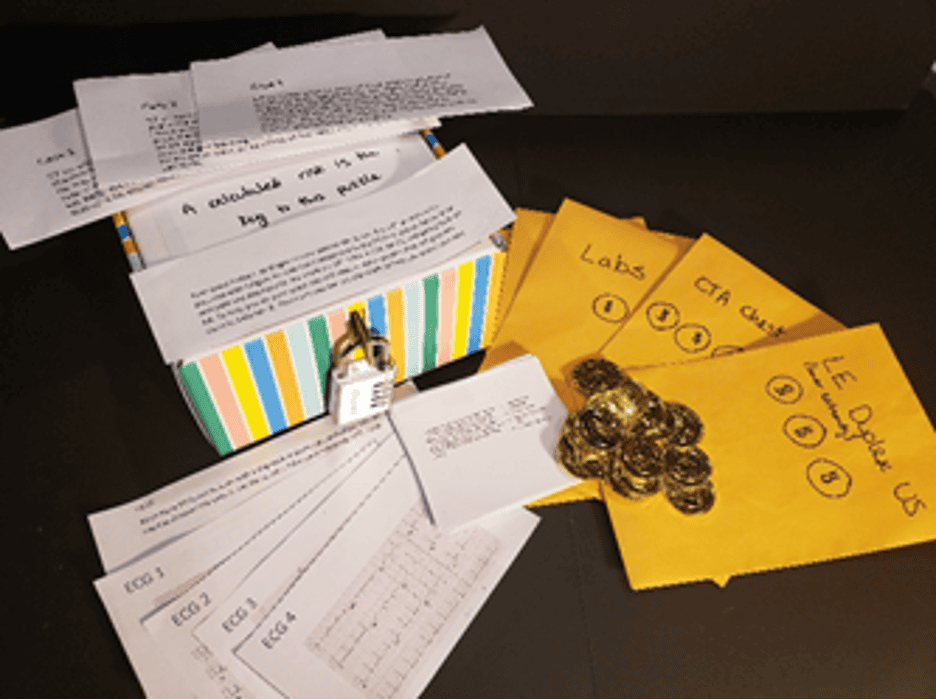
IDEA Series: Acute Venous Thromboembolism (VTE) Escape Room
Adult learning theory supports medical educators in moving away from long lectures with minimal engagement from the learners [1]. Core emergency medicine (EM) topics lend themselves well to interactive methods such as gamification [2]. Puzzle-based activities can successfully facilitate team building in medical education [3]. EM residents commonly encounter acute venous thromboembolism (VTE) in the ED and must know the spectrum of presentations and approach to evaluation and treatment, including the use of risk stratification calculators. The Innovation To improve teaching of acute VTE to EM residents, we created a puzzle-based activity called “Acute VTE Escape Room.” Two teams competed [+]

SAEM Clinical Image Series: Chronic Back Pain
A 52-year-old male with a past medical history of prostate cancer status post radiation therapy 10 years prior presents to the emergency department (ED) with the chief complaint of low back pain worsening over the past year. He characterizes the pain as a “dull, aching stiffness” associated with decreased motility. Vitals: BP 128/82; HR 72; RR 18; T 37°C General: Alert and oriented MSK: Decreased range of motion of the lumbar spine with flexion; Heberden’s and Bouchard’s nodes on multiple fingers Neurologic: Within normal limits with no focal motor or sensory deficits appreciated; deep tendon reflexes [+]

Holiday Gift Guide for ALiEM Readers: Top 5 Favorite Tech Tools
Technology continues to integrate with our life -- for better and worse. Our team felt that the following 5 tech tools added value and joy to our lives, and so we are sharing with you. These also make great gifts for the emergency physician or healthcare provider in your life this holiday season. Blinkist is a professional book summary subscription service that condenses key points from non-fiction books into 15-minute reads. This is an efficient way to catch with all those books that you have been putting off. The Headspace app is one of the frequently used mindfulness app in [+]

Holiday Gift Guide for ALiEM Readers: Top 7 Favorite Level-Up Gear
The difference between a great shift in the Emergency Department and a frustrating one can sometimes be attributable to having the right gear or peri-shift routine. Listed are the top 6 "level-up" tools, recommended by our team. We have a very limited supply of custom ALiEM socks available at $20 per medium-sized pair. These socks have been rumored to quell the blackest of black clouds in the Emergency Department. It may be because of the "Stomping Out Disease" mantra on the socks. You'll have to try for yourself. We have orange (with the COVID-19 graphic) and lime green socks. These [+]

Holiday Gift Guide for ALiEM Readers: Top 7 Favorite Books
With the holiday season rapidly approaching, we polled the ALiEM team on favorite books to buy for yourself or a fellow healthcare provider. Many of us try to make time to read in our busy schedules to learn, be entertained, understand, process, and grow. As Truman stated, “Not all readers are leaders, but all leaders are readers.” View our top 7 recommendations below. 1. Tricks of the Trade in Emergency Medicine We are biased, but we believe that the Tricks of the Trade book would make a lovely coffee table gift for you or your colleague. The hardbound, color print [+]

How I Work Smarter: Mark Ramzy, DO EMT-P
One word that best describes how you work? Focused Current mobile device Samsung Galaxy S20 Computer Samsung Notebook 9 What is something you are working on now? Ultrasound Teaching Curriculum (both image review and interpretation) that can be made virtual and in very small group sessions with focused teaching and infographics. How did you come up with this Idea/Project? We performed a needs assessment in ultrasound learning across different divisions and specialties (IM, Anesthesia, etc) within the hospital. This didn't just include medical students and residents/fellows, but also included attendings and faculty members with a longitudinal component to teaching. [+]

SAEM Clinical Image Series: Pediatric Rash
A previously healthy 8-year-old female presents to the pediatric emergency department due to a rash. Her symptoms started three days prior to presentation with a painful rash on her lower extremities. The rash subsequently spread to the buttocks and upper extremities, and she developed intermittent diffuse abdominal pain, a nonproductive cough, and pharyngitis. The patient denies subjective fever. Known sick contacts include the patient’s mother, who tested positive for COVID-19 two and a half weeks prior. Vitals: T 98.5°F; HR 93; BP 115/68; RR 16; O2 sat 100% on room air Constitutional: Well-developed and in no [+]
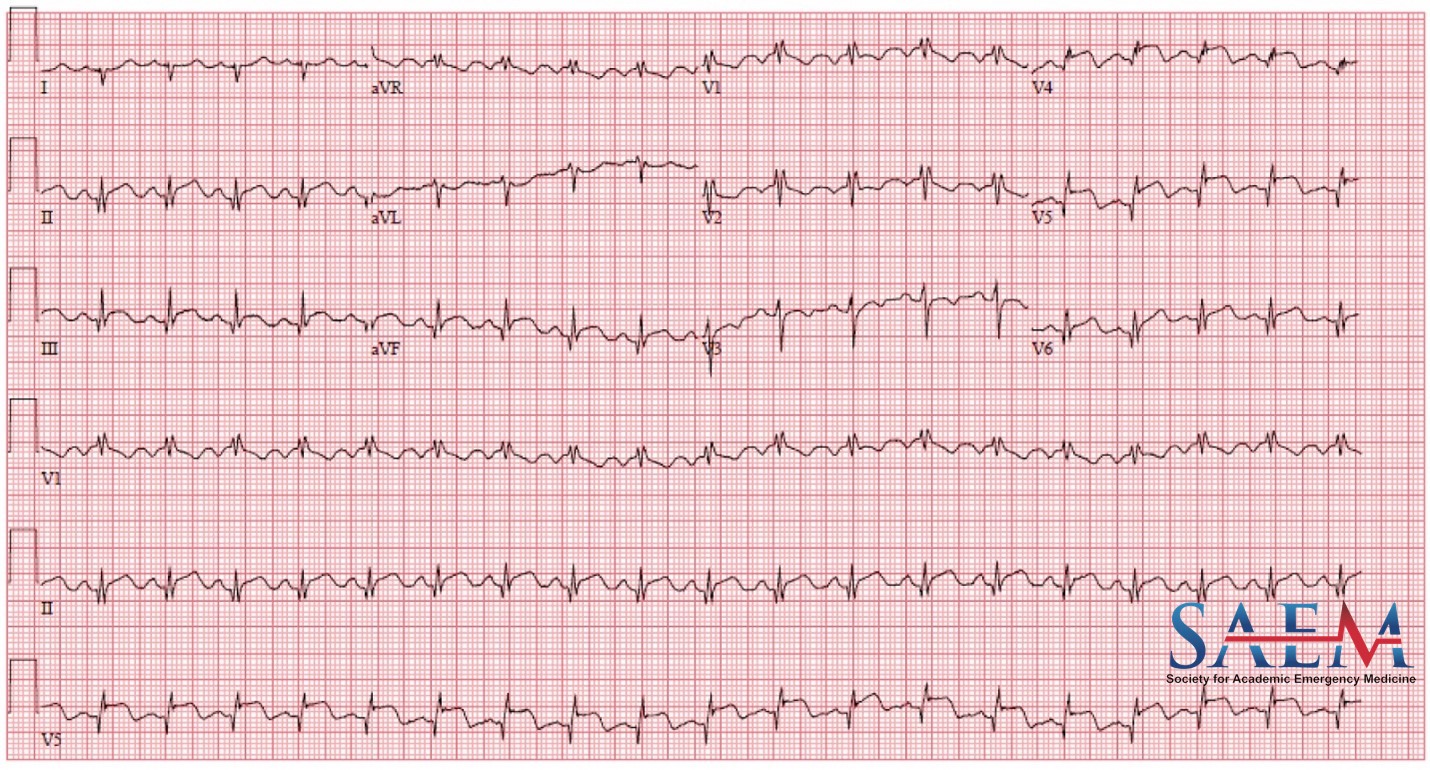
SAEM Clinical Image Series: A Young Woman with Chest Pain
A 35-year-old female with a history of intermittent palpitations who is three months post-partum presented to the emergency department (ED) with three days of sharp, substernal chest pain radiating down her left arm. She reportedly had a normal electrocardiogram (ECG) at an outside hospital on the first day of symptoms. The pain returned and was associated with one episode of vomiting the night prior to presenting to our ED. Initial ECG on arrival is shown. Vitals: Tachycardic; afebrile; normotensive; no tachypnea or hypoxemia on room air General: Mild distress, appears uncomfortable Cardiovascular: Tachycardic to 100s, regular [+]