


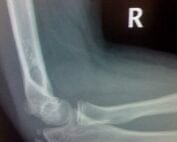
SplintER Series: Pediatric Elbow Pain
A 9-year-old male presents with right elbow pain after a fall onto the elbow. What is your diagnosis? What common pediatric elbow findings are you looking for? What is your management and disposition in the ED? (Image 1: Case courtesy of Dr Ian Bickle, Radiopaedia.org, rID: 47354) [+]

Mark Hopkins, [+]
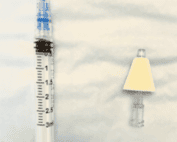
PEM Pearls: Intranasal Medications in the Pediatric ER
Fiona is a 6 year old female who presents to your emergency department after falling onto her left hand while racing on the playground. X-ray of the left upper extremity reveals a distal radius fracture with minimal displacement and angulation. You plan to place her arm in a splint and arrange for close orthopedic follow-up. The only problem: Fiona is in a lot of pain, especially with any manipulation of her arm, and Dad is worried that she will not be able to tolerate having a splint placed. You consider reaching for an intranasal medication [+]

Banishing Busy: Part 3
Medical professionals are busy people and exist in a constant state of “being busy.” How do we resolve chronic “busy-ness”? How do we manage our time effectively? In her recent talk at the CORD Academic Assembly 2020, Dr. Christina Shenvi, EM Physician and Associate Residency Director at UNC, provided 5 key actions to help us be productive, complete our work effectively, and strive for work-life balance. Dr. Shenvi recorded her lecture again to be shared with the ALiEM Faculty Incubator. This series of posts breaks down her talk into 3 sections in order to summarize her key points and to [+]
IDEA Series: Toxicology Virtual Escape Room during COVID-19
In order to enhance emergency medicine (EM) residents’ knowledge of toxicology core content, we previously created an immersive escape room experience complete with team-based puzzle solving in a geographical maze to find an antidote. The subsequent COVID-19 pandemic and physical distancing guidelines resulted in canceled in-person EM conferences, thereby requiring a rapid adaptation to virtual formats [1-4]. Our toxicology division sought a novel method of engaging learners with toxicology core content remotely. [+]

ACMT Toxicology Visual Pearls: Caterpillar Envenomation
What is the correct management of dermatitis after handling the creature pictured? Hot water immersion Intramuscular epinephrine Topical application of liquid antacid Transparent tape application and removal over the area of dermatitis [+]

Nicholas Titelbaum, MD
University of Central Florida in Ocala, FL
Latest [+]

Little Big Med Podcast: Gender Equity in Medicine
It’s time to talk about gender equity in medicine. Significant gender disparities exist in both healthcare institutions and professional societies. These disparities persist even in fields that are predominantly female, such as pediatrics. In fact, although women comprise 72.3% of active pediatricians, only 27.5% of pediatric department chairs across US medical schools are women. Why does this disparity exist? What can we do to address it? In this episode of the Little Big Med podcast, host Dr. Jason Woods discusses these questions with Dr. Nancy Spector, Professor of Pediatrics at Drexel University College of Medicine and Executive Director of the [+]
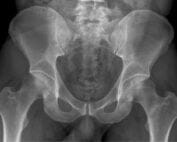
SplintER: Persistent Left Groin Pain
A 24-year-old male presents with progressively worsening left groin pain for six weeks after he began training for a marathon. He states he had x-rays done by his PCP that were negative four weeks ago and was diagnosed with a groin strain. X-rays were obtained and featured to the right. [+]

Aimee Monahan, DO
Department of Family [+]
IDEA Series: Homemade Escharotomy Kit
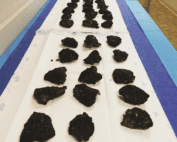
Although escharotomy is rarely performed by emergency physicians during the initial management of burns, it is a life and limb-sparing skill important to know as a trainee and provider in emergency medicine [1,2]. There are few models made to accommodate procedural training, and the ones available are often cost-prohibitive. It is critical to have a method for learning and practicing this important procedure [3,4]. [+]

Introducing: GroundED in EM a 4 week asynchronous curriculum for 3rd year students
A group of educators from our ALiEM Faculty Incubator 2020 class has created a 4-week virtual introduction to Emergency Medicine curriculum for 3rd-year medical students called Grounded in EM! Think back, back to March 2020: you were a medical student, happily rotating through core specialties, considering Emergency Medicine, and then WHAM! The coronavirus pandemic pulled the rug out of your regularly scheduled 3rd year. Or, you were a program looking forward to a "business as usual" approach to your 3rd-year EM clerkship. Now, you'll have limited face to face time, and are wondering "How do we provide the same general [+]
Banishing Busy: Part 2
Medical professionals are busy people and exist in a constant state of “being busy.” How do we resolve chronic “busy-ness”? How do we manage our time effectively? In her recent talk at the CORD Academic Assembly 2020, Dr. Christina Shenvi, EM Physician and Associate Residency Director at UNC, provided 5 key actions to help us be productive, complete our work effectively, and strive for work-life balance. Dr. Shenvi recorded her lecture again to be shared with the ALiEM Faculty Incubator. This series of posts breaks down her talk into 3 sections in order to summarize her key points and to [+]