



Match Day! Words of Wisdom for Life
Last week, more than 2000 medical students were matched into medicine. We welcomed you, and also offered some advice for how to manage the heavy workload of intern year. For the second part of our resident match day series we will transition our focus from work to life. Intern year is a hectic and stressful time. There are a lot of new things to consider. How will you get your family settled in a new city? What are the next four years going to look like financially? How do you make time for your loved ones and keep your hobbies [+]
ALiEM AIR | Trauma 2020 Module
Welcome to the AIR Trauma Module! After carefully reviewing all relevant posts from the top 50 sites of the Social Media Index, the ALiEM AIR Team is proud to present the highest quality online content related to trauma emergencies. 8 blog posts within the past 12 months (as of January 2020) met our standard of online excellence and were curated and approved for residency training by the AIR Series Board. We identified 2 AIR and 6 Honorable Mentions. We recommend programs give 4 hours (about 30 minutes per article) of III credit for this module. [+]
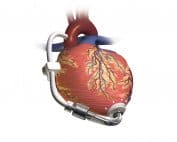
LVAD Part II: Diagnostic Evaluation
Left ventricular assist devices (LVADs) have moved from being a bridge to a heart transplant to destination therapy for patients with severe heart failure. Although their use in the general public has increased, they still provide a challenge to the emergency medicine (EM) physician This series aims to cover the basics of how the EM physician approaches the care of these patients. Last week we covered the physical exam. This week: the diagnostic evaluation. [+]
Match Day! Words of Wisdom for Work
Congratulations on matching into emergency medicine! We are glad to have you. The journey you are about to embark on will be equal parts grueling and rewarding. You will be pushed to your limits but you’ll see and do some amazing things along the way. Excelling at internship and residency and fulfilling your potential goes beyond taking good care of patients. You will be expected to thrive in work and life. In this 2-part blog series we will cover some basics for internship survival, including professional development, life logistics, and wellness. To begin, we will focus on work–from finding a [+]

Teaching in the age of COVID-19: The wrap-up
ALiEM developed the “Teaching in the age of COVID-19” blog series in order to help faculty members identify education/productivity technologies that can help them up their game during this COVID-19 associated period. [+]

Director of [+]
Teaching in the age of COVID-19: The learning management system
Given the epidemiological data from China and Italy, educators should be prepared for the likelihood that online learning will continue to be the norm for many weeks to months. Simply running disconnected weekly educational sessions without an overall organization will hinder educational success for learners. Learning Management Systems (LMS) are a tool that can support educational leaders with the delivery, assessment, and organization of learning. [+]

Teaching in the age of COVID-19: Assessing learners remotely
Providing content is great, but learner assessment is crucial in order to measure educational impact. Digital assessment is valid and reliable; it allows for multiple evaluations and gives learners the opportunity to actively participate in the educational process. Testing for most types of summative and formative evaluations can be done digitally. In this post, we describe the most suitable and reliable tools for assessing learners remotely. [+]

Teaching in the age of COVID-19: Enhancing discussion with digital asynchronous chats
A significant portion of the technology industry is built around social media and asynchronous chat platforms that seek to connect people. Modern tools are designed with the intention to maximize engagement with push notifications, engagements, and emoji/like integrations that maximize the “dopamine rush” for users; “social media addiction” is a known phenomenon. These tools, when repurposed for learning, provide an easy and user-friendly platform for learners to discuss educational objectives. Chats are the quickest communication form, occurring in real-time and encouraging spontaneity and adaptation. There is a sense of forgiveness, and oftentimes if the chat is anonymous, a high [+]

Teaching in the age of COVID-19: Small group conversations
Although you can still use technologies like Zoom or Webex to conduct small group meetings, residency programs may find it prudent to stick to known platforms rather than trying to upskill a large group of faculty and trainees. This is where technologies like Skype and Google Meets (which is the reinvented version of Google Hangouts) can come in. Of note, Google has recently announced that they have made their usually paywalled platform (Google Meet) free during the age of coronavirus, as their way of helping those schools and teachers looking to continue their practice during these difficult times. [+]

Teaching in the age of COVID-19: Live from the recording studio
Recording your content so it can be broadcasted, also called live streaming, can be helpful if you want to reach your audience in real-time. Recording your content for later viewing is useful for trainees who may be clinically unable to attend (they are working, they are post-nights, etc..) or for faculty who are unavailable too. (link to prior ALiEM videos). It’s also a way to double-dip this COVID-19 catastrophe into the generation of a more enduring product of digital scholarship. So, go for it, record that lecture you’ve been meaning to record… Share your thoughts with the world! [+]