



Trick of the Trade: Angiocatheter for manual aspiration of priapism
A 25-year-old man presents with 6 hours of penile pain and swelling after recreational penile injection of Trimix (alprostadil, papaverine, and phentolamine). He denies any history of sickle cell disease or penile trauma. On exam, he is in moderate discomfort and has a tumescent penis with a soft glans. You suspect the patient is suffering from ischemic, low-flow priapism. Manual compression and ice application have been attempted with no significant improvement in the patient’s clinical status. [+]

ACMT Toxicology Visual Pearls: A Foraging Experience to Die For
What life-threatening symptoms can result from the ingestion of this plant? Delayed onset bone marrow suppression Hepatic failure Mucosal swelling of the anterior airway Paralysis and respiratory failure [+]

Robert Goodnough, MD
Department of Emergency Medicine, Baylor College of Medicine
Latest posts by [+]
EM Match Advice: Program Directors Reflect on the 2020 Residency Match
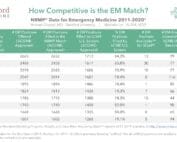
How competitive was the 2020 EM residency match? Although COVID-19 has changed some of the rules and planning for the 2020-21 residency application season, historical data still remains a helpful guide. We have updated our annual table summarizing how competitive the EM residency match was, based on National Residency Matching Program (NRMP) data. [+]
Trick of the Trade: Sodium Bicarbonate for Acute Symptomatic Hyponatremia
A 25-year-old woman is brought into the emergency department by friends due to “acting weird.” She was at a rave and is reported to have consumed alcohol, marijuana, and ecstasy. On exam, she is afebrile, tachycardic, normotensive, and breathing comfortably on room air. She is lethargic, mumbling incomprehensibly, and does not follow commands. Her glucose is 115 mg/dL, her pregnancy test is negative, her EKG reveals sinus tachycardia, her ethanol level is 30 mg/dL, and a stat CT head is negative. Her chemistry panel reveals a sodium level of 114 mEq/L. You order a 100 mL 3% sodium chloride bolus, [+]
ALiEM Statement Against Racism
Illustration by Dr. Moises Gallegos Academic Life in Emergency Medicine (ALiEM) stands in solidarity with emergency physicians and learners in denouncing the structural racism and acts of violence that disproportionately affect persons of color. ALiEM denounces the senseless death of George Floyd which adds to the ever-rising numbers of deaths among Black men and women. The dissemination of the now-viral video documenting Mr. Floyd's last desperate moments has brought a renewed public awareness to a disease that has for far too long afflicted this nation. We see the injustice and disparities in healthcare that are made even more [+]
Social Distancing Simulation: Tips for Leading a Virtual Session With Student Learners
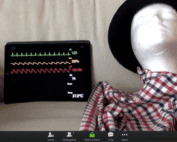
We’ve all had to get a bit creative over the past few weeks. COVID-19 has ushered in an era of not only pushing healthcare workers and hospitals into uncharted territory, but also challenging the structure and delivery of medical education. Simulation education is one of many teaching modalities that is affected by this change given its case-based, in-person structure with a team of learners. These characteristics unfortunately violate the 6-foot rule of social distancing. While traditional simulation is not typically conceptualized as a virtual modality, many of its principals can be successfully adapted for remote learning. [+]

PEM Pearls: Chest Radiographs for Shortness of Breath
Figure 1: Photo by Tim Bish on Unsplash Paramedics bring in a 5-month-old boy in respiratory distress. He’s crying furiously and has normal tone and color. Thick, copious secretions are coming from his nose. He is tachypneic with diffuse wheezes, crackles, retractions, and nasal flaring. His respiratory rate is 70 and his oxygen saturation is 88% on room air. Would you order a chest radiograph (CXR) for this child? CXRs are routinely obtained in adults with respiratory symptoms. Children, however, are more sensitive to radiation and can have multiple respiratory infections every year. [+]
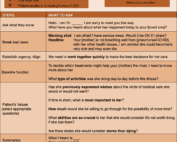
The rapid code status conversation guide for seriously ill older adults in acute respiratory failure
You are working a shift in your emergency department (ED) when an 85 year old female presents with a complaint of altered mental status. She comes from an extended care facility, where paramedics are able to tell you “they called us to come get her,”you are handed a stack of paperwork, given some vital signs, and you notice the patient is altered and unable to provide any further history. You dig a little in the paperwork and note a history of dementia as well as a long list of other medical problems, you notice no known advanced directive, and see [+]
Work Grief: A Primer for Emergency Medicine Providers
Heartbreaking patient situations are the backbone of Emergency Medicine. Whether it’s a new cancer diagnosis, telling a family member that their loved one has died, or the creeping dread that a mistake that we’ve made will negatively impact one of our patients, we all experience extraordinary stress in our day-to-day clinical practice. Most clinicians are not tasked with routinely sharing news about the violent, unexpected, and horrific life-changing situations that occur in the emergency department, and yet we are given so few tools to help us manage this firehose of grief. This article is intended to share some of the [+]
Beyond the Abstract: Systemic Online Academic Resources Review: Renal and Genitourinary
Production and use of free open access medical education resources (FOAM) has had a meteoric rise over the last decade.1–4 ALiEM works hard to produce content, disseminate knowledge, and consolidate resources in a democratic and accessible way. However, we recognize that FOAM comes with its own limitations: Blogs are distinct, individual, and decentralized. How can we search for topic-specific content? FOAM doesn’t often have peer review. How can we assess quality and accuracy? FOAM is produced on an as-needed basis. How do we achieve curricular comprehensiveness? [+]