


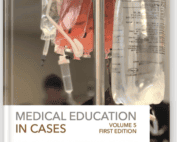
HOT OFF THE PRESS: Free ALiEM MEdIC Series Book – Volume 5
This is a bittersweet moment for the MEdIC Editorial team – the launch of our 5th and final volume of our Medical Education in Cases ebook. We are very excited to showcase the compilation of our final season and hope that it serves you well as you all look to expand your online learning and teaching resources during this incredible time in medical history. We hope that you, your colleagues, and the greater FOAMed community enjoy this collaborative collection of high-quality cases and curated online commentary centered on educational, ethical, and professionalism-based quandaries. Your support, contributions, and enthusiasm for the [+]
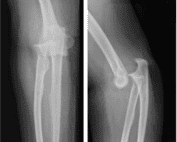
SplintER Series: Elbow Injury
A 70-year-old female presents with left elbow pain and deformity after falling on an outstretched hand. You obtain shoulder x-rays and see the above images. What is the most likely diagnosis, likely mechanism of injury, expected physical exam findings, and management plan? (Image 1: AP and lateral views of the left elbow. Author’s own images) [+]

Victor Huang, MD
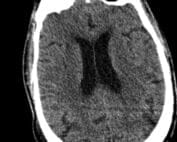
SAEM Clinical Image Series: Found Down with Altered Mental Status
A forty-nine-year-old male with a history of polysubstance abuse, including methamphetamine and intravenous (IV) drug use, rectal cancer, and human immunodeficiency virus (HIV) was brought into the emergency department by emergency medical services (EMS) after he was found down at the bottom of a flight of stairs by his roommate. In the emergency room, he was found to have a Glasgow Coma Scale (GCS) score of 7 and was intubated for airway protection. Non-contrast head CT was performed. Per the roommate, the patient had been “not himself,” exhibiting strange behavior and weight loss. History and [+]

ALiEM AIR | Renal/Genitourinary 2020 Module
Welcome to the AIR Renal/Genitourinary Module! After carefully reviewing all relevant posts from the top 50 sites of the Social Media Index, the ALiEM AIR Team is proud to present the highest quality online content related to renal and genitourinary emergencies. 6 blog posts within the past 12 months (as of May 2020) met our standard of online excellence and were curated and approved for residency training by the AIR Series Board. We identified 1 AIR and 5 Honorable Mentions. We recommend programs give 3 hours (about 30 minutes per article) of III credit for this module. AIR Stamp of [+]
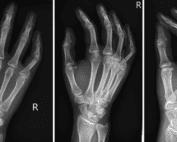
SplintER Series: Finger pain
A 45-year-old male presents to the emergency department (ED) with right hand pain after an e-bike accident. Physical exam shows deformity and tenderness at the 5th proximal phalanx. Radiographs are shown above (Image 1: Plain radiography of right hand with AP and oblique views. Author’s own images). What is the most likely diagnosis? What are the important aspects of the associated physical examination? What is the management in ED, including pain management? When do you consult orthopedics? [+]
ALiEMU Relaunch: Get a new account to check out our new look, digital badges, and courses
ALiEMU is 5 years old, and we are moving out of our toddler stages and growing up developmentally. As we all rely more heavily on digital resources during the COVID-19 era, we felt that this was the perfect time for a major upgrade. Our team remains committed to the motto of “Be Free to Learn,” and in accordance with this mantra, all of the content on our custom learning management system is open-access for anyone interested in learning about emergency medicine topics. We also remain committed to helping EM residency programs who need a trusted resource for asynchronous conference credit [+]
Physician Wellness in the COVID-19 Era | Wellness Think Tank
The COVID-19 pandemic has changed our world in many ways, and for trainees in medicine, the new day-to-day experience of residency continues to adapt and take shape. COVID-19 has undoubtedly affected clinical experiences and educational curricula for residencies. Personal wellbeing for EM residents has become even more important with the new stressors of being on the frontlines. How has the resident experience changed in the ED? How are residents dealing personally and professionally with the new state of things? What strategies, interventions, and resources that residents are utilizing to combat burnout? [+]
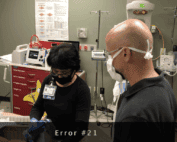
IDEA Series: Pre-recorded Video Simulation Series for Residency Conference
During medical simulation, the inherent unpredictability of learners’ performances and decisions can make it challenging to consistently achieve desired learning objectives. The amount learned and the errors made can vary wildly between groups. Paradoxically, a stellar student can minimize the learning for the other providers if he or she takes over and effortlessly completes the case. Likewise, the visceral impact of seeing a case go horribly wrong can have tremendous teaching value.1 In addition to these challenges, the COVID-19 pandemic has introduced additional barriers to medical simulation training; physical distancing measures have resulted in limited or canceled simulation activities for [+]
ACMT Toxicology Visual Pearls: Perineal Skin Burns
What toxicologic exposure could cause this finding in a 3-year-old child? Ibuprofen Miralax Pseudoephedrine Senna [+]

Michael Keenan, MD
State University of New York at Buffalo
Latest posts by Michael Keenan, MD (see all)
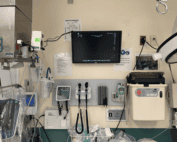
IDEA Series: Big Screen Ultrasound in Resuscitation Bays
Bedside ultrasound (US) often plays a crucial role in medical and trauma resuscitations in the emergency department (ED) [1]. Performing and interpreting bedside US studies such as the Extended Focused Assessment with Sonography for Trauma (E-FAST) during traumas or echocardiography during medical resuscitations are key skills for emergency medicine residents to learn during their training and adopt into clinical practice [2]. During trauma resuscitations timely and efficient dissemination of critical information is paramount. Information obtained via bedside US can be critical in determining further clinical actions (need for urgent thoracostomy for a pneumothorax, need for urgent exploratory laparotomy in a [+]