


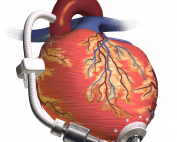
LVAD Part IV: Non-Device Pathology
Left ventricular assist devices (LVADs) have moved from being a bridge to a heart transplant to destination therapy for patients with severe heart failure. Although their use in the general public has increased, they still provide a challenge to the emergency medicine (EM) physician. This series aims to cover the basics of how the EM physician approaches the care of these patients. [+]

Gage Stuntz
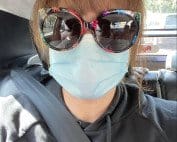
I’m an Emergency Medicine Physician With COVID-19, Now What?
A 35-year-old female emergency medicine physician presents for evaluation for severe myalgias, headache, fatigue, mild nasal congestion, profound anosmia, cough, and subjective fevers and chills. She has no measured temperature above 100.4°F, but has been taking anti-inflammatories around the clock. The day previously, she called occupational health and received testing for the novel coronavirus. The next day, her test returns positive. What happens next? We are here to share our personal experiences with COVID-19 and provide some resources to best support yourselves, your families, your learners, and your colleagues throughout this uncertain and ever-changing situation. [+]
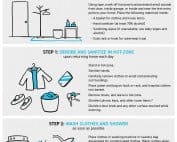
Healthcare Providers in the COVID-19 Era: Keeping Clean When Coming Home
Given overcrowded hospitals and limited availability of personal protective equipment (PPE), showing up for work can feel like entering a battleground without ammunition for many physicians during the COVID-19 outbreak [1]. Despite this, doctors and nurses show up every day ready to do their jobs. While we have committed to the Hippocratic Oath, our families have not. How can we do our duty while preventing exposure of our loved ones at home [2, 3]? [+]
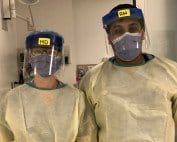
Trick of the Trade: Identifying Team Members in Protected Code Blues
Your team in the Emergency Department (ED) receives a call from your local Emergency Medical Services (EMS) crew informing you that they are transporting a patient with high suspicion of COVID-19 in severe respiratory distress. As you assemble your team in preparation for a Protected Code Blue (PCB), your staff (including physicians, nurses, respiratory therapists, etc.) begins donning full Personal Protective Equipment (PPE). PPE includes donning a gown, gloves, face mask, goggles and/or a face shield. With several team members assembled in the resuscitation bay in full PPE, it can be challenging to identify specific individual members of the team [+]
EM Match Advice: COVID-19 and the 2020-21 Residency Application Season
With so much appropriate attention focused on getting frontline emergency providers with personal protective equipment in the COVID-19 era, one major overshadowed storyline is the uncertainty of the 2020-21 interview season for medical students applying into Emergency Medicine (EM). COVID-19 has thrown a wrench in the entire application season not only for medical students, but also medical schools, residency programs, and hospitals. The downstream effects of potentially canceling visiting (away) EM rotations and possibly even home EM rotations in the near term are dizzying. How does one obtain enough letters of recommendation? Should I even apply for visiting EM rotations? [+]

Why You Should Have a Mantra During These Stressful COVID-19 Times
Healthcare workers on the frontlines during the COVID19 pandemic are likely to experience an increase in stress, fear and anxiety. In these challenging times it is especially important that we take stock of our mental health and practice managing our thoughts. Similar to other skills we learn in emergency medicine (EM) practice, mindfulness takes deliberate practice and repetition. A mantra can be one tool for creating mindfulness and focus. A mantra can serve as a solace to come back to when we feel overwhelmed, distracted, or exhausted. In this post, we will describe the practice [+]

Wellness Perks for Healthcare Workers During COVID-19
Many companies have stepped up, eager to encourage and support those of us on the “front lines.” Here are some discounts and freebies that might help mitigate internal and external stressors that many are facing or will face as we enter a period of incredible uncertainty and fear. [+]

Sarah Mott, MD
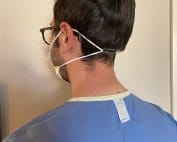
Trick of the Trade: Face mask hacks
A 35-year-old male working as a healthcare worker presents for evaluation of ear discomfort. The skin behind his ears has been red and irritated since having to wear a surgical face mask with the majority of his patient interactions [1]. He has tried to minimize wearing his mask in the appropriate circumstances, using lotions and emollients, but still has a significant amount of discomfort [2]. [+]

LVAD Part III: Complications
Left ventricular assist devices (LVADs) have moved from being a bridge to a heart transplant to destination therapy for patients with severe heart failure. Although their use in the general public has increased, they still provide a challenge to the emergency medicine (EM) physician. This series aims to cover the basics of how the EM physician approaches the care of these patients. [+]
Gage Stuntz
Announcing a new curriculum for medical students: Bridge to EM
Prior to the COVID-19 pandemic, we were already planning to launch Bridge to Emergency Medicine (EM). This 8-week curriculum provides a structured learning schedule for senior medical students about to start an EM residency. For the sake of timeliness and at the request of clerkship directors, we are publishing our curriculum earlier than we planned. It currently is missing the assessment piece; however, once the quizzes are written and peer-reviewed, we will migrate Bridges to EM to ALiEMU. There, clerkship directors can monitor their students' progress on the Educator Dashboard. Congratulations to the Bridge to EM Team, Drs. Tim Wetzel [+]