


Tricks of the Trade Book: Pre-order release of first 500 copies
Will there be a return to book publishing in this era of digital information chaos and overload? We believe so. We are proud to announce “Tricks of the Trade in Emergency Medicine: Where Experience, Ingenuity, and Evidence Intersect.” Being our own publishers (ALiEM Publishing) and selling through a print-on-demand bookstore has allowed us to design the book with full creative license. In stark contrast to our blog and other digital-based projects, we aimed to create a hardback, full-color book that you can read on a lazy Sunday afternoon, give as a graduation gift, or look delightful on your coffee table. [+]
9-Minute Workout for the Frontline Provider
Providing medical care for patients at the frontline can be physically demanding. Exercise is an important part of a routine that can help mitigate the physiologic stressors that come with providing care at the frontline, but in the setting of decreased time and space, providers may have difficulty developing new routines. We worked with a physiotherapist to create an exercise regimen for frontline providers that requires little space, little time, and can still help keep us healthy in the face of an ever more challenging work environment. [+]
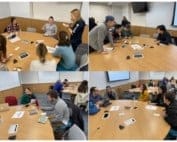
IDEA Series: Use of gamification through Clue: Pediatric Rash Edition
Emergency Medicine (EM) physicians care for anyone, with anything, at any time. This includes pediatric patients as well as adults. For those without advanced pediatric training, “sick kids” can be quite intimidating. Rashes in the pediatric population are often benign, but in rare cases they portend significant illness. Rashes are also frequent chief complaints; In 2015, there were 1,452,300 pediatric ED visits for “skin and subcutaneous tissue disorders” [1]. We sought to improve the teaching of pediatric rashes in our residency curriculum. [+]
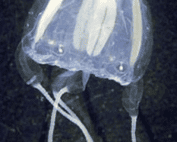
ACMT Toxicology Visual Pearls: The Doom from Down Under
Inadvertent contact with this aquatic species causes excruciating pain and an overwhelming sense of impending doom. What is this? Box Jellyfish (Chironex fleckeri) Irukandji Jellyfish (Carukia barnesi) Lion’s Mane Jellyfish (Cyanea capillata) Portuguese Man o’ War (Physalia physalis) [+]

Christopher Gardner, MD
Carolinas Medical Center, Charlotte, NC

ALiEMU New Course: Pediatric Ultrasound-Guided Peripheral IV Access
Did you know that the ALiEMU learning management platform has courses in addition to the AIR Series? We just published the third installment of the pediatric point-of-care ultrasound (POCUS) series, which focuses on peripheral IV access using ultrasonography. Do you use the traditional transverse, transverse with dynamic needle tip visualization, or longitudinal ultrasound technique? [+]
EMRad: Can’t Miss Adult Shoulder Injuries
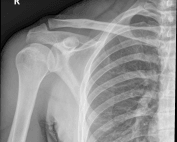
Have you ever been working a shift at 3 am and wondered, “Am I missing something? I’ll just splint and instruct the patient to follow up with their primary doctor in 1 week.” This is a reasonable approach, especially if you’re concerned there could be a fracture. But we can do better. Enter the “Can’t Miss” series: a series organized by body part that will help identify injuries that ideally should not be missed. This list is not meant to be a comprehensive review of each body part, but rather aims to highlight and improve [+]
EMRad: Radiologic Approach to the Traumatic Shoulder
This is EMRad, a series aimed at providing “just in time” approaches to commonly ordered radiology studies in the emergency department [1]. When applicable, it will provide pertinent measurements specific to management, and offer a framework for when to get an additional view, if appropriate. We have already covered the elbow, the wrist, and the foot and ankle. Next up: the shoulder. [+]
ACMT Toxicology Visual Pearls: Tox Never Smelled So Good
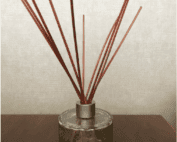
A child presents with tachypnea, tachycardia, and drooling after ingesting the sweet smelling contents of the pictured household item. What toxin could explain this presentation? Camphor Eucalyptus oil Menthol Methyl salicylate/Oil of Wintergreen [+]

Jessica Hoglund, MD
Carolinas Medical Center

Welcoming PECARN to Twitter
Our organization has always been a champion and fan of the Pediatric Emergency Care Applied Research Network (PECARN) research collaborative. We jointly worked on designing their official Head Injury Decision Tool found printed in various emergency departments around the country, featured several PECARN authors on our ALiEM podcast, and provide summaries of their 147-and-growing list of publications in our P3 app. So it follows that we are incredibly honored and thrilled to announce our Twitter collaboration. We will be helping to run their Twitter account. Join @PECARNteam and keep current on their growing list of publications, their clinical take-home points, [+]

ALiEM AIR | Toxicology 2020 Module
Welcome to the AIR Toxicology Module! After carefully reviewing all relevant posts from the top 50 sites of the Social Media Index, the ALiEM AIR Team is proud to present the highest quality online content related to toxicology emergencies. 11 blog posts within the past 12 months (as of March 2020) met our standard of online excellence and were curated and approved for residency training by the AIR Series Board. We identified 1 AIR and 10 Honorable Mentions. We recommend programs give 5.5 hours (about 30 minutes per article) of III credit for this module. [+]