About Michelle Lin, MD

ALiEM Founder and CEO
Professor and Digital Innovation Lab Director
Department of Emergency Medicine
University of California, San Francisco

Paucis Verbis: Lifetime attributable risk of cancer from CT

How great would it be if you could give patients concrete numbers when you are talking about cancer risk and CT? Well, Dr. Hans Rosenberg (Univ of Ottawa)  has come up with just such a table.

Using this table you can say that the risk is about “one in …”

PV Card: Cancer Risk from CT


Adapted from [1]
Go to ALiEM (PV) Cards for more resources.

Reference

  1. Smith-Bindman R. Radiation Dose Associated With Common Computed Tomography Examinations and the Associated Lifetime Attributable Risk of Cancer. Archives of Internal Medicine. 2009;169(22):2078. doi: 10.1001/archinternmed.2009.427
By |2021-10-13T08:43:55-07:00Jun 10, 2011|ALiEM Cards, Radiology|

Trick of the Trade: Fingertip injuries

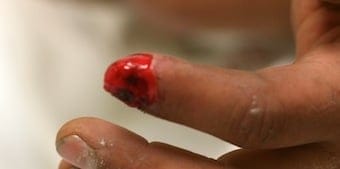
FignernailGone2sm fingertip injuriesFingertips can get injured in a variety of ways such as machetes, meat grinders, and broken glass. You name it, and we’ve probably seen it. Some don’t actually need anything invasive done because the skin is basically just torn off. The wound just needs to be irrigated, explored, and then bandaged to allow for secondary wound closure.

What do you do if the finger injury keeps oozing and the finger tip is too painful for the patient to apply firm pressure? Poking the finger with 2 needles to perform a digital block seems a bit overkill.

(more…)

By |2020-02-12T20:41:43-08:00Jun 8, 2011|Orthopedic, Trauma, Tricks of the Trade|

SAEM National Meeting a success!

SAEMlogo

The national SAEM meeting in Boston just concluded and was a success. As part of the SAEM Social Media Committee, I was encouraged to see how many people were tweeting events from the meeting. Check out the tweets with the #SAEM11 hashtag.

To view beyond the most recent 100 tweets, you can view here.


By |2016-11-11T18:53:04-08:00Jun 6, 2011|Medical Education|

Paucis Verbis: Pulmonary Embolism Clinical Prediction Rules

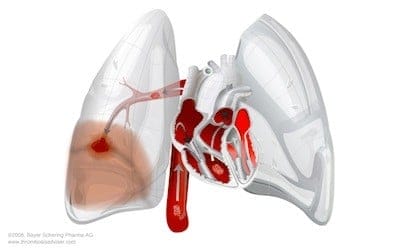
Pulmonary embolism prediction tools“Should I get a D-Dimer test or CT chest angiogram on my patient with atypical chest pain to rule-out a pulmonary embolism?” This is a common question asked by emergency physicians on a routine basis.

Here are 3 clinical prediction rules: PERC, Wells, and Simplified Geneva Score. Personally, I’ve never used the Geneva Score, but it’s worth looking at.

A WORD of CAUTION

These rules should be used with caution, because none of these scoring protocols are perfect. For instance, in a recent publication in the Journal of Thrombosis and Haemostasis, the authors found that the PERC rule does not actually safely exclude PEs.1 Big bummer for us clinicians.

PV Card: Pulmonary Embolism Clinical Prediction Rules


Go to ALiEM (PV) Cards for more resources.

Thanks to Dr. Kit Tainter (Mount Sinai PGY-4 EM resident) for coming up with the idea for this card!

Reference

  1. Hugli O, Righini M, Le G, et al. The pulmonary embolism rule-out criteria (PERC) rule does not safely exclude pulmonary embolism. J Thromb Haemost. 2011;9(2):300-304. [PubMed]
By |2021-10-13T08:47:00-07:00Jun 3, 2011|ALiEM Cards, Pulmonary|

Tricks of the Trade: Tea bags to the rescue

 
TeabagEyes

I have heard of using tea bags under your eyes to reduce puffiness, but to combat odors in the ED?

In my growing list of “Tricks of the Trade” tips for protecting your olfactory nerves (Antacid booties for toxic sock syndrome, aerosolized orange juice, abscess drainage using suction), I got a clinical gem from Dr. James Juarez (Rogue Valley Medical Center in Ashland, OR) after my recent Tricks of the Trade talk at High Risk EM in San Francisco.

(more…)

By |2019-02-19T18:41:48-08:00Jun 1, 2011|Tricks of the Trade|

Article review: Improving case presentations with theater training

“To be or not to be?”

What could be more strange on a medical school curriculum than a theater training course? The authors of this study in Medical Humanities innovatively designed a 1-week elective course to help medical students at Mayo Medical School to improve their case presentation skills in partnership with the Guthrie Theater.

In this pilot course, seven medical students (six 1st year students, one 4th year student) participated. The learning objectives were:

  • Hear stories: those told by patients, colleagues and in written narratives
  • Identify the elements of a narrative, and examine stories for narrative structure 
  • Share stories: through case presentations, body movement, storytelling and acting 
  • Present a patient’s story with elements of traditional medical presentation and narrative

Students were evaluated for the following competencies:

  • The cognitive capacity and flexibility needed to evaluate and acquire reliable clinical information. 
  • The ability to actively and generously observe and listen to another. 
  • An understanding of the components of narrative leading to effective story construction. 
  • A performance sensibility that ensures the delivery of a good story, otherwise known as stage presence. 
  • The finesse to communicate empathically with a patient to create an environment in which she or he feels safe, satisfied and heard.

Eleven sessions, over 25 hours, comprised of the following topics:

  • Improvisation activities
  • Introduction to case presentations
  • Body language – contact improvisation
  • Performance of story
  • Neutral dialogue and elements of a narrative
  • Narrative in context – what’s lost, what’s gained?
  • Listening with a neutral mask
  • Storytelling
  • Writing and presenting case histories
  • The art of personal monologue
  • Final presentations with professional critique

Survey responses uniformly found that students valued this creative, non-traditional approach to learning about interpersonal communications and oral presentations. The art of focused storytelling to an audience  is exactly what physicians do every day when presenting clinical cases.


Reference
Hammer RR, et al. Telling the Patient’s Story: using theatre training to improve case presentation skills. Medical humanities. 2011, 37(1), 18-22. PMID: 21593246
.

By |2016-11-11T18:53:06-08:00May 30, 2011|Education Articles, Medical Education|
Go to Top