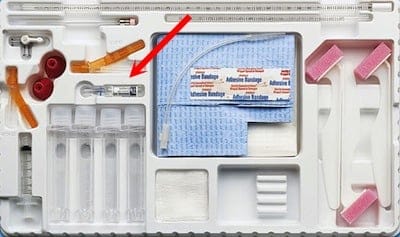
Trick of the Trade: A mini-suction device
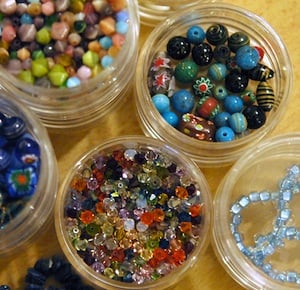
You are doing a shift in the pediatric ED and you are evaluating a kid with a small bead in her ear. There are a ton different approaches you can use (eg. tissue adhesive glue on a q-tip stick). If the bead is in too deep, blindly trying to adhere the foreign body to the glue is a bit risky. Sometimes applying gentle irrigation might not be enough to wash out the bead. You want to avoid irrigation if you worry about a tympanic membrane rupture.
 In 2010, the Carnegie Foundation for the Advancement of Teaching published recommendations for the future reform of medical education. This same Carnegie Foundation had also commissioned and published the landmark 1910 Flexner report
 I just finished taking the 2011 LLSA exam to remain eligible for recertification. The only good thing about this test is that it gives me interesting topics for my Paucis Verbis cards.