About Michelle Lin, MD

ALiEM Founder and CEO
Professor and Digital Innovation Lab Director
Department of Emergency Medicine
University of California, San Francisco

Trick of the trade: Nebulized … orange juice?

Sniff

In my theme of detoxifying malodorous smells in the ED, I recently learned of a new way of masking odors. Imagine the stress on your olfactory nerves from the combined effects of urinary and fecal incontinence from a nursing home patient.

An ingenious nurse proposed nebulizing actual coffee within the room. Unfortunately, our ED was out of coffee at the moment.

(more…)

By |2019-01-28T22:40:09-08:00Apr 27, 2011|Tricks of the Trade|

Paucis Verbis: Dental infections

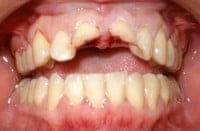
PeriapicalAbscessTo follow up with the wildly popular Paucis Verbis card made by Dr. Hans Rosenberg (University of Ottawa), here is his card on Dental Infections. This card summarizes common dental infection complaints (like the periapical abscess seen to the right) that we see in the Emergency Department.

PV Card: Dental Infections


Adapted from [1]
Go to ALiEM (PV) Cards for more resources.

Reference

  1. Nguyen D, Martin J. Common dental infections in the primary care setting. Am Fam Physician. 2008;77(6):797-802. [PubMed]
By |2021-10-15T11:10:29-07:00Apr 22, 2011|ALiEM Cards, Dental|

Trick of the Trade: Corneal reflex test
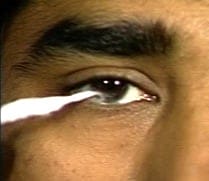
CornealreflexThe corneal reflex test (blink test) examines the reflex pathway involving cranial nerves V and VII. Classically the provider lightly touches a wisp of cotton on the patient’s cornea. This foreign body sensation should cause the patient to reflexively blink.

This maneuver always makes me a little worried about causing a corneal abrasion, especially if you are examining a very somnolent patient. You are wondering — Is there no blinking because you’re not touching the cornea hard enough? You apply harder pressure but still no blink. You repeat the test and now the patient finally blinks. That’s 3 times you’ve just scraped against the cornea.

What’s an alternative approach?

(more…)

By |2016-11-11T18:58:00-08:00Apr 20, 2011|Neurology, Tricks of the Trade|

First annual Medical Apps Awards: Vote now


Gold Cup Trophy

The polls for the first annual Medical Apps Awards is now open. Voting closes April 21, 2011 @ 12:00 AM EST.

There are 3 categories that you can vote on:

1. Best Medical App for Healthcare Professionals

  • MediBabble – a medical translation tool
  • Doximity – a professional networking tool
  • Medscape – comprehensive guide to drugs, interactions, diseases, & procedures
  • Epocrates – comprehensive guide to drugs, interactions, identifying pills, & calculators
  • DrChrono – the first EMR for the ipad

2. Best Medical App for Patients

  • iHealth BPM w/ cuff – the first medical app to take your blood pressure & keep track of it
  • Asthma Maze – know which food additives & cosmetic ingredients can trigger an asthma attack
  • Mayo Clinic Diabetes Type 2 Wellness Solutions – comprehensive guide to diabetes
  • Free RX iCard – get discounts on prescription drugs at participating pharmacies, easy locater
  • Calorie Tracker by Livestrong – keep track of your daily calories and weight loss progress

3. Most Innovative Medical App

  • Airstrip – monitor your patient’s vitals, waveforms, labs, I/Os, meds, & allergies from home
  • Webicina – a comprehensive online medical resource for both patients & healthcare folks
  • Fooducate – scan any barcode in the grocery store to instantly see product health highlights
  • PocketCPR w/cradle – real-time feedback so that anyone can do CPR correctly
  • Google Translate – speak into your phone and it will speak out the translation
mainMediBabbleLogo

I thought I would mention this since Medibabble was created by recent graduates from the UCSF School of Medicine. It’s a creative, well thought-out, free medical translation app. I had highlighted the app back in Feb 2011 and deserves to be on the list of impressive apps.

The downside of voting is that you are required to enter your email and snail-mail address in case you win the prize. Good luck to all the nominees!

I do not have any financial ties with any of these apps.

By |2016-11-20T10:59:28-08:00Apr 19, 2011|Social Media & Tech|

Article review: What’s wrong with self-guided learning?

TugOfWar

There is a constant tug-of-war between self-guided learning and supervised learning. With the advances in technology for medical education such as asynchronous learning modules, simulation, there has been a movement away from traditional, instructor-led teaching and towards more independent, self-guided learning. There is less supervision of learning.
But left unsupervised, are learners learning the right things and doing so optimally? The authors, in this review, say yes and no.

(more…)

By |2016-11-11T18:58:01-08:00Apr 18, 2011|Education Articles, Medical Education|

Paucis Verbis: Dental trauma

OLYMPUS DIGITAL CAMERAHow cool is this — I have talented emergency physicians contributing Paucis Verbis card content! This week features excellent pearls on Dental Trauma by Dr. Hans Rosenberg (University of Ottawa). Here’s his recent article in Annals of EM on reimplantation of avulsed teeth.1

PV Card: Dental Trauma


Go to ALiEM (PV) Cards for more resources.

Reference

  1. Rosenberg H, Rosenberg H, Hickey M. Emergency management of a traumatic tooth avulsion. Ann Emerg Med. 2011;57(4):375-377. [PubMed]
By |2021-10-15T11:15:07-07:00Apr 15, 2011|ALiEM Cards, Dental|

Trick of the Trade: Oblique CXR to look for pneumothorax


PneumothoraxCTSupine chest xrays have an extremely low sensitivity (12-24%) in detecting pneumothoraces. Because a pneumothorax layers anteriorly on an AP CXR film, the xray beam is perpendicular rather than tangential to the pneumothorax edge. This makes visualizing a small to moderate sized pneumothorax extremely difficult. So you are left to look for indirect signs such as a deep sulcus at the costophrenic angle or subcutaneous air. I’m often surprised at how large of a pneumothorax can be missed on CXR based on CT imaging. The image to the right shows a large left-sided pneumothorax on CT.

What if you have an equivocal bedside ultrasound result in looking for a pneumothorax, and the patient is too unstable to go to CT?

 
By |2019-02-19T18:08:06-08:00Apr 13, 2011|Radiology, Tricks of the Trade|
Go to Top