Trick of the Trade: Knee Arthrocentesis
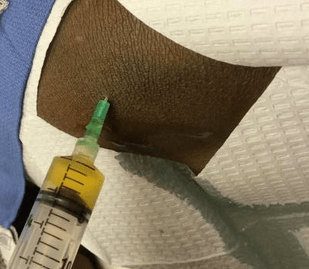 A patient comes into the ED and you suspect septic arthritis to the knee. As you consent the patient for arthrocentesis, you can tell s/he has reservations about a needle being inserted into their knee and left in place while you aspirate. You also think in the back of your mind how tricky it is to sometimes change syringes while keeping the needle in the correct location. Is there another way of tapping the knee without a needle?
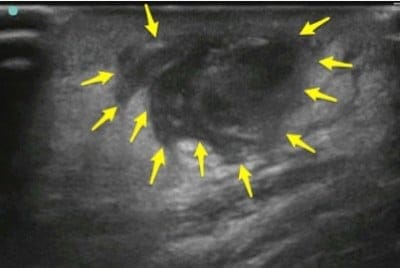

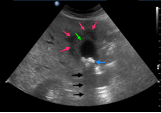

 Welcome to another ultrasound-based case, part of the “Ultrasound For The Win!” (#US4TW) Case Series. In this peer-reviewed case series, we focus on a real clinical case where bedside ultrasound changed the management or aided in the diagnosis. In this case, a 39-year-old female with history of lupus presents with chest pain.