New Antibiotic Dalbavancin: Should we use this in the ED?

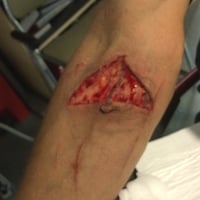
antibiotic ivA new antibiotic will soon be approved for skin and soft tissue infections (SSTIs): dalbavancin. The company behind the drug will likely begin marketing heavily to emergency physicians as many patients with SSTIs seek care in the Emergency Department (ED). However, should we seriously consider dalbavancin as an addition to an ED’s arsenal against SSTIs and should it change our practice?

(more…)

By |2019-02-19T18:22:22-08:00May 12, 2014|Tox & Medications|

Geriatric Emergency Departments: Coming to a Hospital Near You?

senior ERWe are all familiar with the concept of pediatric EDs. We see them as medical students, we train in them as residents, and we work alongside pediatric EM fellows. It is generally clear what pediatric EDs have to offer: smaller sized beds and equipment, nurses trained in pediatric triage and assessment who know how to put IVs in babies and calm crying kids, and physicians with training in pediatric Emergency Medicine. But what about the other end of the age spectrum? Over the last 10 years geriatric EDs, also called Senior EDs, have been popping up around the country. You may have been wondering why that is, and what they have to offer. Here are a few thoughts.

(more…)

Deep Vein Thrombosis (DVT): Wells criteria and D-dimers happy together

DVTYou are evaluating a 45-year-old male who is complaining of calf pain. He has a history of cancer however he has never had a clot in the past.   The leg is neither swollen nor warm but he notes a cramping sensation in the posterior portion of his calf.  You are concerned for a deep vein thrombosis (DVT) and consider the multiple means to reliable exclude the diagnosis: Wells score, D-dimers, ultrasound? What works?

(more…)

By |2016-11-11T19:46:08-08:00Apr 24, 2014|Cardiovascular|

Atypical Antipsychotic Medication Re-initiation in the ED

Pills antipsychotic medicationThe acute episode of intoxication and agitation has subsided and your patient is calm. She has been medically cleared and is ready to be moved to a less acute, less monitored portion of the ED to await further assessment and treatment for her underlying psychiatric conditions. As a well-intentioned emergency medicine practitioner, you wish to give your patient the tools she needs to maintain this calm status by restarting her home atypical antipsychotic medication. What is the best way to go about doing this?

While the atypical antipsychotics have generally been considered safer than the first generation agents due to the decreased risk of extrapyramidal side effects at therapeutic doses, this class is not without adverse effects. All of the medications in this class are capable of causing sedation due to their antihistaminergic effects and some of these agents also have an alpha-blockade effect possibly leading to orthostatic hypotension.1

Re-Initiation Strategy: Atypical Antipsychotic Medication

When faced with the prospect of re-initiation of atypical antipsychotics, it is necessary to determine how long the patient has been without medication if possible. While there is a lack of literature regarding this topic, select medications make reference to re-initiation in their package inserts.2–4 These recommendations range from “an interval off” to “more than one week”, possibly indicating that a few missed doses may not have an impact on the re-initiation dose. However, when it is determined that a patient has been without their atypical antipsychotic for a few days to a week or the period of nonadherence is unknown, caution with re-initiation is justified and some package inserts call for restarting the initial dosing titration.

MedicationPackage insert: Day 1 dosingRe-initiation recommendation
Aripiprazole (Abilify)Schizophrenia: 10-15 mg PO Q 24 hours
Bipolar mania: 15 mg PO Q 24 hours
Bipolar mania (adjunctive therapy): 10-15 mg PO Q 24 hours
No recommendations
Asenapine (Saphris)Schizophrenia: 5 mg PO Q 12 hours
Bipolar mania (monotherapy): 10 mg PO Q 12 hours
Bipolar mania (adjunctive therapy): 5 mg PO Q 12 hours
No recommendations
Iloperidone (Fanapt)Schizophrenia: 1 mg PO Q 12 hoursWhen off > 3 days, the initial dosing titration schedule should be followed
Lurasidone (Latuda)Schizophrenia: 40 mg PO Q 24 hours
Bipolar depression: 20 mg PO Q 24 hours
No recommendations
Olanzapine (Zyprexa)Schizophrenia: 5-10 mg PO Q 24 hours
Bipolar disorder: 10-15 mg PO Q 24 hours
No recommendations
Paliperidone (Invega)Schizophrenia: 6 mg PO Q 24 hours
Schizoaffective disorder: 6 mg PO Q 24 hours
No recommendations
Quetiapine (Seroquel)Schizophrenia: 25 mg PO Q 12 hours
Bipolar mania: 50 mg PO Q 12 hours
Bipolar depression: 50 mg PO Q HS
When off ≥ 1 week, the initial dosing titration schedule should be followed
Risperidone (Risperdal)Schizophrenia: 2 mg PO Q 24 hours
Bipolar mania: 2-3 mg PO Q 24 hours
When off for an interval, the initial titration schedule should be followed
Ziprasidone (Geodon)Schizophrenia: 20 mg PO Q 12 hours
Bipolar I disorder: 40 mg PO Q12 hours
No recommendations
* Dosing above is not adjusted for renal or hepatic dysfunction or concomitantly administered interacting medications

Due to the risk of agranulocytosis for which there is a black box warning, all patients prescribed clozapine must be enrolled in a registry which monitors the patient’s white blood cell count and absolute neutrophil count.  As a result, clozapine dosing must be made in collaboration with the patient’s clozapine registry. In addition, clozapine also carries a black box warning for cardiovascular and respiratory effects and states that for patients who have been without clozapine for 2 or more days, they are to start with 12.5 mg once or twice daily.5

Other Agents

For other agents, the course of action is less clear. Dosing decisions should ideally be made in conjunction with a psychiatric care provider; however this is not always feasible in the ED setting. For patients on atypical antipsychotics without clear re-initiation instructions in the prescribing information and doses higher than initial dosing (see table), consider a dose reduction. Anecdotally, re-initiating the dose at 50-80% of the maintenance dose seems reasonable in hemodynamically stable patients; however, there are not identified data to support this strategy. Regardless of the strategy implored, vigilance is important when re-initiating atypical antipsychotics. This is especially noteworthy in patients who will be in a less monitored area of the department.

Take Home Points

  • Determine how long the patient has been without their atypical antipsychotic if possible.
  • Use caution when re-initiating home doses of atypical antipsychotic agents and consider dosing reductions in patients who have been without their medications for more than a few doses.
  • Clozapine must be ordered in conjunction with the patient’s clozapine registry and when off for 2 or more days usually requires restarting initial dosing.
  • When the maintenance dose is above the initial dosing and re-initiation instructions are not within the package insert, consider a dose reduction (such as restarting  50-80% of the patient’s stabilized dose, depending on the clinical picture) to avoid adverse events, especially in less monitored patients

Reviewer: Clayton English, PharmD, BCPP

References

  1. Minns A, Clark R. Toxicology and overdose of atypical antipsychotics. J Emerg Med. 2012;43(5):906-913. [PubMed]
  2. Risperdal® [package insert].  Titusville, NJ. Janssen Pharmaceutical, Inc; 2007. Rev 11/2013.
  3. Seroquel® [package insert]. Wilmington, DE. AstraZenica; 2013.
  4. Fanapt® [package insert]. East Hanover, NH. Novartis Pharmaceutical Corporation; 1/2013.
  5. Clozapine [package insert]. Morgantown, WV. Mylan Pharmaceuticals Inc. 5/2013.
By |2023-07-30T23:43:01-07:00Apr 22, 2014|Psychiatry, Tox & Medications|

Trick of the Trade: Making your own homemade ultrasound gel

UltrasoundKenyaYou are spending a month in rural Kenya, doing an ultrasound teaching course. Your enthusiastic participants have been ultrasounding every chance they get. Unfortunately, this has caused your ultrasound gel supplies to dwindle. It will be a month before a new shipment of gel arrives from Nairobi. This gel will cost about $5 per bottle, which is a considerable expense for the local hospital’s budget.

(more…)

Understanding Phenytoin Equivalents

fosphenytoin image 1 (1)Sometimes, in an effort to make things simpler, we actually make them more confusing. Such is the case with phenytoin equivalents. 

Fosphenytoin is a water-soluble prodrug of phenytoin. After IV administration, much of the fosphenytoin is metabolized to phenytoin within 15 minutes. Advantages over phenytoin include the option for IM administration and less cardiotoxicity allowing for faster infusion rates. Even the potential for hyperphosphatemia from the release of phosphate is generally inconsequential. 

(more…)

Neuraminidase Inhibitors for Influenza – The Truth, The Whole Truth, and Nothing But the Truth Finally

Influenza

Over the last 5 years, the use of neuraminidase inhibitors for the treatment of influenza has skyrocketed. Emergency physicians have been pushed to prescribe these medications under the belief that they reduced symptoms, the risk of complications, hospitalizations, and transmission. However, the recommendation for the use of these drugs has never sat on firm evidence-based ground. So what did we know then, and what do we know now?

(more…)
Go to Top