PEITHO Trial: Fibrinolysis for Intermediate-Risk Pulmonary Embolism

Pulmonary embolism
ExpertPeerReviewStamp2x200
Most of us would agree that massive PE is treated with fibrinolysis and non-massive PE is treated with anticoagulation. The area of great debate has been the optimal treatment for sub-massive PE. The MOPETT Trial was published in January 2013 and although the patient population was small, it did show a huge benefit in pulmonary pressures at 28 months with fibrinolysis. The next study we have all been waiting for is the Pulmonary Embolism Thrombolysis (PEITHO) trial, which was just published yesterday in the NEJM, evaluating fibrinolysis for patients with intermediate-risk PE.

(more…)

Top 10 reasons NOT to order a CT scan for suspected renal colic

CT_Scanner_01.jpg2d5efea2-a1b7-4c15-848e-4d6c5567eecfLargerExpertPeerReviewStamp2x200It appears that the excitement and utilization of computed tomography (CT) imaging in the emergency department (ED) has far outpaced our concern for the short- and long-term consequences of increased reliance on this technology. CT has greatly supplemented, or even replaced, our clinical decision making for many chief complaints.  Many articles document the dramatic increased CT use in contemporary practice, including a 330% increase in the rate of CT imaging from 1996 to 2007. The likelihood of a CT order being part of any ED encounter now approaches 15%, with no signs of decline.1

(more…)

Article: Hypotonic maintenance IV fluids in pediatrics

IVbags2 copyA 6-month-old male presents to the emergency department with diarrhea and vomiting. Despite antiemetic therapy, the the child is unable to tolerate oral intake in the ED and so you opt to admit him to the hospital for IV fluids.  The pediatric hospitalist requests that you write maintenance fluids prior to admission to the floor. Utilizing the 4-2-1 rule you calculate maintenance needs and choose D5 ½NS as your fluid. This is what you had been taught to utilize in children. It seems appropriate… but is it?

(more…)

By |2016-11-11T19:19:57-08:00Apr 9, 2014|Endocrine-Metabolic, Pediatrics|

Beware of fluoroquinolones: You, your patient, and the FDA

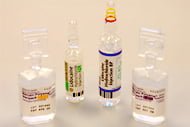
LevofloxacinFluoroquinolones are a widely used class of antibiotic that are effective in treating a wide variety of infections. Despite their popularity there is increasing concern regarding to the potential complications associated with these agents. In 2008, the U.S. Food and Drug Administration (FDA) issued a black box warning involving fluoroquinolone use and an increased risk of tendon rupture. More recently in 2013 the FDA released another warning regarding the risk of peripheral neuropathy and required additional warnings to be added to the drug labels [1].

(more…)

By |2017-03-05T14:18:39-08:00Apr 7, 2014|Medicolegal, Tox & Medications|

High Sensitivity Troponin T and Acute Myocardial Infarction: One and Done?

acute-coronary-syndromeExpertPeerReviewStamp2x200

There has been a lot of publicity about evaluation of chest pain patients in the emergency department (ED) with high sensitivity troponin testing. In the past with older troponin assays, clinicians would evaluate patients, get an ECG, and an initial set of cardiac biomarkers. The subsequent set of biomarkers would be performed at 6-8 hours later before determination of disposition. In the past few years, several studies have been published evaluating point of care troponins,  sensitive troponins, and high sensitivity troponins which have changed our practice and evaluation of these patients.  An early version of a study was recently released in the Journal of the American College of Cardiology (JACC) stating that for ED chest pain patients, we may be able to discharge patients from the ED with an initial normal ECG and single high sensitivity troponin T (hs-cTnT). So is it true… one and done?

(more…)

Uncomplicated Urinary Tract Infections in Older Adults: Diagnosis and Treatment (Part 2)

abx urinary tract infections UTI

It seems like a simple enough question: How do you diagnose and treat uncomplicated urinary tract infections (UTIs) in older adults? The answer is: It depends. In Part 1 of this post we discussed the diagnosis of UTIs in cognitively intact older adults and those with underlying cognitive impairment. This post will discuss treatment options.

UTIs are the most common bacterial infection diagnosed in older adults (age 65 and over).1 They are the most common reason for antibiotic use and account for 5% of ED visits in this population.2 Remember from part 1 that asymptomatic bacteriuria is very common in older adults, and does not require treatment. Furthermore, pyuria with or without bacteriuria is also common in asymptomatic older adults, particularly those with chronic incontinence.3 The key to distinguishing a UTI from asymptomatic bacteriuria (ASB) is the patient’s symptoms. Also remember, that in older adults a male patient with a UTI is considered complicated, as well as patients with pyelonephritis, sepsis, indwelling catheters, or recent instrumentation. As with anything in medicine, there are risks and benefits to treatment. The benefits include relieving symptoms, and preventing progression of the infection to pyelonephritis or baceteremia. However, overuse of antibiotics can breed resistant bacteria, and the medications we use (as will be detailed below) are not without side effects. If it is clearly a UTI, then give antibiotics. If it is clearly asymptomatic bacteriuria or pyuria, then don’t. If you are not sure, and the patient or their care-giver are reliable, you could consider a wait-and-see approach in which you give a prescription, and instruct them to fill it only if the patient develops symptoms. Or, if the patient has good follow up, you could have them rechecked after 2 days, once the urine culture is completed.

Treatment of Uncomplicated UTIs

Once you have determined the patient does have an uncomplicated UTI, you have to decide how to treat them. E. coli are by far the most common bacteria isolated in community dwelling older adults (75-82% of UTIs) and nursing home residents (54-69% of UTIs). Proteus, Klebsiella, and Enterococcus species account for most of the remaining infections.2 Narrow-spectrum antibiotics should be used whenever possible to prevent the development of resistance.

“The selection of an antimicrobial regimen for the treatment of symptomatic urinary infection is similar in all populations. There is a predictable decline in creatinine clearance with aging, but age by itself does not require changes in agent or dose.”1

First Line Agents

Recommended first line agents are as follows:1,2,4

  • Nitrofurantoin 100 mg BID for 5 days
  • Trimethoprim/sulfamethoxazole (TMP/SMX) 160/800 mg BID for 3 days
  • Fosfomycin 3 gm single dose
  • Pivmecillinam 400mg BID for 3-7 days. This agent has lower clinical efficacy (55-82%). This is unavailable in the United States.

Alternative Agents

In case of allergy or concurrent use of a medication with interactions, the following are alternatives, with treatment for 3-5 days:

  • Ciprofloxacin 250-500 mg BID
  • Levofloxacin 250-500 mg daily
  • Amoxicillin/clavulanic acid 500 mg TID or 875 mg BID
  • Cephalexin 500 mg QID
  • Cefuroxime 500 mg BID
  • Cefixime 400 mg daily
  • Cefpodoxime 100-200 mg BID

Cautions and Considerations

There are some important cautions and considerations for each of these medications.

Nitrofurantoin

This medication has high cure rates (93%), comparable to ciprofloxacin, TMP/SMX, and fosfomycin. Resistance rates to nitrofurantoin are very low (around 2% for E. coli).4 Nitrofurantoin is effective against most E. coli species, including extended spectrum beta-lactamase (ESBL)-producing E. coli and also vancomycin-resistant enterococci (VRE)1. In general it is tolerated very well, and allergy to nitrofurantoin is uncommon. It has minimal ecologic adverse effects (ie development of resistant strains).5

  • Caution 1. Resistance: In general there are very low resistance rates to nitrofurantoin. However, Enterobacteriaceae such as proteus may be resistant. If the patient has a history of UTI with gram negative bacteria resistant to nitrofurantoin, TMP/SMX (Bactrim) would be a better choice.
  • Caution 2. Pyelonephritis: Avoid nitrofurantoin if you are concerned about early pyelo, as nitrofurantoin does not sufficiently penetrate the renal tissue to treat pyelonephritis.6
  • Caution 3. Renal Impairment: The classic teaching on nitrofurantoin was that it is ineffective at creatinine clearances or glomerular filtration rate (GFR) of <60mL/min because it does not concentrate in the urine sufficiently. Consensus guidelines from 2008 recommended against nitrofurantoin use if the GFR is <60 mL/min.7 An additional complication is that for older adults, calculations can over-estimate the GFR. However, some new evidence suggests that nitrofurantoin is effective even with a low GFR. One large retrospective study found nitrofurantoin was as effective in women with moderate renal impairment (GFR 30-50 mL/min) compared with trimethoprim for uncomplicated UTIs.8 Another retrospective study compared patients with GFR >50 mL/min and a review of the evidence by one group concluded that there was limited data supporting the contraindication of nitrofurantoin for patients with GFR < 60 mL/min, and state that currently available data supports its use in patients with GFR of > 40 mL/min.9 More studies are needed before definite recommendations can be made.

TMP/SMX

This is a reasonable first line agent, and is widely used. However, resistance has become a problem in many areas.

  • Caution 1. Resistance: You should consult your hospital’s antibiogram. In one cohort of community-dwelling older women, 32% of E. coli isolated from patients with UTI were resistant to TMP/SMX. Avoid if your resistance rates are greater than 20%, or if it has been used in that patient for a UTI in the last 3 months.6
  • Caution 2. Allergy: Sulfa allergies are common. The moiety responsible for the allergic reaction is present in other sulfonamide antibiotics (such as sulfasalazine and sulfadiazine) and in anti-retrovirals (such as amprenavir and fosamprenavira). The chemical structures in other “sulfa” drugs such as furosemide, hydrochlorothiazide, glipizide, and others should NOT have true cross-reactivity.10
  • Caution 3. Interaction with warfarin: TMP/SMX can increase the INR and increase the risk bleeding complications for patients on vitamin K antagonists.
  • Caution 4. Consider another medication in older patients with renal failure, or who are on NSAIDs or medications that could predispose them to renal failure or hyperkalemia.

Fosfomycin

This agent is less commonly used. It offers the simplicity of a single dose, avoiding the concerns of non-adherence. There is not as much data on the use of fosfomycin, although the studies that have been done showed clinical cure rates that were similar to other first line agents.6 Resistance data is not as widely available as most labs do not test for fosfomycin resistance. However, it is effective against VRE, methicillin-resistant S. aureus (MRSA), and ESBL-producing gram-negative rods.

  • Caution 1. Pyelonephritis: Avoid fosfomycin if you are concerned about early pyelonephritis.
  • Caution 2. Fosfomycin may not be available in all outpatient pharmacies. If you plan to use it, give a dose in the ED.

Fluoroquinolones

Ciprofloxacin is a commonly used first line agent, and a 3 day course is probably as effective as 7 days.11 However, resistance rates have become so high that it is now recommended ciprofloxacin be reserved for patients who cannot use other first line agents, who have more severe infections, or who have organisms resistant to other agents.2,4 Levofloxacin is also an effective agent, but provides broader coverage than is needed for most simple UTIs. It is best reserved for patients with complicated UTIs and pyelonephritis.

  • Caution 1. Resistance: Resistance in community dwelling older adults is around 17% for fluoroquinolones, and may be even higher in long-term care residents.2 Consult your hospital’s antibiogram.
  • Caution 2. Interaction with warfarin: Levofloxacin can increase the effect of warfarin leading to higher INR and potential for bleeding complications.

Summary

  1. When treating an uncomplicated UTI, check for prior culture resistance patterns for the patient.
  2. Recommended first-line agents include TMP/SMX, nitrofurantoin, and fosfomycin.
  3. Nitrofurantoin has low resistance rates, high cure rates, and few medication interactions. More data is needed regarding its use in renal impairment (see post by Bryan Hayes, PharmD), but it should be effective for those with a GFR >60 mL/min.
  4. Fluoroquinolones have high resistance rates and should be reserved for patients who cannot take one of the other agents, or who have more severe infections.
  5. Oral cephalosporins may serve as an alternative therapy in patients who use warfarin. TMP/SMX and levofloxacin can both increase the INR.

References

  1. Nicolle L. Urinary tract infections in the elderly. Clin Geriatr Med. 2009;25(3):423-436. [PubMed]
  2. Rowe T, Juthani-Mehta M. Diagnosis and management of urinary tract infection in older adults. Infect Dis Clin North Am. 2014;28(1):75-89. [PubMed]
  3. Ouslander J, Schapira M, Schnelle J, Fingold S. Pyuria among chronically incontinent but otherwise asymptomatic nursing home residents. J Am Geriatr Soc. 1996;44(4):420-423. [PubMed]
  4. Sanchez G, Master R, Karlowsky J, Bordon J. In vitro antimicrobial resistance of urinary Escherichia coli isolates among U.S. outpatients from 2000 to 2010. Antimicrob Agents Chemother. 2012;56(4):2181-2183. [PubMed]
  5. Hooton T. Clinical practice. Uncomplicated urinary tract infection. N Engl J Med. 2012;366(11):1028-1037. [PubMed]
  6. Gupta K, Hooton T, Naber K, et al. International clinical practice guidelines for the treatment of acute uncomplicated cystitis and pyelonephritis in women: A 2010 update by the Infectious Diseases Society of America and the European Society for Microbiology and Infectious Diseases. Clin Infect Dis. 2011;52(5):e103-20. [PubMed]
  7. Hanlon J, Aspinall S, Semla T, et al. Consensus guidelines for oral dosing of primarily renally cleared medications in older adults. J Am Geriatr Soc. 2009;57(2):335-340. [PubMed]
  8. Geerts A, Eppenga W, Heerdink R, et al. Ineffectiveness and adverse events of nitrofurantoin in women with urinary tract infection and renal impairment in primary care. Eur J Clin Pharmacol. 2013;69(9):1701-1707. [PubMed]
  9. Oplinger M, Andrews C. Nitrofurantoin contraindication in patients with a creatinine clearance below 60 mL/min: looking for the evidence. Ann Pharmacother. 2013;47(1):106-111. [PubMed]
  10. Brackett C, Singh H, Block J. Likelihood and mechanisms of cross-allergenicity between sulfonamide antibiotics and other drugs containing a sulfonamide functional group. Pharmacotherapy. 2004;24(7):856-870. [PubMed]
  11. Vogel T, Verreault R, Gourdeau M, Morin M, Grenier-Gosselin L, Rochette L. Optimal duration of antibiotic therapy for uncomplicated urinary tract infection in older women: a double-blind randomized controlled trial. CMAJ. 2004;170(4):469-473. [PubMed]
By |2021-03-09T12:07:25-08:00Apr 2, 2014|Genitourinary, Geriatrics|

Cellulitis: Do Not Get Blood Cultures

BloodCultureBottleYou are treating a patient with left lower leg cellulitis. The nurse is going to establish IV access, draw blood work, and give analgesia and antibiotics. Before walking into the room, the nurse asks, “Do you need me to grab a set of blood cultures?” Additionally the hospitalist had asked you to order a “set of cultures” on your most recent cellulitis admission. Should you proceed?

(more…)

Go to Top