SAEM Clinical Images Series: A Lethal Combination of Skin and Lung Findings

dermatomyositis

A 49-year-old female with a past medical history of recurrent diverticulitis initially presented with one month of shortness of breath and a minor nonproductive cough for which she was started on doxycycline by her primary care provider. She then developed a rash on her chest, upper back, and face. Antibiotics were switched to amoxicillin and azithromycin. She underwent a brief admission of six days for shortness of breath but did not have an oxygen requirement at that time. She was evaluated by pulmonology (evaluated for cocci, unknown results), and then discharged. She then presented again to the ED with two weeks of worsening shortness of breath, intermittent fevers (Tmax 101°F), nausea/vomiting, fatigue, and arthralgias.

Vitals: BP 100/66; HR 128; Temp 37.2 °C (99 °F); Resp 44; SpO2 84%; BMI 28.25 kg/m2; Wt 79.4 kg (175 lb); Ht 1.676 m (5′ 6″)

General: NAD

Cardiovascular: Tachycardia, no m/r/g

Lungs: Coarse breath sounds at bases bilaterally, tachypneic

Abdomen: Soft, non-distended

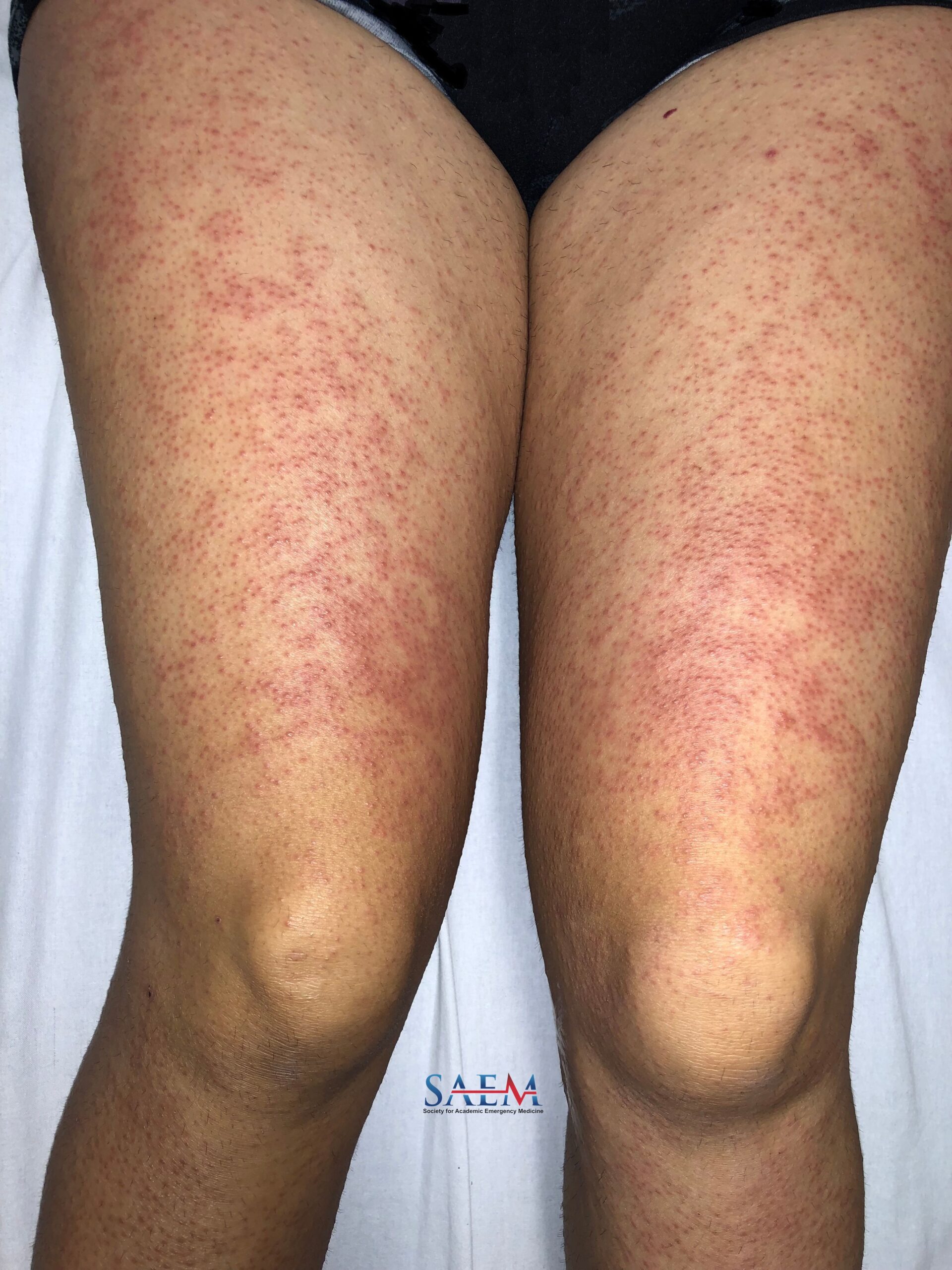
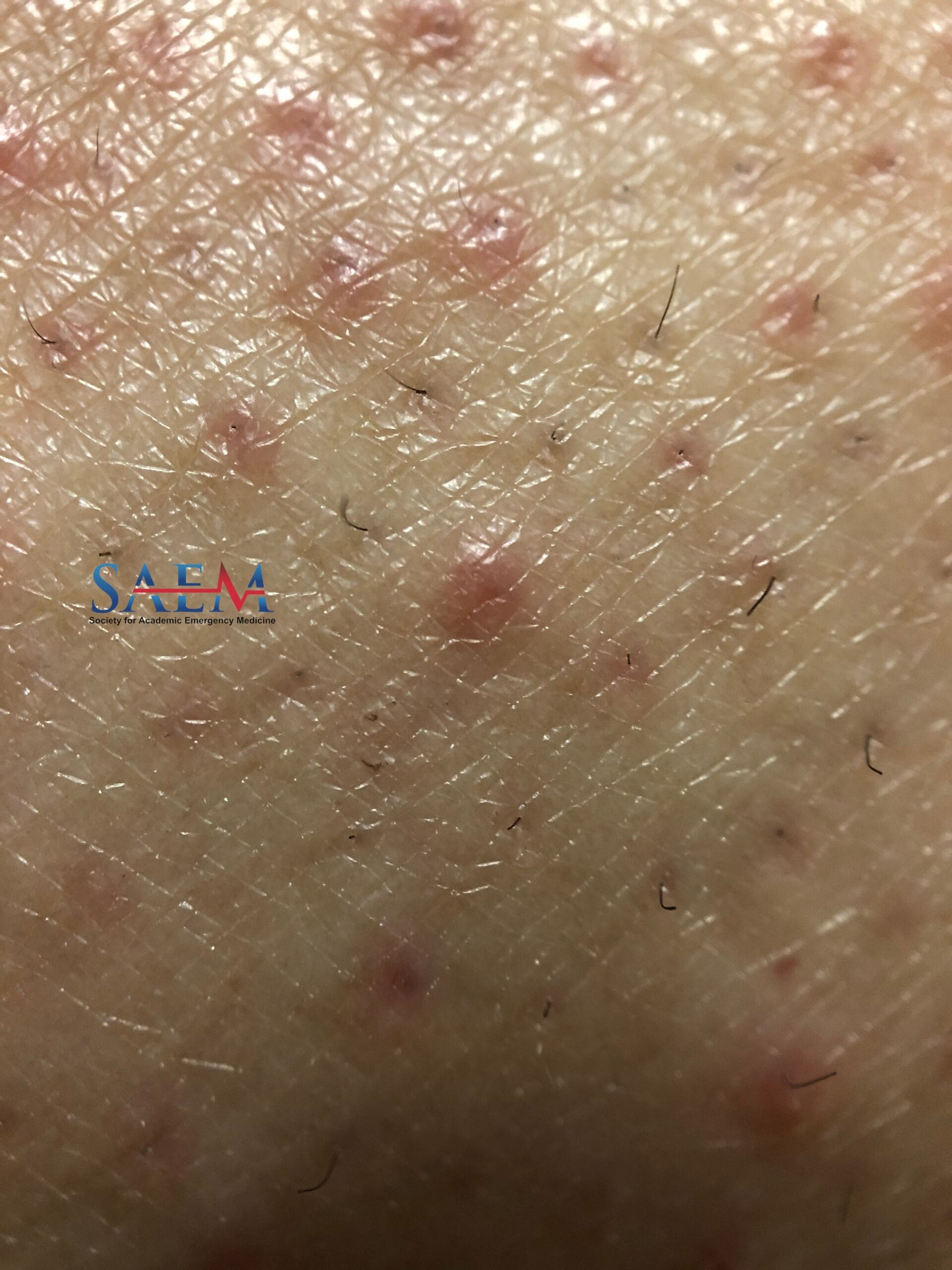
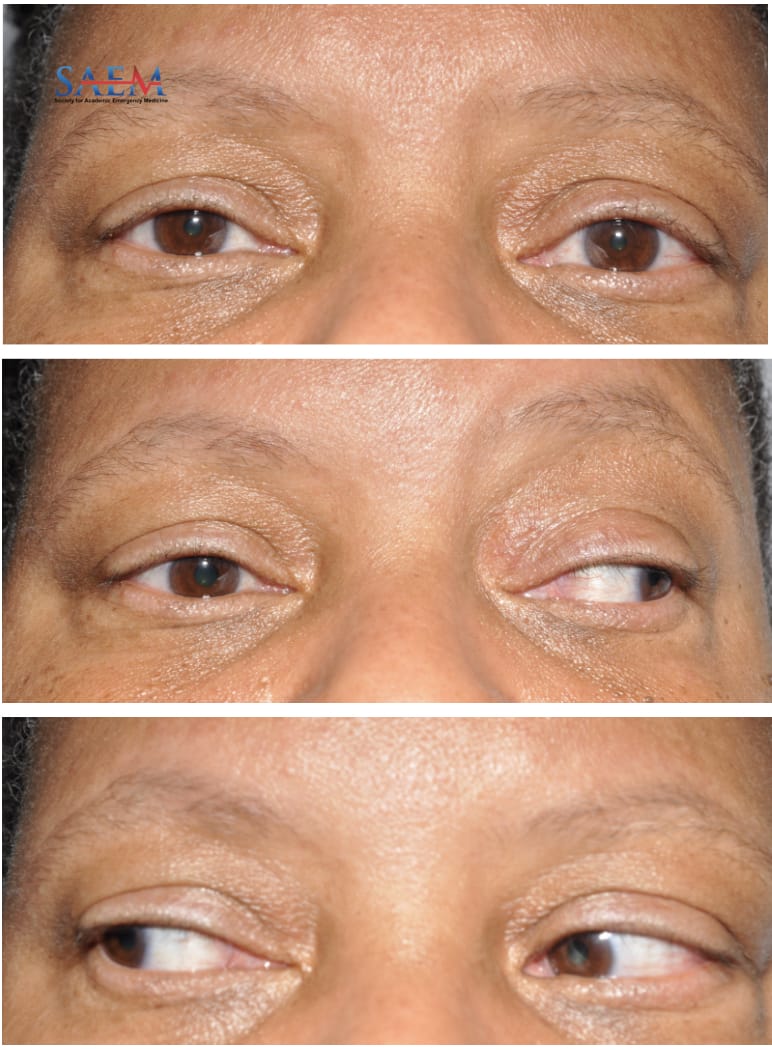
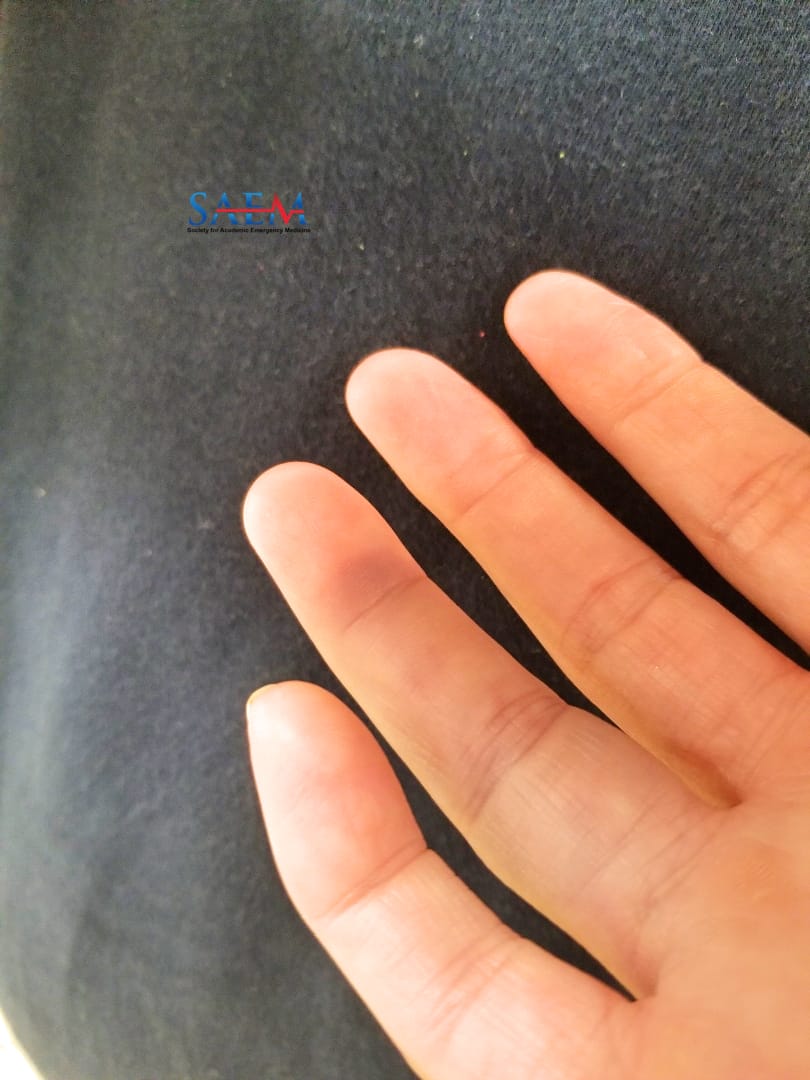
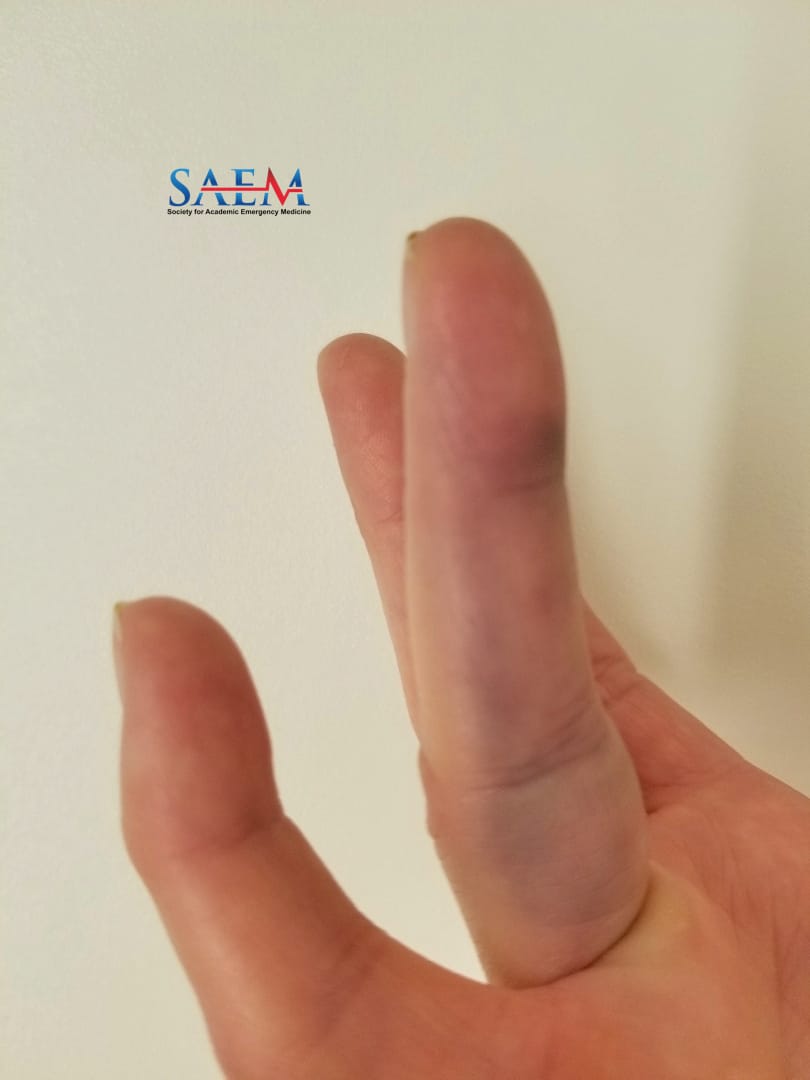
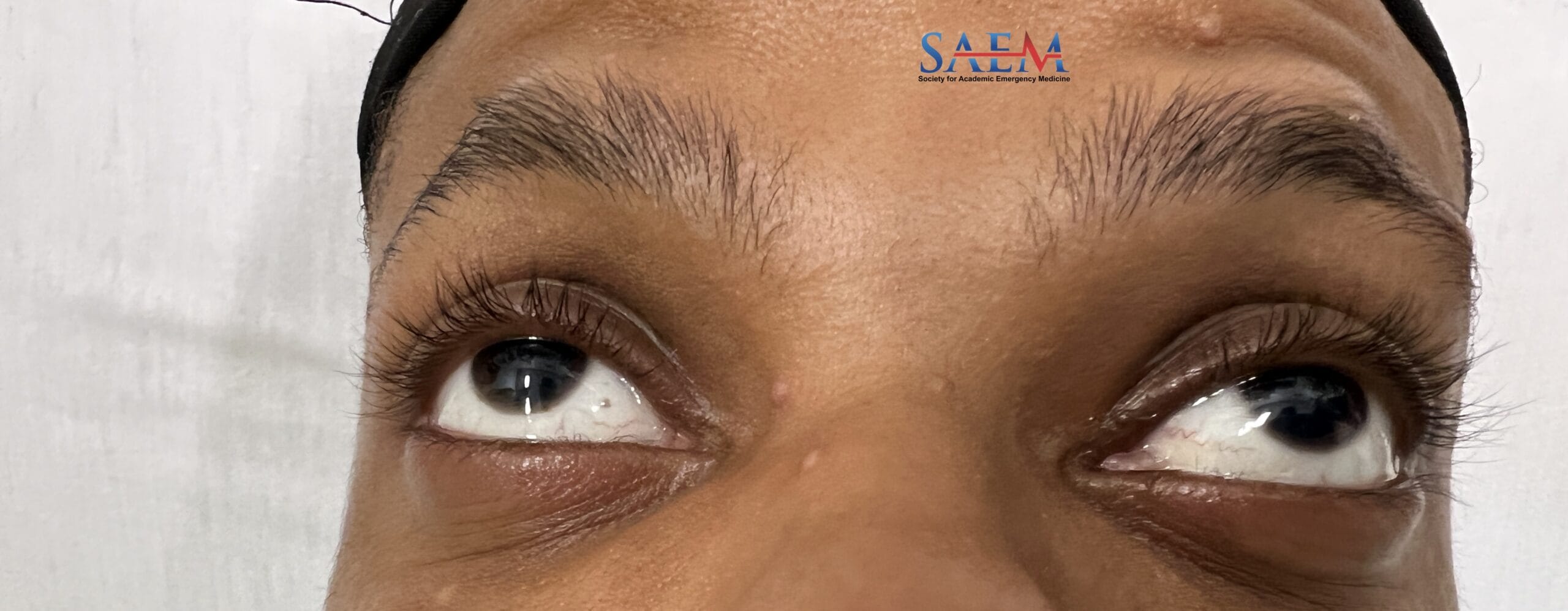
Skin: Heliotrope rash to face (violaceous, erythematous rash to eyelids and nasolabial fold), shawl sign (erythematous patches to chest and upper back), shallow ulcers to tongue and lower inner lip, tender papules involving palms and lateral fingers bilaterally, and faint erythema of proximal nail fold

White blood cell (WBC) count: No leukocytosis

ESR: Elevated

LDH: Elevated

CK: Within normal limits

CXR: Bilateral infiltrates

CTPE: Negative for PE, but with scattered areas of ground glass and consolidative opacities throughout both lungs.

If emergency medicine physicians consider MDA5 Dermatomyositis (MDA5 DM) with rapidly progressive interstitial lung disease (RP-ILD) on their differential for patients presenting with skin and pulmonary symptoms, this can result in more rapid diagnosis and aggressive treatment.

This patient was admitted requiring 40 L HFNC, then two days later required intubation for severe ARDS and was placed on VV-ECMO the same day. Her hospital course was complicated by tachyarrhythmias requiring cardioversion, and Takostubo physiology. She was found to be MDA-5 antibody positive and ultimately expired while waiting for a lung transplant.

Take-Home Points

  • Critical actions in approaching ED patients with dermatological physical exam findings (even in the absence of known rheumatological history) with progressive pulmonary symptoms should include early consideration of dermatomyositis, serologic testing, early rheumatology and pulmonology consults, and early consideration of ECMO as a bridge to response to immunotherapy or lung transplant
  • Beginning these critical actions with first patient contact in the ED will only help improve patient outcomes throughout hospitalization.
  • Huang K, Levy RD, Avina-Zubieta JA. Successful lung transplant in rapid progressive interstitial lung disease associated with anti-melanoma differentiation associated gene 5. Rheumatology (Oxford). 2020 Aug 1;59(8):2161-2163. doi: 10.1093/rheumatology/keaa032. PMID: 32068868.
  • Koga T, Fujikawa K, Horai Y, Okada A, Kawashiri SY, Iwamoto N, Suzuki T, Nakashima Y, Tamai M, Arima K, Yamasaki S, Nakamura H, Origuchi T, Hamaguchi Y, Fujimoto M, Ishimatsu Y, Mukae H, Kuwana M, Kohno S, Eguchi K, Aoyagi K, Kawakami A. The diagnostic utility of anti-melanoma differentiation-associated gene 5 antibody testing for predicting the prognosis of Japanese patients with DM. Rheumatology (Oxford). 2012 Jul;51(7):1278-84. doi: 10.1093/rheumatology/ker518. Epub 2012 Feb 29. PMID: 22378718.
  • Moghadam-Kia S, Oddis CV, Sato S, Kuwana M, Aggarwal R. Anti-Melanoma Differentiation-Associated Gene 5 Is Associated With Rapidly Progressive Lung Disease and Poor Survival in US Patients With Amyopathic and Myopathic Dermatomyositis. Arthritis Care Res (Hoboken). 2016 May;68(5):689-94. doi: 10.1002/acr.22728. PMID: 26414240; PMCID: PMC4864500.

SAEM Clinical Images Series: Enigmatic Traumatic Hip Pain

hip

An 84-year-old female presented with a chief complaint of right hip pain after a fall 12 hours prior to presentation. The patient reported a history of falls resulting in shoulder, rib, and left hip fractures in the past. The patient stated that upon getting out of bed, she took 4-5 steps, lost her balance, and fell backward onto the bedroom floor. She denied loss of consciousness. She denied syncope or vertigo before the fall. She was unable to bear weight due to a 7/10 intensity pain on the anterior medial aspect of her right thigh that was worse with movement.

Vitals: 37.8°C; BP 138/92; HR 94; RR 18; SpO2 98% on room air; BMI 24

General: A&Ox4, anxious, in moderate distress.

HEENT: Normocephalic, atraumatic, PERRLA, EOM’s intact.

Cardiac: RRR w/out m/r/g, pulses 2+ in all extremities.

Respiratory: BBS, CTA.

Abdomen: BS+, nondistended, nontender.

MSK: No gross deformities appreciated, right hip with limited flexion and extension due to pain. Tender to palpation superior, anterior medial aspect of the right thigh. Full range of motion of the right knee, ankle, and left lower extremity.

Complete blood count (CBC): Within normal limits

Comprehensive metabolic panel (CMP): Within normal limits

AP Pelvis Radiograph (Figure 1): “Osteopenia with no acute fractures or dislocation”

Occult femur fracture

Occult fractures are defined as fractures that cannot be detected by standard radiographic examination until weeks after the injury either due to lack of displacement or limitations of the imaging study. Occult femur fractures account for 2-10% of total hip fractures and have an associated one-year mortality of 14-16% even when surgically repaired within two days. Delayed recognition coupled with patient immobility may lead to complications such as pulmonary emboli that have been shown to increase one-year mortality by up to 30%.

Magnetic Resonance Imaging

In our case, computed tomography with 3D reconstruction (Figures 2,3) revealed a non-displaced intertrochanteric fracture with involvement of the greater and lesser trochanters. As CT scanning is usually more readily available than MRI, it may be the first additional imaging choice when radiographs are normal. A normal CT scan, however, especially in patients with osteopenia is considered insufficient to rule out an occult fracture. In a 7-year retrospective analysis at a regional trauma center, 57.4% of cases were diagnosed by MRI and 14.6% were diagnosed by CT scan within the first 24 hours. Of the remaining portion, a final diagnosis was made 72 hours after presentation with CT scan (39% of false negative cases) or MRI (61% of false negative cases).

Take-Home Points

  • Occult fractures are an important differential when standard imaging modalities do not correlate with physical exam findings.
  • Occult fractures can be missed on X-rays and CT scans, delaying definitive treatment. Delayed diagnosis can result in further complications and increased mortality and morbidity.
  • MRI is considered the gold standard for identifying occult fractures.
  • Deleanu B, Prejbeanu R, Tsiridis E, Vermesan D, Crisan D, Haragus H, Predescu V, Birsasteanu F. Occult fractures of the proximal femur: imaging diagnosis and management of 82 cases in a regional trauma center. World J Emerg Surg. 2015 Nov 18;10:55. doi: 10.1186/s13017-015-0049-y. PMID: 26587053; PMCID: PMC4652353.
  • Jonathan Grammer, Michael Sternberg. Occult femur fracture. Visual Journal of Emergency Medicine. Volume 14, 2019, Pages 15-16, ISSN 2405-4690

By |2023-12-23T10:25:21-08:00Dec 22, 2023|Orthopedic, Radiology, SAEM Clinical Images|

SAEM Clinical Images Series: Rapidly Spreading Rash

DRESS

A 19-year-old female with a past medical history of epilepsy presented to the emergency department for evaluation of rash and fever. Two days prior to presentation she began to experience fevers with a Tmax of 103°F. One day before presentation she developed a rash that began on her face and slowly spread down her body, now involving her palms. The patient endorsed associated pruritus and cervical lymphadenopathy with the rash. The patient specifically denied mucous membrane involvement (mouth, eyes, genitalia), vomiting, diarrhea, dysuria, hematuria, neck stiffness, cough, dyspnea, chest pain, or exposure to ticks or exotic animals. Of note, she reported that her dose of lamotrigine has been slowly uptitrated, most recently two days prior changing from 50 mg BID to 75 mg BID.

Vitals: T 39.6°C; HR 140; BP 102/66; RR 15; O2 sat 97% on RA

General: Alert and oriented, well-developed female in no acute distress

Cardiovascular: Tachycardia, regular rhythm

HEENT: Bilateral cervical lymphadenopathy; facial edema; conjunctiva clear; oral mucous membranes clear

Skin: Deeply erythematous/papules coalescing into plaques diffusely on the face, trunk, extremities; no pustules, purpura, or vesicles/bullae noted; no scales or desquamation

Complete Blood Count (CBC): WBC 9.84 (eosinophils 7%), Platelets 144

Alkaline phosphatase (ALP): 180

ALT: 378

AST: 228

C-reactive protein (CRP): 91

Urine protein: 11 mg/dL

Drug reaction with eosinophilia and systemic symptoms (DRESS) syndrome. DRESS syndrome is an idiosyncratic, potentially fatal, adverse drug reaction to anticonvulsants, antimicrobials, antivirals, or allopurinol with a multifactorial pathogenesis. It has a delayed onset, typically within 2-8 weeks, after drug initiation. Clinical presentation can be diverse but is usually characterized by a diffuse skin rash, fever, lymphadenopathy, eosinophilia, and internal organ involvement (most commonly the liver). Incidence ranges from 1 in 1,000 to 1 in 10,000 with a mortality rate that can be as high as 10%, and is commonly related to fulminant hepatitis. Diagnosis can be extremely challenging due to the variability in clinical presentation. The regiSCAR diagnostic criteria is the most used diagnostic criteria and is based on a scoring system for possible, probable, or definite diagnosis.

Immediate discontinuation of the offending medication is critical. Symptoms may continue for several weeks after withdrawal of the inciting agent. The mainstay of treatment is systemic corticosteroids with tapering over a long period. Other immunosuppressants may be used in refractory cases. If DRESS syndrome occurs in the setting of an aromatic anticonvulsant, the patient should not be started on any other aromatic anticonvulsants due to their cross-reactivity.

Take-Home Points

  • DRESS syndrome is a severe, possible life-threatening adverse drug reaction that is frequently overlooked and missed because of its variable clinical presentation. Increasing familiarity with its clinical presentation is of utmost importance for recognition and treatment.
  • The inciting agent (aromatic anticonvulsant, antimicrobial, allopurinol, etc.) should be stopped immediately and should not be restarted at any time. Corticosteroids are the mainstay of treatment with gradual tapering over multiple months.
  • Cho YT, Yang CW, Chu CY. Drug Reaction with Eosinophilia and Systemic Symptoms (DRESS): An Interplay among Drugs, Viruses, and Immune System. Int J Mol Sci. 2017 Jun 9;18(6):1243. doi: 10.3390/ijms18061243. PMID: 28598363; PMCID: PMC5486066.
  • Choudhary S, McLeod M, Torchia D, Romanelli P. Drug Reaction with Eosinophilia and Systemic Symptoms (DRESS) Syndrome. J Clin Aesthet Dermatol. 2013 Jun;6(6):31-7. PMID: 23882307; PMCID: PMC3718748.

By |2023-12-15T09:19:09-08:00Dec 18, 2023|Dermatology, SAEM Clinical Images|

SAEM Clinical Images Series: Bulge in the Belly

bulge

A 45-year-old male status-post right nephrectomy secondary to a renal mass presented to the emergency department with right-sided flank pain. He endorsed low-grade intermittent right-sided flank pain since the nephrectomy one year prior, associated with an increasingly enlarging mass extending laterally from his right abdomen. Over the course of the past several days, the mass had become larger and more painful. He denied any fevers, chills, or signs of systemic illness, and reported no urinary symptoms.

Vitals: T 98°F; HR 88; RR 17; BP 121/67; SpO2 97% on RA

Respiratory: Clear to auscultation in all lung fields. No diminished breath sounds in the right lower lobe.

Abdomen: Soft, non-tender to palpation. 10 cm mobile, non-erythematous mass protruding from the right flank.

White Blood Cell (WBC) Count: 5.5 K/uL

BUN: 10 mg/dL

Creatinine: 0.88 mg/dL

Lactate: 1.1 mmol/L

Urinalysis (UA): WBC 0-5, Neg Bacteria, Neg Nitrites, Neg Leukocyte Esterase, Neg Ketones

The major risk factor that predisposes patients to the development of abdominal wall hernias is a decrease in the strength of the abdominal wall musculature. Additionally, cardiovascular co-morbidities, such as obesity, hypertension, and diabetes, can increase the risk. Urologic procedures predispose patients to flank hernias in particular due to the postoperative weakening of the muscular wall. The patient in question had a right-sided nephrectomy, which likely predisposed him to the development of this hernia (Figure 1).

The critical complications that can develop secondary to a hernia are incarceration and strangulation (which can result in subsequent necrosis). Initial management focuses on a rapid assessment to evaluate for these complications, while also providing pain control. Incarcerated hernias are erythematous, edematous, tender to palpation, and unable to be reduced. If strangulated, patients will additionally have signs of peritonitis. Ancillary laboratory tests, such as an elevated lactate, may also suggest ischemia secondary to strangulation. CT imaging should be acquired in cases of suspected incarceration or strangulation (Figure 2: CT showing right-sided abdominal wall hernia containing fat and non-obstructed bowel loops without evidence of strangulation). Patients without evidence of emergent hernia complications can be managed with outpatient surgical follow-up.

Take-Home Points

  • Abdominal wall hernias are classified by their location: ventral, groin, pelvic, and flank.
  • Major risk factors for their development include prior abdominal surgeries that weaken the musculature as well as cardiovascular co-morbidities.
  • Evaluation should include a physical exam, laboratory work (particularly a complete blood count, comprehensive metabolic panel, and lactate), and CT Abdomen/Pelvis.
  • If an incarcerated or strangulated hernia is suspected, surgery should be consulted emergently.
  • Hernias that can be reduced at the bedside can be managed with outpatient surgical follow-up.
  • Pastorino A, Alshuqayfi AA. Strangulated Hernia. 2022 Dec 19. In: StatPearls [Internet]. Treasure Island (FL): StatPearls Publishing; 2023 Jan–. PMID: 32310432.
  • Zhou DJ, Carlson MA. Incidence, etiology, management, and outcomes of flank hernia: review of published data. Hernia. 2018 Apr;22(2):353-361. doi: 10.1007/s10029-018-1740-1. Epub 2018 Jan 27. PMID: 29380158.

By |2023-12-05T20:31:20-08:00Dec 8, 2023|Gastrointestinal, SAEM Clinical Images|

SAEM Clinical Images Series: Penile Lesion with a Poor Prognosis

A 49-year-old male presented to the emergency department of an academic hospital with the chief concern of penile pain. Prior medical history is notable for end-stage renal disease on hemodialysis three times per week, but the patient has not been dialyzed in the past four days, hypertension, insulin-dependent diabetes mellitus, heart failure with reduced ejection fraction (59% two months prior), seizure disorder, prior pulmonary embolism (eight months prior), a left nephrectomy seven months ago due to a gunshot wound, bradycardia status post permanent pacemaker, duodenal ulcer, and dry gangrene of the left foot. The patient was recently admitted to the hospital eight days prior to presentation for purulent urethral discharge where he received a course of topical antibiotics and was discharged. The patient stated he had 10/10 sharp penile pain since discharge from the hospital. He followed up with all “appropriate” appointments. He noticed that his penis started becoming discolored. He then noticed the pain start and grow in intensity without radiating anywhere else except the glans. He denies any discharge or pain with urination with 2-3 small volume voids daily but denies urine trapping.

GU: There is erythema, tenderness, and discoloration of the penile gland. There is no crepitus or swelling.

The rest of the physical exam is benign.

K: 6.5

Magnesium: 2.6

BUN: 70

Creatinine: 8.7

Alkaline phosphatase: 1562 (baseline 1069-1409)

Hemoglobin: 8.9 (at baseline)

WBC: 18.7 (monocyte predominance)

Calcinosis is characterized by the presence of precipitated calcium crystals in soft tissue. The condition is divided into 5 subtypes based on etiology and severity: dystrophic, metastatic, idiopathic, iatrogenic, and calciphylaxis (1). Dystrophic calcinosis cutis is caused by local trauma to the tissue, such as by repeated intravenous access, heel sticks, or other procedures, and is present in patients with normal calcium and phosphorus levels (1). Metastatic calcinosis cutis occurs in patients with underlying disorders of calcium or phosphorus metabolism (and therefore abnormal calcium and phosphorus levels) and can also be associated with calcium deposition in blood vessels, lungs, kidneys, and intestines (1). Iatrogenic calcinosis cutis is caused by the extravasation of intravenous calcium gluconate, calcium chloride, or fluids containing phosphorus (1). Idiopathic calcinosis cutis occurs in the absence of underlying causes like metabolic disorders or tissue damage. Calciphylaxis is the most serious subtype, defined as a vasculopathy of small and medium vessels that leads to ischemic necrosis.

Calciphylaxis is also known as uremic gangrene syndrome or calcific uremic arteriolopathy and is most often seen in patients with chronic renal failure, specifically those on hemodialysis. It is associated with extreme pain, infection, and a 60% to 80% mortality rate in the setting of few and frequently ineffective therapeutic options (2,3). Because of the rich vascular network of the penis, penile calciphylaxis is rare and is often associated with a poor prognosis having an overall mortality rate of 64% and an average of 2.5 months to death (4).

Take-Home Points

  • Calciphylaxis is the presence of calcium crystals in soft tissues and is often seen in hemodialysis patients.
  • Penile calciphylaxis is a rare finding that often portends a poor prognosis with a high mortality rate.

  • Nunley JR. Calcinosis cutis. http://emedicine.medscape.com/article/1103137
  • Vedvyas, C., Winterfield, L. S., & Vleugels, R. A. (2012). Calciphylaxis: a systematic review of existing and emerging therapies. Journal of the American Academy of Dermatology, 67(6), e253–e260. https://doi.org/10.1016/j.jaad.2011.06.009
  • Nigwekar SU, Kroshinsky D, Nazarian RM, Goverman J, Malhotra R, Jackson VA, Kamdar MM, Steele DJ, Thadhani RI. Calciphylaxis: risk factors, diagnosis, and treatment. Am J Kidney Dis. 2015 Jul;66(1):133-46. doi: 10.1053/j.ajkd.2015.01.034. Epub 2015 May 7. PMID: 25960299; PMCID: PMC4696752.
  • Yang TY, Wang TY, Chen M, Sun FJ, Chiu AW, Chen YH. Penile Calciphylaxis in a Patient with End-stage Renal Disease: A Case Report and Review of the Literature. Open Med (Wars). 2018 May 9;13:158-163. doi: 10.1515/med-2018-0025. PMID: 29756051; PMCID: PMC5941707.

SAEM Clinical Images Series: Face and Chest Rash

chicken pox

A 23-year-old female with a past medical history of asthma presented with a rash that began five days ago on her face and spread to her chest. The lesions are painful and pruritic, spreading slightly to her extremities. She noted a slight sore throat and nasal congestion. She denied any known fever and had no known vaginal or oral lesions. She has a 5-year-old daughter at home with no known symptoms. She is sexually active with one male partner who has no rash or illness. She is vaccinated for COVID-19. She is unsure of childhood illnesses and believes she was never properly immunized as a child in Central America.

Vitals: BP 110/55; Temperature 37°C; pulse ox 97%

Skin: Face, thorax, and extremity papules are noted with an erythematous base, some vesicular, others with occasional crust or scabs. No dermatomal distribution. There is relative sparing of extremities with more lesions noted on the trunk and face. Negative Nikolsky sign. Otherwise, no other findings on physical examination.

Non-contributory

Herpes varicella-zoster, or chickenpox, is a viral infection transmitted by airborne droplets and direct contact. Before immunization, 90% of cases occurred in children. While primary infection in children is generally benign, adult and infant infections can have severe complications including encephalitis and pneumonia. Erythematous vesicular lesions appear in successive crops typically starting on the face and spreading to the trunk. Extremities usually have more minor involvement with sparing of palms and soles. Vesicles progress quickly to crusted erosions in 8-to-12-hour periods. Treatment should focus on symptomatic care.

Antivirals can slow the severity of the course if given within 24 hours of the onset. Severely immunocompromised patients should receive acyclovir 10 mg/kg IV every 8 hours for 7 to 10 days.

Take-Home Points

  • Chickenpox presents with several “crops” of lesions: papules, vesicles, and scabs.
  • Adult primary disease is not common and is more severe than pediatric illness.
  • Antivirals are not indicated after the first day of illness in immunocompetent adults with mild to moderate disease.

  • Gomez-Gutierrez AK, Flores-Camargo AA, Casillas Fikentscher A, et al. Primary varicella or herpes zoster? An educational case report from the primary care clinic. Cureus Apr 2022;14(4):e23732.
  • Hughes CM, Liu L, Davidson WB, et al. A Tale of Two Viruses: Coinfections of Monkeypox and Varicella Zoster Virus in the Democratic Republic of Congo. Am J Trop Med Hyg. 2020 Dec 7;104(2):604-611. doi: 10.4269/ajtmh.20-0589. PMID: 33289470
  • Kennedy PGE, Gershon AA. Clinical Features of Varicella-Zoster Virus Infection. Viruses. 2018 Nov 2;10(11):609. doi: 10.3390/v10110609. PMID: 30400213
  • Wolff K, Johnson RA Saavedra AP. Fitzpatrick’s Color Atlas of Clinical Dermatology. 7th ed. McGraw Hill. 2013:673-675.

Go to Top