SAEM Clinical Images Series: Wolf in Sheep’s Clothing

wolf

A 55-year-old female with a history of hyperlipidemia presents after a syncopal episode. She had mild nausea and diarrhea on the morning of presentation but otherwise had no prodromal symptoms before suddenly losing consciousness in a grocery store. Of note, she recalls a similar syncopal episode in the remote past, also preceded by gastrointestinal symptoms at that time. At present, she is symptom-free.

Vitals: BP 135/71; HR 52; Temp 98°F; RR 18; SpO2 100% on room air

General: Tired appearing

CV: 2+ peripheral pulses. Regular rate and rhythm, no murmurs, rubs, or gallops.

Pulmonary: No increased work of breathing. Lungs clear to auscultation bilaterally.

GI: Soft, non-distended, non-tender to palpation.

Non-contributory

Wolff-Parkinson-White Syndrome (WPW)

Short PR interval (< 0.12 seconds) and slowed upstroke of the QRS complex, referred to as a delta wave, which are both seen in our patient. These particular EKG findings define a “Wolff-Parkinson-White Pattern.”

WPW is a pre-excitation syndrome characterized by an accessory pathway caused by a congenital failure of cells to resorb near the AV valves. This accessory pathway conducts impulses faster than the AV node, causing a short PR interval. WPW Syndrome consists of characteristic EKG findings as well as symptomatic arrhythmias. Patients with WPW may classically present after a syncopal episode due to an arrhythmia involving the accessory pathway. Most commonly, WPW is associated with atrioventricular nodal reentrant tachycardia (AVNRT) and atrial fibrillation.

First-line treatment for WPW-mediated tachyarrhythmia consists of procainamide, which blocks conduction through the accessory pathway. An exception to this would be the hemodynamically unstable patient, who should be cardioverted. AV nodal blocking agents should be avoided in patients with tachyarrhythmias as they can cause increased conduction to the ventricles through the accessory pathway, leading to potential ventricular arrhythmias and hemodynamic instability. Ablation of the accessory pathway is indicated in those with symptomatic tachyarrhythmias and leads to successful remission in about 90 percent of cases.

Take-Home Points

  • The WPW pattern on EKG consists of a short PR interval and a delta wave.
  • Patients with WPW Syndrome classically present with symptomatic arrhythmias (including syncope) and EKG findings consistent with WPW pattern.
  • The most common arrhythmias seen in WPW include AVNRT and atrial fibrillation, which should be managed with procainamide. Avoid the use of AV nodal blocking agents.

  • Conover MB. Diagnosis and management of arrhythmias associated with Wolff-Parkinson-White syndrome. Crit Care Nurse. 1994 Jun;14(3):30-9; quiz 40-1. PMID: 8194348.
  • Dagres N, Clague JR, Kottkamp H, Hindricks G, Breithardt G, Borggrefe M. Radiofrequency catheter ablation of accessory pathways. Outcome and use of antiarrhythmic drugs during follow-up. European heart journal. 1999 Dec 1;20(24):1826-32.
  • Wolff L, Parkinson J, White PD. Bundle-branch block with short P-R interval in healthy young people prone to paroxysmal tachycardia. 1930. Ann Noninvasive Electrocardiol. 2006 Oct;11(4):340-53. doi: 10.1111/j.1542-474X.2006.00127.x. PMID: 17040283; PMCID: PMC6932258.

By |2023-11-12T13:55:35-08:00Nov 6, 2023|Cardiovascular, ECG, SAEM Clinical Images|

ALiEM AIR Series | Trauma 2023 Module

Welcome to the AIR Trauma Module! After carefully reviewing all relevant posts in the past 12 months from the top 50 sites of the Digital Impact Factor [1], the ALiEM AIR Team is proud to present the highest quality online content related to related to trauma in the Emergency Department. 8 blog posts met our standard of online excellence and were approved for residency training by the AIR Series Board. More specifically, we identified 3 AIR and 5 Honorable Mentions. We recommend programs give 4 hours of III credit for this module.

AIR Stamp of Approval and Honorable Mentions

In an effort to truly emphasize the highest quality posts, we have 2 subsets of recommended resources. The AIR stamp of approval is awarded only to posts scoring above a strict scoring cut-off of ≥30 points (out of 35 total), based on our scoring instrument. The other subset is for “Honorable Mention” posts. These posts have been flagged by and agreed upon by AIR Board members as worthwhile, accurate, unbiased, and appropriately referenced despite an average score.

Take the AIR Trauma Module at ALiEMU

Interested in taking the AIR quiz for fun or asynchronous (Individualized Interactive Instruction) credit? Please go to the above link. You will need to create a free, 1-time login account.

Highlighted Quality Posts: Trauma

SiteArticleAuthorDateLabel
Rebel EMTrauma Resuscitation UpdateSalim Rezaie, MDMay 25, 2023AIR
EM DocsUnstable Pelvic Trauma PatientLuke Wohlford, MDJune 3, 2023AIR
EM DocsMaxillofacial TraumaForrest Turner, MDOctober 17, 2022AIR
Rebel EMPATCH trauma trialAnand Swaminathan, MDJune 19, 2023HM
Don’t Forget the BubblesBlast InjuriesAndrew Tagg, MDMarch 16, 2023HM
Don’t Forget the BubblesPenetrating Chest TraumaSarah Davies, MD and Kat Priddis, MDJuly 1, 2023HM
St Emlyns BlogRefresher on Blood Transfusion in TraumaRichard Carden, MDApril 13, 2023HM
RCEMlearningBlast InjuriesAlison Tompkins, MDJune 30, 2023HM

(AIR = Approved Instructional Resource; HM = Honorable Mention)

If you have any questions or comments on the AIR series, or this AIR module, please contact us!

Reference

  1. Lin M, Phipps M, Chan TM, et al. Digital Impact Factor: A Quality Index for Educational Blogs and Podcasts in Emergency Medicine and Critical Care. Ann Emerg Med. 2023;82(1):55-65. doi:10.1016/j.annemergmed.2023.02.011, PMID 36967275
ACMT Toxicology Visual Pearl: Who Doesn’t Like a Nice Rosé?

test tube of different color urine

What clinical presentation and medication is associated with this urinary discoloration?

  1. Critical illness requiring intubation and propofol sedation
  2. Cyanide toxicity requiring sodium thiosulfate
  3. Iron toxicity treated with deferoxamine
  4. Refractory vasoplegic shock treated with methylene blue
  5. Septic shock treated with vancomycin and cefepime

(more…)

SAEM Clinical Images Series: Intracranial Abnormality

mega cisterna magna

A 26-year-old male with no significant past medical history presented to the ED after slipping on wet pavement and hitting his head on the ground three hours prior. He endorsed a constant, achy 7/10 headache accompanied by nausea and photophobia. He denied vomiting, dizziness, diplopia, loss of consciousness, or seizures. Nothing made it better or worse.

Vitals: BP 101/63; HR 76; RR 14; T 36.7°C

General: Alert and oriented, no acute distress

HEENT: Normocephalic, atraumatic, tenderness elicited over right occipital bone, PERRLA, + photophobia

Neurologic: WNL with no focal motor or sensory deficits appreciated other than photophobia; deep tendon reflexes 2+ throughout, steady gate

Non-contributory

This patient has a classic presentation of Mega Cisterna Magna (MCM). MCM is a rare cystic posterior fossa malformation characterized by a 10 mm or larger cisterna magna on midsagittal planes, absent hydrocephalus, and an intact cerebellar vermis. Most cases of MCM are found during prenatal ultrasonography. Adults with isolated MCM are typically asymptomatic and found incidentally on radiographic imaging. No follow-up or treatment is needed.

More than 90% of patients with isolated MCM (such as our patient) have a favorable prognosis and normal development. However, there are multiple conditions that have been found to be associated with MCM. Developmental or cognitive delay occurs in about 8% of patients with MCM, and patients with MCM scored slightly lower than controls when comparing memory, executive functioning, and language fluency. MCM is also associated with other central nervous system (CNS) anomalies; the most common being ventriculomegaly, cerebellar hypoplasia, and arachnoid cysts. Renal defects, such as a horseshoe kidney, are the most common extra-CNS anomalies.

Take-Home Points

  • Mega Cisterna Magna is a cystic posterior fossa malformation typically found on perinatal ultrasonography or incidentally on cranial imaging in asymptomatic patients. MCM is a benign condition with no need to follow up or initiate treatment.
  • Mega Cisterna Magna is associated with developmental and cognitive delay, inferior memory, executive functioning, and verbal fluency, renal defects, and other CNS anomalies.

By |2023-10-26T20:58:31-07:00Oct 27, 2023|Neurology, SAEM Clinical Images|

SAEM Clinical Images Series: Dangerous Eye Drainage

orbital abscess

A 32-year-old man with a history of traumatic globe rupture from a stab wound two months ago, status post repair, presented to the emergency department for worsening right eye pain and green malodorous drainage for the past three days. These symptoms started when he got a fleck of sawdust in the right eye about four days prior to presentation, which he was able to brush out with his finger. He described the pain as severe, throbbing, constant, and non-radiating. He had been unable to open the right eyelid for three days, both due to pain and from the thick sticky discharge that adhered his eyelids together. He reported that his vision had been normal before these symptoms started. On review of systems, he reported nausea that started on the day of presentation but otherwise denied any vision loss or pain in the other eye.

General: Nontoxic appearing but seemed quite uncomfortable.

Eye: On inspection, he had substantial right upper and lower eyelid swelling and erythema, with a green discharge dripping from the palpebral fissure. There was a well-healed scar on the bottom eyelid. The lateral canthus appeared inferiorly displaced. The patient was unable to open his right eye actively, and was unable to tolerate passive opening due to severe discomfort, despite pain medication.

White blood cell (WBC) count: 9.1 x 10^3 /uL with 80.4% neutrophils

Complete metabolic panel (CMP): Within normal limits

Procalcitonin:<0.05 ng/mL

Lactate: 1.4 mmol/L

Cultures from the eye revealed penicillin-sensitive Streptococcus pneumoniae.

Pain with extraocular movements should be present in orbital cellulitis due to inflammation of the structures deep within the orbit. Although not sensitive, proptosis, leukocytosis & fever, chemosis, or any visual impairment should raise concern for orbital cellulitis.

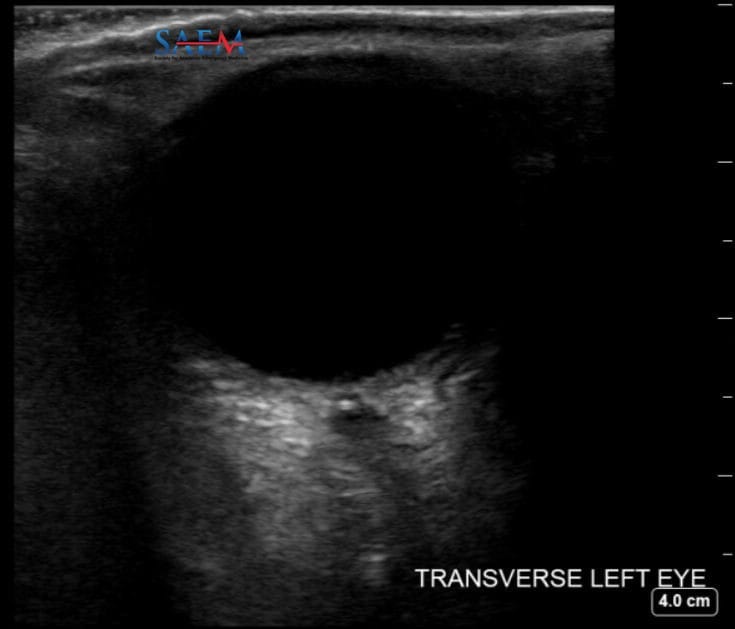
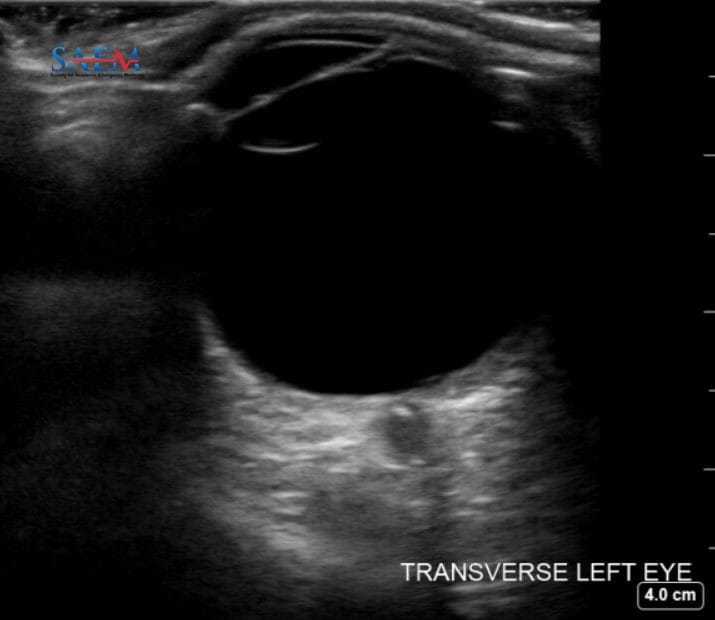
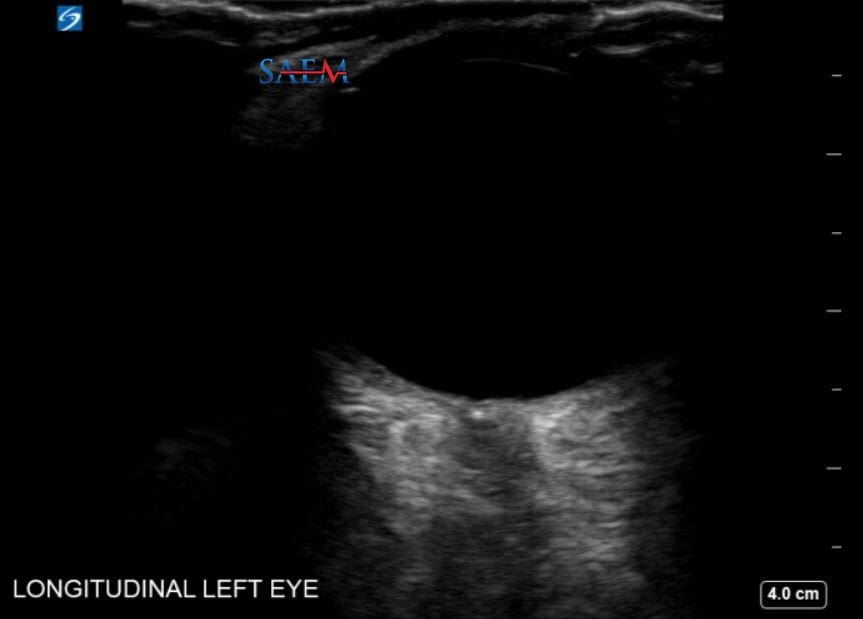
In this patient, displacement of the lateral canthus likely represents a mass effect from his orbital abscess. This abscess is seen lateral to the globe on imaging. On ultrasound, it appears as a heterogeneous isoechoic collection that abuts the right globe. A hyperechoic structure between the orbit and this collection with shadowing raises the possibility of a foreign body. Debris is also visible throughout the right globe and within the anterior chamber. On CT scan, the abscess is described as a rim-enhancing fluid collection that adheres to the lateral rectus muscle. The hyperdense foreign body is again seen on CT, as well as a small focus of air within the anterior chamber.

Take-Home Points

  • Orbital abscess is an uncommon but vision-threatening ocular emergency, which can come from traumatic injury to the globe (as with this case), sinus/nasal infections, or as a complication of dental procedures.
  • The most common organisms responsible for orbital abscesses are Streptococci species (including Strep. pneumoniae and Strep. pyogenes), Staphylococcus aureus (including methicillin-resistant Staph. Aureus), and Pseudomonas aeruginosa.
  • Surgical management is necessary in almost all cases of orbital abscess, with just under 50% of all patients achieving complete visual recovery.

  • Krohel GB, Krauss HR, Winnick J. Orbital abscess. Presentation, diagnosis, therapy, and sequelae. Ophthalmology. 1982 May;89(5):492-8. doi: 10.1016/s0161-6420(82)34763-6. PMID: 7099569.
  • Zawadzki T, Komisarek O, Pawłowski J, Wojtera B, Bilska-Stokłosa J, Osmola K. Orbital Abscess-Two Case Reports with Review. Indian J Otolaryngol Head Neck Surg. 2022;74(Suppl 2):1334-1343. doi:10.1007/s12070-021-02486-z

By |2023-10-22T20:48:41-07:00Oct 23, 2023|HEENT, Ophthalmology, SAEM Clinical Images|

SAEM Clinical Images Series: A Case of Painful Skin Lesions

necrobiosis

A 50-year-old Caucasian female with a history of hypertension, coronary artery disease, and insulin-dependent diabetes mellitus presents to the emergency department with a complaint of painful sores on the top of her left foot. She notes that ulcerations have formed over the past two weeks and reports a history of multiple recurrent usually non-tender skin lesions to her lower extremities, forearms, and hands over the past twenty years. She is homeless and medically non-compliant secondary to financial issues.

Vitals: T 37.2°C; BP 149/77; HR 94; RR 20

Skin: Multiple yellow-brown and violaceous plaques on the pretibial lower extremities and feet, some exhibiting ulceration with central necrosis and surrounding erythema. Raised reddish-brown well-demarcated plaques with waxy centers were also noted on the dorsal forearms and hands.

Glucose: 539 (with a normal anion gap)

Hemoglobin A1C: 10.9

Necrobiosis Lipoidica – This patient had a previous skin biopsy with histopathologic changes demonstrating a granulomatous dermatitis involving the dermis and subcutaneous tissues with necrobiosis of collagen and inflammatory infiltrates of lymphocytes and plasma cells consistent with a diagnosis of necrobiosis lipoidica.

Necrobiosis lipoidica is a rare, chronic, idiopathic, granulomatous disease of collagen degeneration classically associated with type 1 diabetes (with a prevalence of 0.3 to 1.2%). It may present as the first clinical finding of or a precursor to diabetes, although its course is unaffected by glycemic control and it is unrelated to other diabetic complications including renal, ocular, and vascular problems. It has been associated with thyroid disease, inflammatory bowel disease, rheumatoid arthritis, and sarcoidosis. It may be equally common in patients without diabetes, hence was renamed without the term “diabeticorum”.

Necrobiosis lipoidica typically is asymptomatic and presents in females (average onset at age of 30) as small, well-demarcated papules that expand into waxy-centered plaques with indurated borders that may resolve spontaneously (up to 17%) or may be complicated by ulceration, infection, and occasionally transformation to squamous cell carcinoma. The differential diagnosis includes other granulomatous and inflammatory diseases such as granuloma annulare, sarcoidosis, rheumatoid arthritis, and necrobiotic xanthogranuloma. The diagnosis is suggested by clinical presentation and is proven by biopsy.

Complications of necrobiosis lipoidica include long-term scarring, ulceration (more common in males), infection, and when lesions are chronic they may rarely transform into squamous cell carcinoma. There is no cure for necrobiosis lipoidica, and some skin lesions may resolve spontaneously, therefore, treatment is focused on addressing any complications. Multiple medical and surgical interventions have been tried. Topical and intra-lesional corticosteroids have been used to stabilize rapidly enlarging lesions with limited success, however, have the potential to cause further skin atrophy. Surgical interventions including debridement and skin grafting are discouraged as in necrobiosis lipoidica trauma tends to induce the Koebner phenomenon.

Take-Home Points

  • Necrobiosis lipoidica is an idiopathic rare skin disease classically associated with insulin-dependent diabetes mellitus but may affect otherwise healthy individuals.
  • More common in females but more severe in males, necrobiosis lipoidica usually affects the pretibial lower extremities, may present in various stages, and has no known cure.
  • Non-diabetic patients presenting with necrobiosis lipoidica should be monitored for the development of diabetes mellitus, thyroid and inflammatory diseases, and squamous cell carcinoma.

  • Lepe K, Riley CA, Salazar FJ. Necrobiosis Lipoidica. [Updated 2022 Dec 1]. In: StatPearls [Internet]. Treasure Island (FL): StatPearls Publishing; 2022 Jan-. Available from: https://www.ncbi.nlm.nih.gov/books/NBK459318/ PMID:29083569.
  • Kota SK, Jammula S, Kota SK, Meher LK, Modi KD. Necrobiosis lipoidica diabeticorum: A case-based review of literature. Indian J Endocrinol Metab. 2012 Jul;16(4):614-20. doi: 10.4103/2230-8210.98023. PMID: 22837927; PMCID: PMC3401767.

SAEM Clinical Images Series: A Serious Pain in the Neck

lemierre

An otherwise healthy 34-year-old male presented to the Emergency Department with two weeks of anterior neck pain. Symptoms began with several days of pain in his mandibular molars, progressing to pain and swelling in the neck. In the last several days, the patient developed warmth and redness in the chest wall associated with subjective fever and chills. Additionally, the patient reports difficulty swallowing solid foods secondary to odynophagia associated with intermittent globus sensation. He has no history of immunocompromise and denies any drug or alcohol use. Of note, he has not seen a dentist in many years.

Vitals: BP 115/80; HR 120; T 101°F; RR 16; O2 sat 97%

General: Well appearing in no acute distress

HEENT: Poor dentition, mild trismus. No gingival inflammation or swelling or induration to suggest abscess. The floor of the mouth is unremarkable.

Skin: The neck and upper chest demonstrate erythema and tenderness with an enlarged area of fluctuance on the superior aspect of the left breast (Figure 1).

White blood cell (WBC) count: 6.3 k/uL

Lactate: 1.6 mmol/L

Glucose: 95 mg/dL

Creatinine: 0.72 mg/dL

Lemierre Syndrome, also known as septic thrombophlebitis of the internal jugular vein, is a rare condition with an incidence of 3-15 cases per million people. This condition occurs when an oropharyngeal or odontogenic infection spreads locally from pharyngeal tissue to the internal jugular vein. The pathogens classically arise from normal oral flora, most commonly Fusobacterium necrophorum. The presentation may be associated with trismus and/or dysphagia. Subsequent complications, including localized abscess formation and bacteremia, stem from a combination of surrounding tissue invasion and systemic septic embolization.

Given the potential for regional lymphatic spread and septic embolization, patients may present with both local and systemic findings. Skin exam may reveal regionalized cellulitic or infectious changes overlying the neck or chest (Figure 1).

Respiratory signs and symptoms may suggest the presence of pulmonary septic emboli or mediastinitis.

Constitutional symptoms including fever, chills, and fatigue are common though nonspecific. The differential is broad and includes a number of infectious, lymphatic, endocrine, and neoplastic conditions.

It is essential for the clinician to consider the alternative diagnosis of Ludwig’s Angina through careful evaluation of the oral floor.

Given the potential for oropharyngeal and respiratory compromise, emergency clinicians must maintain a high index of suspicion for this condition. Diagnostics should include laboratory studies with blood cultures, as well as CT imaging of the neck and chest to evaluate for filling defects of the internal jugular vein.

When entertaining the diagnosis, early antibiosis is prudent. Treatment should include both an extended course of antibiotic therapy as well as surgical source control of abscesses. Given the propensity for thrombus development (Figure 2), anticoagulation may be considered, but its indication here remains controversial. Patients with Lemierre Syndrome will require surgical consultation and hospital admission.

Take-Home Points

  • Lemierre Syndrome is a septic thrombophlebitis of the internal jugular vein most commonly occurring via direct spread from the oral cavity. Distinction from Ludwig’s Angina is imperative.
  • Given the proximity to critical structures and the potential for systemic organ dysfunction from septic emboli, emergency physicians need to maintain a high clinical suspicion for this rare diagnosis.
  • Treatment includes parenteral antibiotics and prompt consultation of medical and surgical subspecialists to identify the infectious source as well as mitigate against systemic spread and/or thrombus propagation.
  • Kuppalli K, Livorsi D, Talati NJ, Osborn M. Lemierre’s syndrome due to Fusobacterium necrophorum. Lancet Infect Dis. 2012 Oct;12(10):808-15. doi: 10.1016/S1473-3099(12)70089-0. Epub 2012 May 25. PMID: 22633566.

Go to Top