Trick of Trade: Removal of Entrapped Metal Zipper

zipper entrapment injury

A young boy is brought to the pediatric emergency screaming at the top of his lungs by his parents. His penile skin is trapped in the zipper of his jeans. On a busy shift, you want a simple way to handle zipper injuries that minimizes pain, doesn’t require resource-intensive procedural sedation, and is quick.

Background

The 4 most common types of zippers are nylon coil zip, plastic mold zip, metal zip, and invisible zip. Most of the techniques describing solutions on zipper entrapment in the medical literature are derived from case reports and case series. All revolve around understanding zipper anatomy and obtaining adequate exposure to assess how the skin is entrapped. The penile skin often is entrapped either in the sliding mechanism (also known as the endplate) or between the teeth of the zipper.

zipper anatomy

Figure 1. Anatomy of a zipper

Penile Entrapment Injury Management Techniques in Literature

Reported techniques for releasing zippers include [1, 2]:

  • Cut the sliding mechanism (aka the endplate) using metal cutters.
  • Use a flat screwdriver placed underneath the sliding mechanism and rotate it.
  • Use mineral oil for lubrication.
  • Use lateral compression technique to relieve the tension on the trapped skin.
  • Cut the zipper and pull the teeth apart.

All these techniques are associated with variable rates of success. Some of these techniques such as using metal cutters might lead to iatrogenic injuries.

The problem is that the child’s penile skin is entrapped within a metal zipper, where many recommended methods for zipper entrapment removal won’t work.

Trick of the Trade: Removing Metal Zippers

Materials Needed

  • Lidocaine gel
  • Blade or scissors

Technique

  1. The zipper should be separated from the pants as much as possible to minimize painful stretching or pulling of the penile skin.
  2. Apply lidocaine gel on the area of entrapment for 2-3 minutes.
  3. Identify the exposed teeth closest to slider and cut off the zipper at that level (blue dots) while avoiding penile skin (Figure 2).
  4. Gently advance the zipper body forward, pulling either the tab or the body itself, to disengage it from the teeth. You may need to add more lidocaine gel or other lubrication to facilitate this sliding motion.
  5. The remaining parts of the zipper can easily be disengaged from the skin (Figure 3).

metal zipper cut trick zipper entrapment

Figure 2. Cutting off the zipper between the teeth (blue dots) and advancing the zipper body (yellow arrow)

metal zipper entrapped free

Figure 3. Freed zipper body

Interested in Other Tricks of the Trade?

References

  1. Leslie SW, Sajjad H, Taylor RS. Penile Zipper and Ring Injuries. [Updated 2023 Mar 11]. In: StatPearls [Internet]. Treasure Island (FL): StatPearls Publishing; 2023 Jan-.
  2. Tasian GE, Belfer RA. Genitourinary trauma. In: Fleisher and Ludwig’s Textbook of Pediatric Emergency Medicine, 7th ed, Shaw K, Bachur RG (Eds), Lippincott Williams & Wilkins, Philadelphia 2015.

Trick of Trade: Inflating the Esophageal Balloon of a Blakemore/Minnesota Tube without a Manometer 

esophageal balloon manometer trick minnesota blackmore tube

A heavy alcohol drinker, who is well known to your Emergency Department, presents with altered mental status, except that he looks different this time. He looks really bad, stating that he has been vomiting blood. He is hypotensive. He then vomits a copious amount of blood right in front of you. You intubate the patient and initiate the massive transfusion protocol, but everything you pour into him seemingly comes right back out. The gastroenterologist on-call states that he is too unstable for endoscopy. It is time for a balloon tamponade device. You’ve trained for this and set up everything. You call the respiratory therapists (RT) for this mystical “manometer” that you have seen in instructional videos, except that they look puzzled by your request. It is time to MacGyver a method that allows you to know the esophageal balloon pressure that you are generating to avoid an esophageal rupture.

esophageal balloon devices linton sengstaken blakemore minnesota tube

Esophageal Balloon Tamponade Devices – Linton-Nachlas, Sengstaken-Blakemore, Minnesota Tubes (image courtesy of Dr. Mark Ramzy at REBEL EM)

What are esophageal balloon tamponade devices?

There are 2 commonly used devices for tamponading the esophagus during a variceal bleed, the Sengstaken-Blakemore (SB) tube and the Minnesota tube. There is also the Linton-Nachlas tube, but that only has a gastric balloon. The SB tube was created in 1950 in order to help tamponade variceal bleeds [1]. It is a 3-lumen device that has ports to inflate the gastric balloon, aspirate gastric contents, and inflate an esophageal balloon. The Minnesota tube was developed later as a variation to the SB tube and contains an additional port and lumen for aspirating esophageal contents [2]. Another minor difference is that the gastric balloon in the Minnesota tube holds 450-500 ccs of air, while the SB gastric balloon holds 250 ccs of air [2].

Indication: The uncontrolled hemorrhage from esophageal or gastric variceal bleeding after medical or endoscopic treatment fails, is not available, or is not technically possible [3, 4].

Contraindications [4]:

  • Unprotected airway
  • Esophageal rupture (Boerhaave’s syndrome)
  • Esophageal stricture
  • Uncertainty of bleeding site
  • Well-controlled variceal bleeding

Esophageal balloon tamponade devices achieve hemostasis in 60-90% of cases; however, they are only a temporary measure of hemorrhage control because over 50% of variceal bleeds rebleed after deflation [5].

How do you insert these esophageal tamponade devices?

The following instructions are for inserting a Sengstaken-Blakemore (SB) tube [3, 6]:

  1. Pre-measure 50 cm above the gastric balloon and esophageal balloon and mark them on the SB tube.
  2. Fully lubricate the tube.
  3. Insert the tube similar to an orogastric tube until you have reached the 50 cm mark for the gastric balloon
    • Additional trick: You can insert it with a nasogastric tube to have more rigidity and make inserting the tube easier.
  4. Use a slip syringe at the gastric aspiration site and auscultate to confirm that you are in the stomach. Then fill the gastric balloon with 50 cc of air.
  5. Verify the placement of the gastric balloon with a chest x-ray.
    • Additional trick: If the x-ray is delayed, you can pre-check with ultrasound [7]. However final confirmation prior to full inflation should be with a chest X-ray.
  6. Fully inflate the gastric balloon with 200 more ccs of air for a total of 250 ccs.
    • The Minnesota tubes should have the gastric balloon inflated to 450-500 ccs.
  7. Apply traction to the tube by tying a roller bandage to the end of it and then the other end to a 1 L bag of IV fluids. Then hang the roller bandage over an IV pole.
  8. Place the nasogastric tube down to the pre-measured level above the gastric balloon and suction the esophageal space. If there is continued bleeding coming from the nasogastric tube then you will need to inflate the esophageal balloon.
    • Note that Minnesota tubes already have their own esophageal suction port and will NOT need this NG tube placement to suction the esophagus.
  9. Use a “manometer” to inflate the esophageal balloon to 30 mmHg. If bleeding persists, you can go to a maximum of 45 mmHg.

What is this “manometer” typically used for the esophageal balloon?

The manometer referenced in numerous videos [6, 8] is actually a cuff manometer, or pressure gauge, to measure endotracheal cuff pressures. Hence, the RT’s are supposed to have them. In our emergency department, the RTs do not spend a lot of time going around measuring cuff pressures and usually save that until the patient reaches the ICU. It is convenient to use for the inflation of the esophageal balloon because it can inflate and measure pressure at the same time.

Pearl 1: Check the units of pressure being used. Manometers often use cmH2O, while esophageal balloons use mmHg.

  • The conversion rate is: 1 cmH2O = 0.74 mmHg
  • The esophageal balloon goal of 30-45 mmHg is approximately 40-60 cm H2O.

Pearl 2: While the gastric balloon sets a target VOLUME, the esophageal balloon sets a target PRESSURE.

Trick of the Trade: Use a sphygmomanometer as the manometer

Once the inflated gastric balloon is confirmed to be in place, it is time to inflate the esophageal balloon. A manual blood pressure instrument can be repurposed to inflate and measure the esophageal balloon pressure.

  1. Take your manual blood pressure cuff and detach the connections so you have only a plastic tube that runs to the pressure gauge.
  2. Connect this plastic tube end to the male Luer lock of a 3-way stopcock.
  3. Connect the esophageal balloon to a female luer lock on the 3-way stopcock.
  4. Place a 50 cc syringe on the final female Luer lock of the 3-way stopcock.
  5. Turn the 3-way stopcock off towards the pressure gauge and inflate the esophageal balloon with 10 ccs of air.
  6. Then turn the 3-way stopcock off towards the syringe and you should have a reading on the pressure gauge.
  7. Repeat this using small increments (we chose 10 ccs) until you have a pressure reading of 30 mmHg on the pressure gauge. If bleeding continues, you can increase to 45 mmHg.

Video Demonstration: Esophageal Balloon Inflation

References

  1. Sengstaken RW, Blakemore AH. Balloon tamponage for the control of hemorrhage from esophageal varices. Ann Surg. 1950 May;131(5):781-9. doi: 10.1097/00000658-195005000-00017. PMID: 15411151; PMCID: PMC1616705.
  2. Nickson C. Sengstaken–Blakemore and Minnesota Tubes. Life in the Fast Lane • LITFL. Published January 30, 2019.
  3. Powell M, Journey JD. Sengstaken-Blakemore Tube. [Updated 2022 Jun 5]. In: StatPearls [Internet]. Treasure Island (FL): StatPearls Publishing; 2023 Jan-.
  4. Yartsev A. Sengstaken-Blakemore, Minnesotta and Linton-Nachlas tubes. Deranged Physiology. Published July 13, 2015. Accessed April 6, 2023.
  5. García-Pagán JC, Reverter E, Abraldes JG, Bosch J. Acute variceal bleeding. Semin Respir Crit Care Med. 2012 Feb;33(1):46-54.
  6. Mason J. Placement of a Blakemore Tube for Bleeding Varices. EM:RAP HD Videos. Accessed December 17, 2021.
  7. Farkas J. PulmCrit Wee: Ultrasound-guided blakemore tube placement. EMCrit Project. Published May 4, 2016. Accessed April 6, 2023.
  8. Roohollahi A, Suleiman Bilal Rana H, Hadique S. Blakemore Tube Insertion – BAVLS. American Thoracic Society. Published June 1, 2020. Accessed April 7, 2023.

SAEM Clinical Images Series: My Eye Looks Different

cone

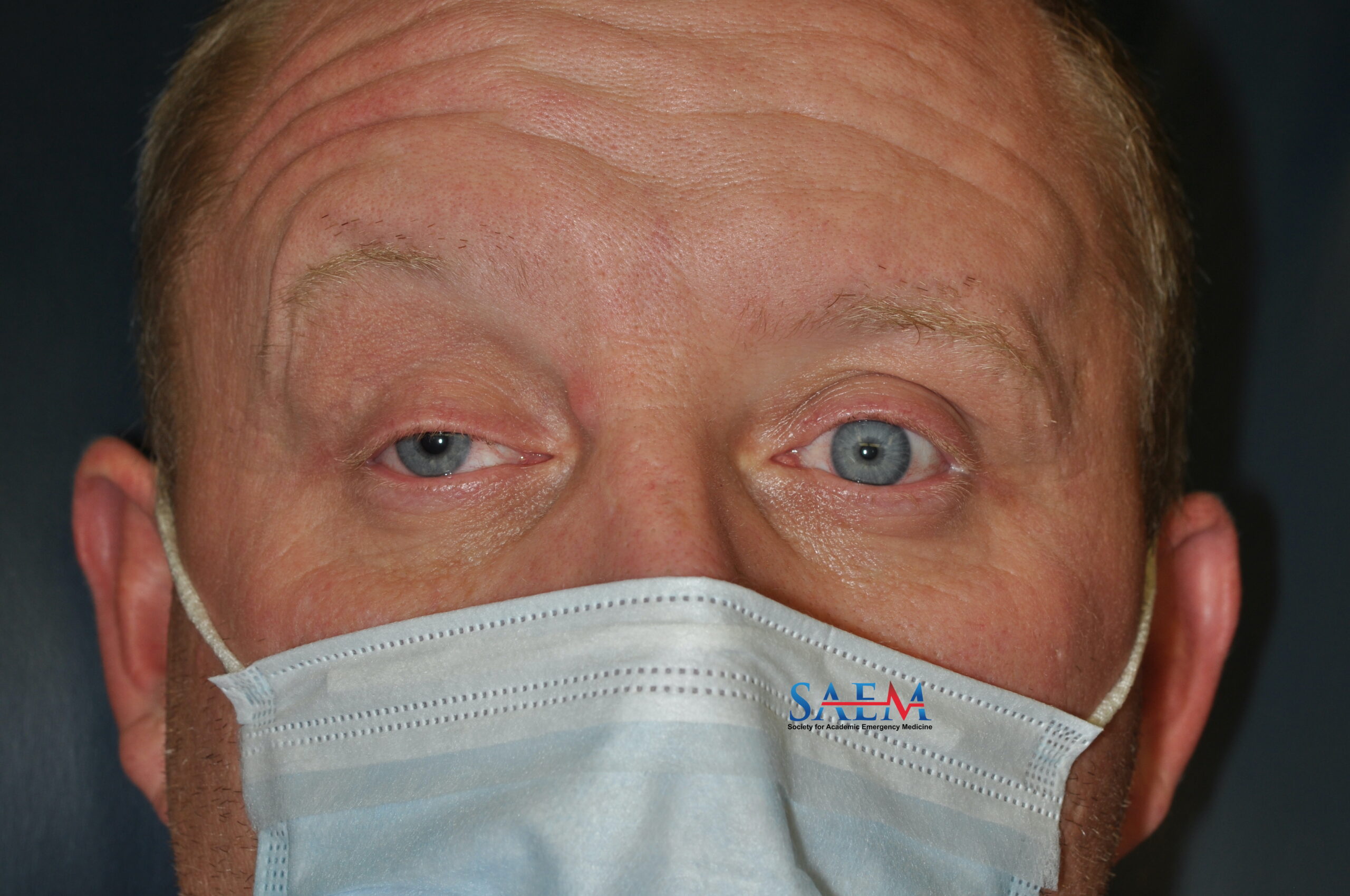
A 29 year-old-male with a past medical history of left eye enucleation secondary to a gunshot wound several years prior presents to the Emergency Department (ED) for blurry vision, redness, and concern for a deformity to his right eye. The patient states symptoms started 2-3 months ago and he initially thought symptoms were due to allergies and recalls rubbing his eye a lot. Over the past 3-4 days, he noticed an acute decline in his vision with what the patient describes as a “cloudy bump” appearing during that time. The patient normally does not wear contacts or corrective lenses but states his vision is very blurry and he is now having difficulty reading. He also reports photophobia and mild eye pain. Review of systems is negative for any fevers, headache, eye discharge, or any recent falls or trauma.

Vitals: BP 125/83; Pulse 70; Temp 97.6 F (36.4 C); Resp 17; SpO2 100%

Constitutional: No acute distress, lying in stretcher comfortably.

Head: No visible traumatic injuries. No peri-orbital edema or facial swelling.

Eyes:

  • OD: Edematous cone-shaped protrusion with central haziness. V-shaped deformity to lower lid margin noted on downward gaze. The patient reports no pain when performing extraocular movement testing which is intact and pupil is reactive to light. Visual fields intact. There is no fluorescein uptake upon Wood’s Lamp exam and IOP is 18. VisualAcuity OD 20/200.
  • OS: Eye prosthesis in place.

Nose: No foreign bodies.

Mouth/Throat: Oropharynx is clear and moist and mucous membranes are normal.

Neck: Normal range of motion.

Corneal hydrops secondary to keratoconus.

Keratoconus is a degenerative, multifactorial, non-inflammatory disorder of the cornea that causes bilateral thinning of the cornea and distorted vision. The corneal thinning leads to a structural weakness in the collagen fibers that causes the characteristic bulging, “cone-shaped” cornea. If the thinning is significant enough, a break in collagen fibers and Descemet’s membrane lead to sudden edema which appears as a corneal opacification. This complication is known as corneal hydrops and causes sudden eye pain and decreased visual acuity. Patients with keratoconus present in young adulthood with progressive blurry or distorted vision. Risk factors include connective tissue disorders and Down syndrome as well as a familial history of keratoconus. There is also a risk in patients with a history of eye rubbing as was the case with this patient. The initial treatment for keratoconus is corrective eyewear for refractive correction.

The clinical hallmark of keratoconus is the cone-like protrusion of the cornea. The bulging may eventually lead to “Munson’s sign”, a v-shaped indentation of the lower eyelid on downward gaze as the cornea bulges outward that is seen in advanced keratoconus.

Take-Home Points

  • Suspect keratoconus in patients with a history of constant eye rubbing, developmental delay (i.e. Down Syndrome), and in patients with connective tissue disorders.
  • Munson’s Sign is a v-shaped indentation of the lower eyelid on downward gaze as the cornea bulges outward.
  • Initial treatment of keratoconus is conservative management with prompt ophthalmology follow-up.

  • V. Mas Tur, C. MacGregor, R. Jayaswal, D. O’Brart, N. MaycockA review of keratoconus: Diagnosis, pathophysiology, and genetics Surv Ophthalmol, 62 (6) (2017), pp. 770-783
  • Gold J, Chauhan V, Rojanasthien S, Fitzgerald J. Munson’s Sign: An Obvious Finding to Explain Acute Vision Loss. Clin Pract Cases Emerg Med. 2019 Jul 8;3(3):312-313. doi: 10.5811/cpcem.2019.5.42793. PMID: 31403106; PMCID: PMC6682229.
  • Gialousakis, John P. “Management of Acute Corneal Hydrops in a Patient with Keratoconus: a Teaching Case Report.” The Journal of the Association of Schools and Colleges of Optometry, vol. 45, 2020.
  • Greenwald MF, Vislisel JM, Goins KM. Acute Corneal Hydrops. EyeRounds.org. August 3, 2016; Available from: http://EyeRounds.org/cases/241-acute-corneal-hydrops.htm
  • Stack L, Sheedy C, Bales B. Corneeal Hydrops: A Complication of Keratoconus. Visual Diagnosis Ophthalmology. Published 2015 Dec 11. Available from: https://www.emra.org/emresident/article/corneal-hydrops-a-complication-of-keratoconus/

By |2023-04-05T14:07:32-07:00Apr 17, 2023|HEENT, Ophthalmology, SAEM Clinical Images|

ALiEM AIR Series | Procedures Module

ALiEM AIR Series: Procedures 2023

Welcome to the AIR Procedures Module! After carefully reviewing all relevant posts in the past 12 months from the top 50 sites of the Social Media Index, the ALiEM AIR Team is proud to present the highest quality online content related to related to procedures in the Emergency Department. 6 blog posts met our standard of online excellence and were approved for residency training by the AIR Series Board. More specifically, we identified 2 AIR and 4 Honorable Mentions. We recommend programs give 3 hours of III credit for this module.

AIR Stamp of Approval and Honorable Mentions

In an effort to truly emphasize the highest quality posts, we have 2 subsets of recommended resources. The AIR stamp of approval is awarded only to posts scoring above a strict scoring cut-off of ≥30 points (out of 35 total), based on our scoring instrument. The other subset is for “Honorable Mention” posts. These posts have been flagged by and agreed upon by AIR Board members as worthwhile, accurate, unbiased, and appropriately referenced despite an average score.

Take the AIR Procedures Module at ALiEMU

Interested in taking the AIR quiz for fun or asynchronous (Individualized Interactive Instruction) credit? Please go to the above link. You will need to create a free, 1-time login account.

Highlighted Quality Posts: Procedures

SiteArticleAuthorDateLabel
Rebel EMIntra Articular Lidocaine vs Sedation in Shoulder ReductionsNordia Matthews, MD30 Jan 2023AIR
EM DocsVideo Laryngoscopy in the EDCameron Jones, MD8 Aug 2022AIR
First 10 EMLacerations: Does closure technique matter?Justin Morgenstern, MD28 Nov 2022HM
DFTBRegional nerve blocks moduleNicola Mulrooney, MD7 Dec 2022HM
EM DocsUltrasound Guided Regional Anesthesia for Hip FracturesOlivia Victoriano, MD and Jacob Avila, MD5 Dec 2022HM
Core EMUltrasound Guided Lumbar PuncturesAaron Bola, MD31 Mar 2022HM

(AIR = Approved Instructional Resource; HM = Honorable Mention)


If you have any questions or comments on the AIR series, or this AIR module, please contact us! More in-depth information regarding the Social Media Index.

Thank you to the Society of Academic Emergency Medicine (SAEM) and the Council of EM Residency Directors (CORD) for jointly sponsoring the AIR Series! We are thrilled to partner with both on shaping the future of medical education.

Trick of the Trade: Gel-free ultrasound-guided peripheral IV technique

Ever finally step away from a busy resuscitation and someone stops you for peripheral IV access? You set up everything, have the patient positioned, and then notice there is no sterile ultrasound gel. No gel? No problem. The trick is to eliminate anything of poor acoustic impedance between the ultrasound probe and the patient’s skin.

Trick of the Trade

1. Apply a transparent adhesive dressing with a thin alcohol layer on the probe

Instead of using gel, we squeeze alcohol pads to create a thin alcohol layer and place a transparent adhesive cover, such as Tegaderm ©. The thin alcohol layer serves to eliminate any air bubbles under the adhesive cover as well as minimizes residual adhesive material sticking to the probe when removing the cover. The adhesive cover itself serves as a sterile barrier and a slick surface to improve probe maneuverability. Note that some ultrasound manufacturers do not recommend the use of isopropyl alcohol on their transducers. Therefore check your specific ultrasound’s recommendations before trying [1, 2].

2. Use sterile saline instead of gel on the patient’s skin

Squirt normal saline flush on the patient’s skin to create a coupling medium between the probe and the patient.

Why it works:

Ultrasound procedures use a range of frequencies (1.5-20 MHz) to visualize internal structures and require a medium to replace air, which has a poor acoustic impedance for the ultrasound waves [3]. Acoustic impedance is defined as the resistance of the propagation of ultrasound waves through tissues and is the product of the density and speed of sound in the tissue [4]. Ultrasound gel has an acoustic impedance that is similar to soft tissue and is therefore considered the ideal medium [3]. Because most soft tissue is comprised of water, the acoustic impedance of water, and therefore 0.9% saline, is actually pretty similar [5], as demonstrated by water bath techniques for ultrasounding distal extremity injuries [6].

We find great visual clarity for performing ultrasound-guided peripheral IVs using this trick, as shown in Figure 1.

Peripheral IV ultrasound screen without gel

Figure 1: Peripheral IV ultrasound using alcohol under transparent film dressing and topical saline flush – all without ultrasound gel

Read other Tricks of the Trade articles.

References

  1. Cleaning and Disinfecting FUJIFILM SonoSite Products User Guide [PDF]. Sonosite. 2015. Accessed April 5, 2023.
  2. Disinfectants and Cleaning Solutions for Ultrasound Systems and Transducers [PDF]. Philips. 2021. Accessed April 5, 2023
  3. Afzal S, Zahid M, Rehan ZA, et al. Preparation and Evaluation of Polymer-Based Ultrasound Gel and Its Application in Ultrasonography. Gels. 2022 Jan 6;8(1):42. doi: 10.3390/gels8010042. PMID: 35049577; PMCID: PMC8774352
  4. Suzuko S, Peter G, Philipp L. 20 – Local Anesthetics, Ed(s): Hugh C. Hemmings, Talmage D. Egan, Pharmacology and Physiology for Anesthesia (Second Edition), Elsevier, 2019, Pages 390-411, ISBN 9780323481106. DOI: 10.1016/B978-0-323-48110-6.00020-X
  5. R. Alkins, K. Hynynen, 10.08 – Ultrasound Therapy, Editor(s): Anders Brahme, Comprehensive Biomedical Physics, Elsevier, 2014, Pages 153-168, ISBN 9780444536334. DOI 10.1016/B978-0-444-53632-7.01010-8
  6. LeDonne S, Sengupta D. US Probe: Ultrasound Water Bath for Distal Extremity Evaluation. Alerhand S, Singh M, editors. emDOCs.net – Emergency Medicine Education. 2017.

By |2023-04-06T20:53:38-07:00Apr 12, 2023|Radiology, Tricks of the Trade, Ultrasound|

SAEM Clinical Images Series: A Rare Pediatric Scalp Rash

rash

The patient is a 3-month-old, full-term male who presents with a rash on his head. The rash started one day prior to presentation on his forehead and spread to the rest of his head. Today, it developed a central clearing with surrounding redness. He has a history of sensitive skin since birth with patches of eczema and cradle cap. He treats these with Aquaphor and Honest Co. Cream; he has never been prescribed topical steroids for his rashes. Denies fever, cough, rhinorrhea, congestion, decreased appetite, diarrhea, and decreased urination. He had an uncomplicated birth history.

General: Well appearing, no distress.

Skin: Large, serpiginous rash on the left forehead and scalp with central clearing and peripheral erythema as well as areas of erythematous plaques. He has some erythema of the left medial epicanthus. He also has a large erythematous patch at the base of his skull. The remainder of his skin is clear.

CV: Normal rate and rhythm, no murmur.

White blood cell (WBC) count: 8.4

Hemoglobin: 12.4

Hematocrit: 37.1

Platelet Count: 468

Complete metabolic panel (CMP): ALT 30, AST 60, Alk phos 266, Tbili 0.7, Total Protein 6.4

The image is of the cutaneous manifestation of neonatal lupus erythematosus. Neonatal lupus erythematosus is an autoimmune disease caused by transplacental passage of maternal autoantibodies to Sjögren’s syndrome A or B autoantigens (SS-A/SS-B). It can present with reversible changes including cutaneous lesions (most common, in up to 40% of patients), hepatobiliary disease, and cytopenias, which resolve once maternal autoantibodies have been cleared.

All infants that present with concern for neonatal lupus erythematosus should have screening labs performed to evaluate for hematologic, cardiac, and hepatobiliary involvement including a CBC with differential, liver enzymes, and antibody testing. In addition, an EKG is essential given that neonates can present with irreversible total atrioventricular heart block, which can present in utero or after birth.

The rash typically presents in the first few weeks of life but can present as late as 2-3 months of life (usually within 1-2 days of first sun exposure). Eighty percent of cases are not clear at birth and present in the first month of life. The rash appears as a coalescing rash with raised margins, with annular and discoid erythema involving the head in 95% of cases. It is often misdiagnosed as skin infections or eczema if the mom is asymptomatic. Fifty percent resolve by four months of life and 100% by one year.

Any neonate with a slow fetal heart rate or the postnatal diagnosis of atrioventricular heart block warrants immediate maternal testing for these autoantibodies. Most cardiac changes from neonatal lupus are diagnosed before 26 weeks gestation, with <20% later in pregnancy and 2% detected postnatally.

Take-Home Points

  • While cutaneous findings of neonatal lupus most commonly present in the first month of life, they can present as late as 2-3 months.
  • The cutaneous findings associated with neonatal lupus most of the time resolve in 4-6 months (when maternal antibodies are cleared from the infant’s circulation).
  • Any baby with findings concerning for neonatal lupus should have an EKG performed. Around 2% of infants present with heart block postnatally within the first month.

  • Diaz-Frias J, Badri T. Neonatal Lupus Erythematosus. [Updated 2021 Jun 30]. In: StatPearls [Internet]. Treasure Island (FL): StatPearls Publishing; 2021 Jan-. Available from: https://www.ncbi.nlm.nih.gov/books/NBK526061/
  • Lee LA. Neonatal lupus erythematosus: clinical findings and pathogenesis. J Investig Dermatol Symp Proc. 2004 Jan;9(1):52-6. doi: 10.1111/j.1087-0024.2004.00827.x. PMID: 14870986.

By |2023-04-05T14:00:29-07:00Apr 10, 2023|Dermatology, Pediatrics, SAEM Clinical Images|

Trick of the Trade: Chest tube rewarming with Foley tubing connector

You have a pulseless hypothermic patient requiring aggressive internal rewarming. ECMO is not available, and you’ve made the decision to initiate thoracic lavage. After placing your chest tubes, you step back triumphantly, but in short order, the nurse hands you large diameter IV tubing with warmed fluids so that you can connect it to the chest tube. You are left with the IV tubing in one hand and a chest tube in the other with no time to waste, but no elegant or straightforward solution to interface the two.

Trick of the Trade

Using Foley bag tubing

The tube from a standard Foley bag, available in all emergency departments, contains a Luer lock near the tapered nozzle. This unique connector setup allows you to instill warm fluids into the thoracic space with minimal spillage.

rewarming hypothermia IV tubing chest tube foley tubing

Technique for Rewarming

  1. Attach the warmed IV fluids to the Luer lock port on the Foley bag tubing.
  2. Insert the tapered nozzle on the Foley bag tubing (typically interfaces with the urine drainage port of the Foley catheter) into the chest tube.
  3. Clamp the remainder of the Foley bag tubing just proximal to the Luer lock to minimize backflow of IV fluids into the bag.
  4. Optional: Cut the tubing proximal to the clamp to declutter the space around the interface.
  5. Instill warm fluid through one chest tube and drain it from the adjacent chest tube.
  6. Continue rewarming resuscitation protocols.
Chest tube connected to IV tubing via Foley bag tubing

IV tubing connected to chest tube via Foley bag tube (left photo is a closeup view with arrow designating IV fluid flow)

Read other Tricks of the Trade posts.

Go to Top