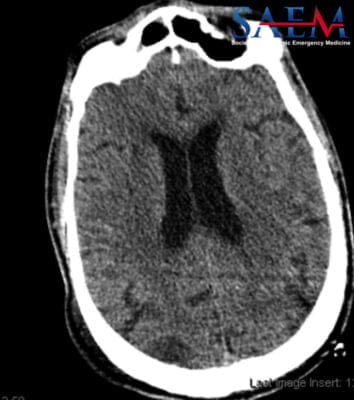
SAEM Clinical Image Series: The Cocaine Gut
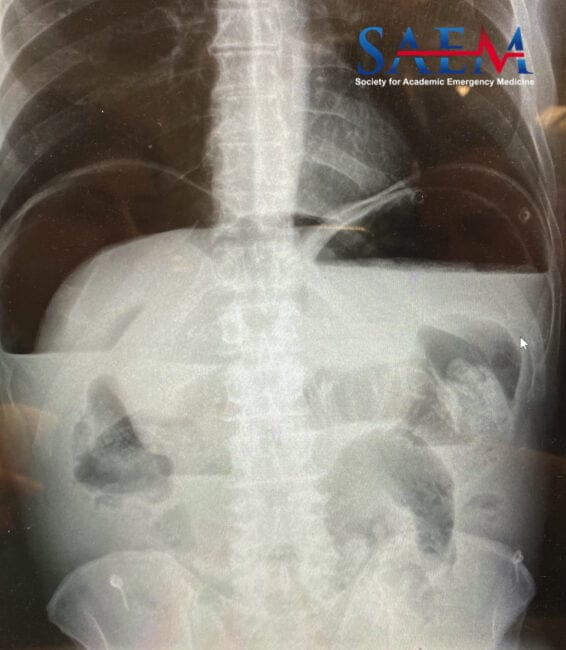
A sixty-five-year-old male with a medical history of gastroesophageal reflux disease (GERD), hypertension, alcohol dependence, homelessness, and cocaine abuse presents to the emergency department with abdominal pain for three days. The patient describes his abdominal pain as knife-like, 9/10, located diffusely throughout his abdomen, with associated anorexia and nausea. He reports that he had one episode of coffee ground emesis this morning which provoked him to come to the ED. He reports frequent cocaine use with his last use three days ago. He endorses subjective fevers, chills, and no bowel movement for two days. He has had no sick contacts.