IDEA series: The Bleeding Arm Tourniquet Simulation

Tourniquet simulation

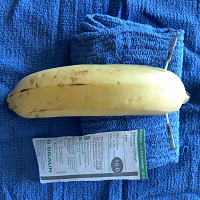
Education in emergency response to trauma is a global health priority [1]. Mortality rates are nearly twice as high in patients with trauma in low-income as compared to high-income countries [2]. With uncontrolled bleeding as the number one cause of death from trauma, tourniquet application has been the focus of training programs, like the “Stop the Bleed” campaign in the United States [3]. Although understanding how to apply a tourniquet is a life-saving intervention, use of a windlass tourniquet may not be intuitive [4].  The windlass tourniquet in its simplest form is the “stick-and-rope.” Winding the stick in the tourniquet creates a mechanical advantage for providing compression. Simulation of the windlass technique can be used to teach management of uncontrolled bleeding. Here we describe a low-cost simulation model that combines low- and high-fidelity techniques to train healthcare personnel on windlass tourniquet application.

(more…)

A Tale of Two Epidemics: COVID-19 and the Opioid Crisis

The United States is currently dealing with 2 deadly, concurrent epidemics: COVID-19 and the opioid crisis. Both need viable solutions. The better we are equipped to address one, the more effective we can be at treating the other. Counterintuitively, now is actually the best time to get waivered. It’s imperative that we do so for 3 reasons:

(more…)

Diagnose on Sight: Scrotal Swelling

pneumoscrotum

Case: A 58-year-old male with no past medical history presents to the emergency department for evaluation of right lower quadrant abdominal pain associated with right scrotal swelling. The patient reports that he had a colonoscopy the day before to remove a 20 mm polyp, which had been seen on an outpatient CT scan. He states that he noticed that his right scrotum appeared slightly swollen immediately away after the procedure, but since then the swelling had increased and he developed mild right lower quadrant abdominal pain. Physical examination reveals mild tenderness to the right lower quadrant and swelling of the right scrotum with palpable crepitus of the right scrotum and inguinal canal.  There is no overlying skin discoloration.  What is the most likely diagnosis?

(more…)

LVAD Part V: The Coding LVAD Patient

Left ventricular assist devices (LVADs) have moved from being a bridge to a heart transplant to destination therapy for patients with severe heart failure. Although their use in the general public has increased, they still provide a challenge to the emergency medicine (EM) physician. This series aims to cover the basics of how the EM physician approaches the care of these patients.

(more…)

By |2020-04-20T09:48:07-07:00Apr 20, 2020|Cardiovascular, Emergency Medicine|

A Pop in the Calf – Plantaris Rupture

plantaris rupture

A 32 year-old male presents to the Emergency Department after he felt a “pop” in his posterior-medial calf while playing tennis. He was able to ambulate but had pain with plantar flexion and was unable to continue playing tennis. What is your differential diagnosis? What physical exam maneuver would you perform? What findings would you expect on physical exam? What is the diagnosis based on ultrasound images? What is your management in the emergency department?

(more…)

LVAD Part IV: Non-Device Pathology

Left ventricular assist devices (LVADs) have moved from being a bridge to a heart transplant to destination therapy for patients with severe heart failure. Although their use in the general public has increased, they still provide a challenge to the emergency medicine (EM) physician. This series aims to cover the basics of how the EM physician approaches the care of these patients.

(more…)

By |2020-04-13T13:16:03-07:00Apr 13, 2020|Cardiovascular, Emergency Medicine|

Healthcare Providers in the COVID-19 Era: Keeping Clean When Coming Home

COVID coronavirus keeping clean when coming homeGiven overcrowded hospitals and limited availability of personal protective equipment (PPE), showing up for work can feel like entering a battleground without ammunition for many physicians during the COVID-19 outbreak [1]. Despite this, doctors and nurses show up every day ready to do their jobs. While we have committed to the Hippocratic Oath, our families have not. How can we do our duty while preventing exposure of our loved ones at home [2, 3]?

(more…)

By |2020-04-02T13:52:58-07:00Apr 8, 2020|COVID19, Infectious Disease, Life|
Go to Top