


ALiEM AIR | Trauma 2020 Module

Welcome to the AIR Trauma Module! After carefully reviewing all relevant posts from the top 50 sites of the Social Media Index, the ALiEM AIR Team is proud to present the highest quality online content related to trauma emergencies. 8 blog posts within the past 12 months (as of January 2020) met our standard of online excellence and were curated and approved for residency training by the AIR Series Board. We identified 2 AIR and 6 Honorable Mentions. We recommend programs give 4 hours (about 30 minutes per article) of III credit for this module.
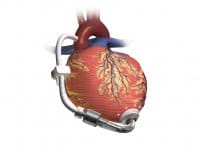 Left ventricular assist devices (LVADs) have moved from being a bridge to a heart transplant to destination therapy for patients with severe heart failure. Although their use in the general public has increased, they still provide a challenge to the emergency medicine (EM) physician This series aims to cover the basics of how the EM physician approaches the care of these patients.
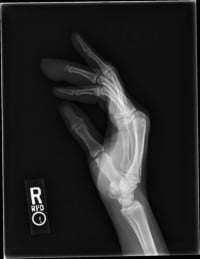 Case: A 32-year-old male with a past medical history of diabetes presents with a 1 month history of finger pain after slamming his finger in a car door. 2 weeks after the initial incident he presented to the emergency department for worsening pain and received x-rays that were negative for acute fracture. Today he presents reporting pain radiating up the hand, arm, and into the shoulder, with associated chills. His labs are significant for hyperglycemia, hyponatremia, and an elevated erythrocyte sedimentation rate and c-reactive protein. His x-ray is seen here (figure 1 image courtesy of Daniel Rogan, MD). What is the diagnosis?
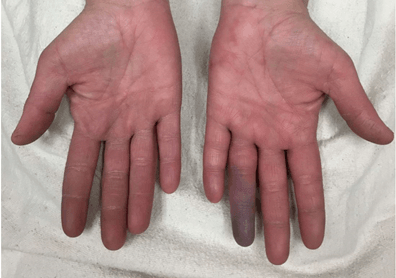 A 37-year-old female presented to the emergency department for evaluation of numbness and discoloration to her left fourth finger, which had started the day before. The patient stated that she was gardening the previous day and afterward she noticed the discoloration and pain. The patient denied taking any medications. She reported recreational methamphetamine and heroin use. She denied any chest pain or difficulty breathing. She denied any history of Raynaud’s phenomenon, venous thromboembolism, or history of trauma. The patient was afebrile with normal vital signs. Physical exam revealed cyanotic discoloration to the left distal fourth finger. Sensation was intact to light touch and strength was 5 out of 5 in the finger. The capillary refill was diminished. Radial and ulnar pulses were 2+ bilaterally. Initially, a warm pack was placed to the patient’s finger with slight improvement, but without resolution of the pain and cyanosis. What is the diagnosis?