Trick of the Trade: Temperomandibular (TMJ) dislocation
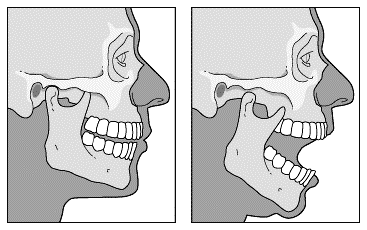
TMJdislocation.jpg

Mandible, or TMJ, dislocations occur when the patient excessively opens the mouth, such as in a yawn. They are typically bilateral and are difficult to relocate because of masseter and medial pterygoid muscle spasm. You can relocate the condyles back into the TMJ space with gentle but firm intraoral pressure inferiorly and posteriorly. Often it requires some sedation to help relax the muscles of mastication.

(more…)

By |2019-01-28T22:49:39-08:00May 4, 2011|ENT, Tricks of the Trade|

Trick of the trade: Nebulized … orange juice?

Sniff

In my theme of detoxifying malodorous smells in the ED, I recently learned of a new way of masking odors. Imagine the stress on your olfactory nerves from the combined effects of urinary and fecal incontinence from a nursing home patient.

An ingenious nurse proposed nebulizing actual coffee within the room. Unfortunately, our ED was out of coffee at the moment.

(more…)

By |2019-01-28T22:40:09-08:00Apr 27, 2011|Tricks of the Trade|

Trick of the Trade: Corneal reflex test

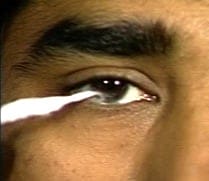
CornealreflexThe corneal reflex test (blink test) examines the reflex pathway involving cranial nerves V and VII. Classically the provider lightly touches a wisp of cotton on the patient’s cornea. This foreign body sensation should cause the patient to reflexively blink.

This maneuver always makes me a little worried about causing a corneal abrasion, especially if you are examining a very somnolent patient. You are wondering — Is there no blinking because you’re not touching the cornea hard enough? You apply harder pressure but still no blink. You repeat the test and now the patient finally blinks. That’s 3 times you’ve just scraped against the cornea.

What’s an alternative approach?

(more…)

By |2016-11-11T18:58:00-08:00Apr 20, 2011|Neurology, Tricks of the Trade|

Trick of the Trade: Oblique CXR to look for pneumothorax


PneumothoraxCTSupine chest xrays have an extremely low sensitivity (12-24%) in detecting pneumothoraces. Because a pneumothorax layers anteriorly on an AP CXR film, the xray beam is perpendicular rather than tangential to the pneumothorax edge. This makes visualizing a small to moderate sized pneumothorax extremely difficult. So you are left to look for indirect signs such as a deep sulcus at the costophrenic angle or subcutaneous air. I’m often surprised at how large of a pneumothorax can be missed on CXR based on CT imaging. The image to the right shows a large left-sided pneumothorax on CT.

What if you have an equivocal bedside ultrasound result in looking for a pneumothorax, and the patient is too unstable to go to CT?

 
By |2019-02-19T18:08:06-08:00Apr 13, 2011|Radiology, Tricks of the Trade|

Trick of the Trade: Check pupillary constriction with ultrasound

SwollenEyeIn some trauma patients with head and face trauma, you will need to check their pupillary response to light. Severe periorbital and eyelid swelling, however, make this difficult. You want to minimize multiple attempts to retract the eyelids because of the risk of a ruptured globe. What’s a minimally painful and traumatic way to check for pupillary constriction?

By |2019-01-28T22:50:28-08:00Apr 6, 2011|Ophthalmology, Tricks of the Trade, Ultrasound|

Trick of the Trade: Steristrip-suture combo for thin skin lacerations

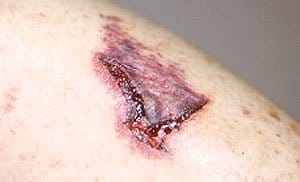
Laceration Thin SkinLacerations of elderly patients or chronic corticosteroid users can be a challenge because they often have very thin skin. Sutures can tear through the fragile skin. Tissue adhesives may not adequately close the typically irregularly-edged laceration.

How do you repair these lacerations?
Do you just slap a band-aid on it?

(more…)

By |2019-11-29T18:57:44-08:00Mar 30, 2011|Geriatrics, Trauma, Tricks of the Trade|

Trick of the Trade: Benzoin for opening traumatic, swollen eyelids


EyelidRoll1smsmArrowssm

Patients who sustain facial trauma often have swollen eyelids. They may be so swollen that it is impossible to pull back the eyelids for an ocular exam. You use one of our “Tricks of the Trade”ideas and attempt to “roll” the upper eyelid using the Q-tip trick (above).

Fresh blood on the face, however, makes the Q-tip a little slippery along the upper eyelid, preventing an adequate view of the eye itself.

(more…)

By |2016-11-25T15:43:21-08:00Mar 23, 2011|Ophthalmology, Tricks of the Trade|
Go to Top