



Thyroid Storm: Treatment Strategies
The Case You have a 54-year-old female who presents to the emergency department with a chief complaint of “just feeling out of it.” She has felt “off and on” for the past 12 hours and has had an occasional cough with some sputum production along with “the shakes and chills.” She also feels as if her heart was “going at a mile a minute” and because of this, she is very much out of breath. [+]

Child Whisperer Series: Just Breathe
Just breathe…. Early in my career as a Child Life Specialist, I was working with a 4 year old girl who needed her port catheter accessed. She was beginning to panic with rapid breathing and moving around. She was clearly on the verge of screaming at any moment. Her panic made everyone in the room feel anxious. I knew I had to do something, so I got on one knee, looked her in the eye and said, “Just breathe.” Without missing a beat, she leaned in closer to me and said, “I am!”… Touché my little friend. [+]

Discussing Annals EM article: Social Media and Physician Learning
I was delighted to see the News and Perspectives piece in this month’s Annals of Emergency Medicine about “Social Media and Physician Learning” (free PDF). I had totally forgotten that Jan Greene, the author, had called to talk with me several months ago. In the piece, she discusses many of the issues with which I struggle: Is peer review good or bad? What is the role of blog and podcast sites in the future of medical education? With the ease of how anyone can be “published” on blogs, how can one decide on the trustworthiness of open educational resources such [+]
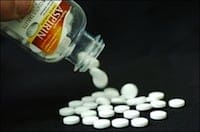
5 Tips in Managing Acute Salicylate Poisoning
Salicylate is among the top 25 substances that cause the greatest number of overdose fatalities in the United States. 1 Patients can present with a wide variety of complaints including tinnitus, dyspnea, vomiting, confusion, and coma. Significant toxicity occurs when a large amount of salicylate saturates the body’s protein-binding capacity and leaves free salicylate in the serum. 2 The American College of Medical Toxicology (ACMT) recently published a guidance document on management priorities in salicylate toxicity, and it’s definitely worth a read. 3 While not an official clinical guideline, it highlights some important concepts to consider when working up and [+]

Patwari Academy videos: Testicular torsion and acute scrotal pain
There are several causes for the acutely painful scrotum. In the follow two short tutorial videos, Dr. Rahul Patwari reviews common causes, which include testicular torsion, epididymitis, orchitis, torsion of the testicular appendix, and testicular masses. [+]

Putting an Older Patient Under: Tips for Geriatric Procedural Sedation
An 84-year old woman presents to your ED with a traumatic, left-sided posterior hip dislocation. You need to reduce the hip. But how should you sedate her? Procedural sedation is an important component of ED care. It allows us to more comfortably perform otherwise painful procedures such as fracture or dislocation reductions, endoscopies, large laceration repairs, and I&Ds. How safe is procedural sedation in older adults? [+]
Introducing REBEL in EM and IM
As a physician and newcomer to FOAM, I am finding that I have learned a lot of myths and pearls that are not true as I matriculated through school. This has taught me that learning from textbooks may be great for board exams, but more importantly it is not optimal for patient care and has made me question a lot of different practices. We all want to know clinically relevant information that is evidence based and up to date that will make a difference in our care of patients. The purpose and goal of REBEL is to create a sustained change [+]

Epinephrine Dosing for Anaphylaxis in Patients on Beta-Blockers
I love when complex medication questions come across my desk from folks like Drs. Amal Mattu, Rob Orman, Mike Winters, and Haney Mallemat (just to name a few). This week I received one from Dr. Scott Weingart that someone had sent to him. This paramedic was reviewing his anaphylaxis protocol with some new medics and providers. They asked a challenging question regarding a “pearl” they learned in which half-dose epinephrine should be administered in anaphylactic patients on beta-blockers. Patients on beta-blockers do have an increased risk for anaphylaxis, so there is a chance you’ll see a case just like this at [+]
CPR: Hands-on or Hands-off Defibrillation?
Pauses in chest compressions are known to be detrimental to survival in cardiac arrest, so much so that the 2010 American Heart Association (AHA) emphasize high-quality compressions while minimizing interruptions. There have been some studies that now advocate for continuous chest compressions during a defibrillation shock. There have been substantial changes to external defibrillation technology including: Biphasic shocks with real-time impedance monitoring to reduce peak voltages Paddles being replaced by adhesive pre-gelled electrodes Enhancement in ECG filtering permitting rhythm monitoring during chest compressions. So the mantra of “hard and fast” may be true when it comes to CPR, but the [+]
Patwari Academy Videos: Evidence Based Medicine (part 5)
In this fifth and final installment of the Evidence Based Medicine series, Dr. Rahul Patwari reviews the concepts of: distribution of the means (with case examples), confidence intervals, accuracy, precision, and the student t-test (with an example). [+]
Director of Growth, Strategic Alliance Initiative, Center for Innovation and Digital Health
Massachusetts General Hospital;
Chief Scientific Officer, Conductscience.com
Latest posts by Shuhan He, MD (see all)
- The Discharge Severity Index: Early Research on ED Readmission Risk Assessment - August 14, 2025
- Suboxone and the Emergency Physician: Get Waivered Training - August 12, 2022
- A Tale of Two Epidemics: COVID-19 and the Opioid Crisis - April 23, 2020