



Posterior Myocardial Infarction: How Accurate is the Flipped ECG Trick?
Posterior myocardial infarction (MI) represents 3.3 – 21% of all acute MIs and can be difficult to diagnose by the standard precordial leads. Typically, leads V7 – V9 are needed to diagnose this entity. Luckily, leads V1 – V3, directly face the posterior wall of the left ventricle and are the “mirror image” of the posterior wall of the left ventricle. [+]
Safe dosing of nebulized lidocaine
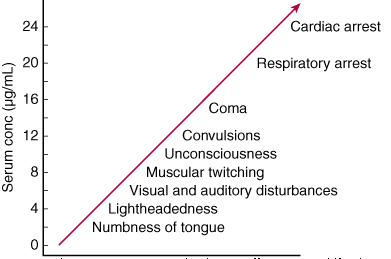
Serum lidocaine levels correlate well with observed clinical effects. As the concentration increases, lightheadedness, tremors, hallucinations, seizures, and cardiac arrest can occur. Levels > 5 mcg/mL are associated with serious toxicity. With so many concentrations (1%, 2%, 4%) and routes of administration available, the total dose of lidocaine is always a concern. [+]
Trick of the Trade: The PIPP for deep peripheral IVs in obese patients
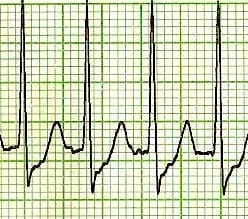
The Case A 500-pound morbidly obese male presents to your ED complaining of mild shortness of breath and palpitations. A quick ECG shows SVT with a rate of 160 bpm. His BP is in the 130s systolic, and he is otherwise stable. You know you have a bit of time. Meanwhile, the nurses begin searching for veins to start an IV… [+]
Patwari Academy videos: Snake bites!
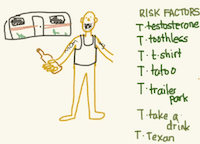
There are about 8,000 snakebites per year in the United States and 10% are fatal (see comments)! If this doesn’t scare you enough to view these videos, watch these videos to see Dr. Rahul’s Patwari’s amazing digital drawing skills. In addition to a brief 4-minute overview on snake bites, Rahul also goes more in depth about crotalids (rattlesnakes) and elapids (coral snakes) specifically. [+]

A time-based approach to elderly patients with altered mental status
It’s 7 am on a Monday. Your first patient is an 82 year-old woman who was brought in by EMS from an assisted living facility. All EMS can tell you is that she was not acting herself. You enter her room and introduce yourself. “Hello Mrs. Jones. How are you today?” The woman startles, “Well, you see, I went to put my dog out, and then I was just walking, and couldn’t remember. So it’s all coming full circle, and then I ate a sandwich.” Just then EMS rolls in with another patient, a 75 year-old male coming from home, [+]
PV Card: Intimate partner violence
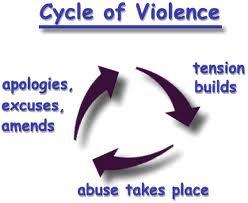
In the Emergency Department, we too often under-estimate our patients' likelihood for intimate partner violence (IPV). Unfortunately, there is no perfect screening test to detect this. So one must maintain a high index of suspicion. Once you detect it, what questions should you ask to ensure her/his safety and how do you optimize the resources available to her/him? Created by Trevor Wilson (UCSF medical student) and Dr. Beth Kaplan (UCSF/SFGH), the following PV pocket card reviews how to screen, document, intervene, and provide resources for the patient. Learn the "SAFE" questions.1,2 PV Card: Intimate Partner Violence Go to ALiEM [+]
Alarms from the ventilator: Troubleshooting high peak pressures
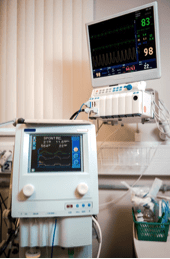
Airway management is one of the defining skills of an emergency physician, but our role in the care of intubated patients may continue long after endotracheal tube placement is confirmed. In mechanically ventilated patients, acute elevations in airways pressures can be triggered by both benign and life-threatening causes. When the ventilator alarms, do you know how to tell the difference? What is your approach in troubleshooting the potential problems? [+]

Critical Care Series by new ALiEM writer Dr. Todd Seigel
Welcome a new superstar blogger, Dr. Todd Seigel (@ToddSeigelMD), to the ever-growing ALiEM team. I first met Todd at the recent Society of Academic Emergency Medicine meeting. At that time, he was an already established clinician-scholar-educator at Brown University. He had already graduated from residency and was returning to fellowship training to get his board-certification in Critical Care Medicine. I’m thrilled that he is now at my home institution (UCSF) doing this fellowship, where I couldn’t resist recruiting him to join our all-star cast of blog authors. Today is the first of hopefully a long series of critical care/resuscitation topics that are [+]
Quick clinical tip: Elson’s test for the finger
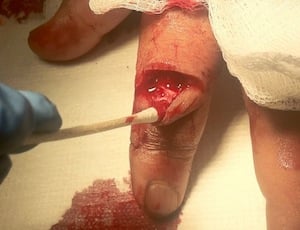
Injuries to the hand are fraught with multiple, concurrent injuries. Many injuries may have chronic debilitating complications, if not detected early. One such example is a finger laceration with a concurrent extensor tendon injury, causing delayed boutonniere deformity formation and limited function. Review the anatomy of the extensor tendon. View the video on how to perform the Elson’s test to detect a central slip tendon injury. [+]

Patwari Academy videos: ECG intervals and segments
Last week, the Patwari Academy videos covered ECG basics on rate, rhythm, and axis. Here is another set of three videos discussing ECG intervals and segments — specifically the PR interval, QRS interval, and ST segments. Again, this is a nice review on ECG concepts. [+]

Director of Growth, Strategic Alliance Initiative, Center for Innovation and Digital Health
Massachusetts General Hospital;
Chief Scientific Officer, Conductscience.com
Latest posts by Shuhan He, MD (see all)
- The Discharge Severity Index: Early Research on ED Readmission Risk Assessment - August 14, 2025
- Suboxone and the Emergency Physician: Get Waivered Training - August 12, 2022
- A Tale of Two Epidemics: COVID-19 and the Opioid Crisis - April 23, 2020