


PV Card: Brugada Criteria for SVT with Aberrancy vs Ventricular Tachycardia
Due to the overwhelming popularity of Dr. Salim Rezaie's recent post discussing the Brugada criteria for SVT with aberrancy vs VT, Dr. Jason West (@JWestEM, an EM resident from Jacobi/Montefiore) kindly helped to co-author and package this information into a PV card for quick reference. To use this sequential, four-question approach, if at any time you answer YES to the question, it is ventricular tachycardia. PV Card: SVT vs VT - Brugada Criteria Adapted from [1] Go to ALiEM (PV) Cards for more resources. Reference Brugada P, Brugada J, Mont L, Smeets J, Andries E. A new approach to the differential diagnosis [+]
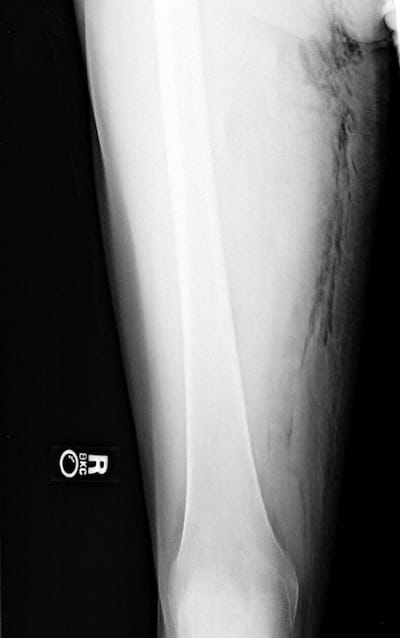
QI Series: Cellulitis vs Necrotizing Fasciitis
Case A 50-year-old male was referred to the ED for evaluation of cellulitis. The patient had developed pain and swelling in his right groin region 5 days earlier. He had seen his physician 3 days before the ED visit and was started on Doxycycline. On the day of evaluation, he had returned to the office with increasing redness so was referred to the ED. [+]

New Quality Improvement Series: Be a detective to avoid errors
When you attend Morbidity & Mortality or Quality Improvement (QI) Conferences, the cases presented often have teaching points, which revolve around potentially avoidable errors. Subtle and not-too-subtle clues often reveal themselves along the way, which could have been detected sooner. This ALiEM QI Series, hosted by Dr. Steven Polevoi (UCSF EM Medical and QI Director), was created to help you become a better detective in finding these clues early in the patient’s course. “Learn from the mistakes of others. You can’t live long enough to make them all yourself.” – Eleanor Roosevelt [+]
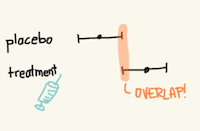
Patwari Academy videos: EBM Treatment Studies (part 2)
Dr. Rahul Patwari continues with the fourth and fifth videos in this series on Evidence Based Medicine (EBM) and Treatment Studies (see first three videos). These two videos are about the concept of Confidence Intervals and Patient Applicability. The second video below makes great points about whether a published study is applicable to YOUR patient. Don’t fall into common traps. [+]

Ultrasound-Guided Pericardiocentesis
All the years of ultrasound training in residency has paid off. You found the large pericardial effusion in the hypotensive patient who is still alive, but looks sick. You are a star! The only problem was that you never performed a pericardiocentesis in an awake patient. The cardiology fellow is at home sleeping and/or the closest receiving hospital is about 1 hour away. Now what? Dr. Arun Nagdev reviews how to do an ultrasound guided pericardiocentesis as part of this new, ongoing series of advanced ultrasound tips for emergency physicians. [+]

Choosing the right vasopressor agent in hypotension
The incidence of critical illness in the ED is rising, with greater than 1 million ED patients requiring emergent resuscitation each year. In addition to definitive airway management, hemodynamic support is among the most important life-saving interventions implemented by emergency physicians. When a patient develops persistent hypotension, what is your approach to choosing the right vasopressor medication for hemodynamic support? Persistent hypotension results in impaired tissue perfusion and is often a late and ominous indication of decompensated shock. Correction of persistent hypotension is imperative, often requiring vasopressors and inotropes. When considering an agent for hemodynamic support, the following checklist can [+]
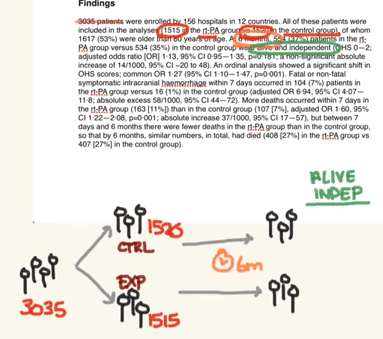
Patwari Academy videos: EBM Treatment Studies
Dr. Rahul Patwari reviews evidence-based medicine (EBM) concepts specifically regarding treatment studies, as guided by the JAMA Users Guide to the Medical Literature manual. In these first three videos, Rahul provides a brief introduction to the concept of treatment studies and then discusses (1) how to assess whether the results are valid and (2) calculating the risks/benefits of treatment based on the IST-3 trial? [+]

Supraventricular Tachycardia (SVT): Are Troponins Necessary?
More than one third of patients will have chest pain associated with SVT causing providers to order troponins and other cardiac enzymes. Elevated troponins are not pathognomonic for CAD/ACS and could represent other etiologies such as sepsis, subarachnoid hemorrhage, and pulmonary embolism. Also, subsequent coronary angiography is not necessary for risk stratification in all cases. SVT causes a rapid heart rate, which is well documented as a cause for modest troponin elevation secondary to cardiac stretch, poor diastolic perfusion, and/or coronary artery vasospasm. [+]

Patwari Academy videos: Spider and Hymenoptera bites
These two videos continue on the theme of envenomations. Watch these great videos on the consequences and management of bites by spiders and Hymenoptera species (bees, wasps, ants). Hymenoptera bites can cause all sorts of complications, but one of the most worrisome includes anaphylaxis, which is also reviewed in the video. [+]
Pediatric febrile seizure: When do I need to do a lumbar puncture?
You are in the ED when a 7 month old is brought in by EMS after a witnessed generalized seizure. The grandmother reports that the child has had URI symptoms for a couple of days and then developed a fever today. Shortly after giving ibuprofen, the child began to seize with arms and legs twitching. The episode lasted approximately 8 minutes and when EMS arrived, the child was sleepy, but arousable. The glucose was 92 mg/dL en route. On exam in the ED, child is awake and staring at you to make the next move… Vitals: Temp 39C, P 136, [+]

Director of Growth, Strategic Alliance Initiative, Center for Innovation and Digital Health
Massachusetts General Hospital;
Chief Scientific Officer, Conductscience.com
Latest posts by Shuhan He, MD (see all)
- The Discharge Severity Index: Early Research on ED Readmission Risk Assessment - August 14, 2025
- Suboxone and the Emergency Physician: Get Waivered Training - August 12, 2022
- A Tale of Two Epidemics: COVID-19 and the Opioid Crisis - April 23, 2020