


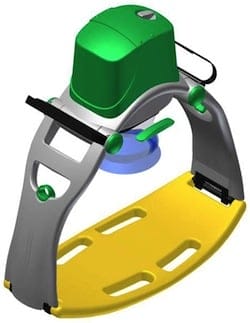
Mechanical vs Manual CPR Chest Compressions
When talking about Out of Hospital Cardiac Arrest (OHCA) there are really only three things that make a true difference on outcomes (i.e. survival and neurologic function): High quality, non-interrupted CPR Early defibrillation Therapeutic hypothermia The quality of CPR is often under appreciated and performed incorrectly (too slow and/or not hard enough). With mechanical CPR, chest compressions are delivered uninterrupted and at a predefined depth and rate. In my own practice I have seen these devices being used more and more, but my questions is do these devices impact outcomes? [+]

P-Video: Rule of 15 in anion gap metabolic acidosis
You have a patient with an anion gap of 30 and bicarbonate of 10 mEq/L. You also determine on VBG that the patient’s pCO2 is 25 mmHg. What trick of the trade can you use to quickly determine whether this low pCO2 is an appropriate compensation of the primary metabolic acidosis? Dr. Jeremy Faust and Dr. Corey Slovis explains the quick “Rule of 15”. [+]
Patwari Academy Videos: Evidence Based Medicine (part 4)
Dr. Rahul Patwari is a one-man statistics teaching machine. In part 4 of this Evidence Based Medicine series, he reviews advance concepts in statistics and calculations including: case-fatality rates, crude mortality rates, specific-mortality rates, years of potential life lost, and direct and indirect age adjustments. [+]
P-Video: Sources for pediatric and adult fevers
Dr. Jeremy Faust is back with another P-video, which stands for Paucis Videos (paucis means “few” or “brief” in Latin) much like the Paucis Verbis cards. These P-videos are short video-based educational pearls for the practicing physician with a focus on Emergency Medicine and Critical Care. Here Jeremy shares two mnemonics, LUCAS and FEBRILE, to help you remember the common causes for fevers in pediatric and adult patients, respectively. [+]

Confessions of an Emergency Department Kid Helper
As I was rounding the corner from the adult area of the emergency department to the pediatric area I heard a child screaming at the top of his lungs, “I DON’T WANT A SHOT”. I knew at that moment I was being summoned. I walked into the room and I saw a mother with her 5 year old son in a full headlock, while a new intern was trying to look in his ears. I made eye contact with the intern said “maybe I can help” then turned my attention to mom and son. [+]
Patwari Academy Videos: Evidence Based Medicine (part 3)
In part three of this Evidence Based Medicine series, Dr. Rahul Patwari does a deep dive on more advanced concepts in statistics. Specifically, he reviews: odds, incidence, prevalence, and incidence rates. What IS the difference between incidence and prevalence? Ever wonder? [+]

Treating Ischemic Stroke with tPA in the ED: Time is Brain
Ischemic stroke is an emergent and devastating neurologic disorder, and is a leading cause of both death and disability in the United States. With each minute of brain ischemia, two million neurons are irreversibly damaged. Total ischemic time is linked to functional outcome, and therefore, the role of the Emergency Department is paramount in the management of these patients. Fibrinolytic therapy has become a mainstay of therapy for acute stroke, but guidelines for the use of tPA are dynamic, and often even controversial. When you identify someone with symptoms of stroke, what is your approach to determining if a patient [+]
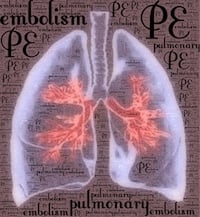
Acute Pulmonary Embolism: Size does matter and ECG can give us clues
Acute pulmonary embolism (PE) is a common condition that can be both severe and difficult to diagnose. Half of all acute PE cases are diagnosed in the emergency department, and acute PE follows acute coronary syndrome as the second most common cause of sudden unexpected death in outpatients. Also, right ventricular dysfunction is a consequence of massive/submassive acute pulmonary embolism and correlates with a poor prognosis and high mortality rate. Although an ECG lacks both sensitivity and specificity for acute PE, there are some clues that can help in determining the size of an acute PE. [+]
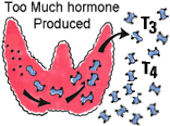
Diagnosing hyperthyroidism: Answers to 7 common questions
The prevalence of hyperthyroidism in the general population is about 1-2%, and is ten times more likely in women than men. The spectrum of hyperthyroidism ranges from asymptomatic or subclinical disease to thyroid storm. So how do we diagnose various presentations of hyperthyroidism in the Emergency Department? Below are answers to 7 common questions that commonly arise. [+]
Patwari Academy videos: Evidence Based Medicine (part 2)
In part 2 of this Evidence Based Medicine series by Dr. Rahul Patwari, more advanced statistical concepts are reviewed. These concepts include ROC curves, screening tests, probability (multiplication and addition rules) and the binomial theorem. Sounds daunting but these short videos really condenses the concepts into digestible lessons. [+]

Director of Growth, Strategic Alliance Initiative, Center for Innovation and Digital Health
Massachusetts General Hospital;
Chief Scientific Officer, Conductscience.com
Latest posts by Shuhan He, MD (see all)
- The Discharge Severity Index: Early Research on ED Readmission Risk Assessment - August 14, 2025
- Suboxone and the Emergency Physician: Get Waivered Training - August 12, 2022
- A Tale of Two Epidemics: COVID-19 and the Opioid Crisis - April 23, 2020