


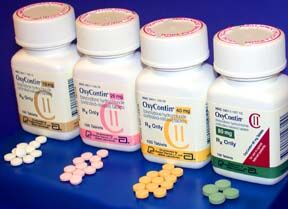
Trick of the Trade: Oral naloxone for opioid-induced constipation
Opioids are amazingly effective for pain control. Patients on chronic opioids, however, often struggle with constipation. These patients may fail supportive treatment with enemas and laxatives. [+]

Director of Growth, Strategic Alliance Initiative, Center for Innovation and [+]
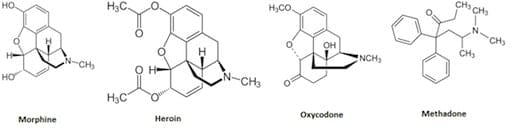
Peeing into the wind? Urine drug screens, part 2 (opiates)
Apart from benzodiazepines, the opiate urine drug screens (UDS) are probably the most frequently utilized and misunderstood. [+]
Director of Growth, Strategic Alliance Initiative, Center for Innovation and Digital Health
Massachusetts General Hospital;
Chief Scientific Officer, Conductscience.com
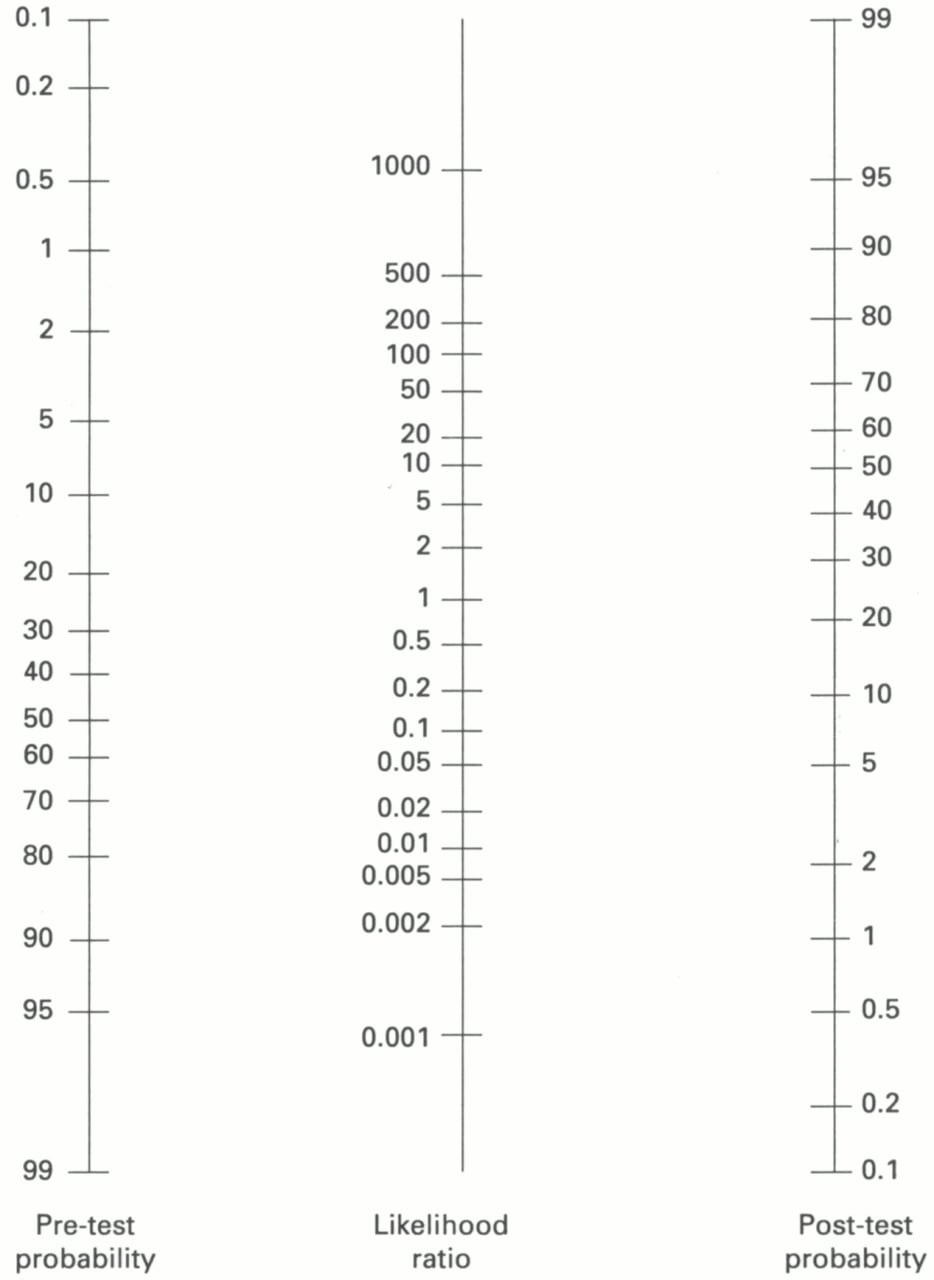
Paucis Verbis: CHF likelihood ratios
A 50 y/o man with a history of CHF and COPD is brought in by ambulance in severe respiratory distress. He is sitting upright with a RR 30 and O2 saturation of 79% on room air. Is this a CHF or COPD exacerbation? This is a common dilemma faced in the ED. Fortunately there are likelihood ratios to help you risk stratify using a Fagan nomogram. Note that there are 3 tables: All-comer Emergency Department (ED) patients1 ED patients WITH a known history of asthma or COPD2 Summative LRs for BNP are provided in ED patients with or without a history of asthma/COPD1 [+]

Trick of the Trade: Alternative to Word catheter for Bartholin abscess
Bartholin abscesses are challenging to manage, partly because of Word catheter insertion. Sometimes, the space is not large enough (unable to fit the catheter) or too large (catheter falls out). How else can you “pack” the abscess space? [+]
Peeing into the wind? Urine drug screens, part 1 (benzodiazepines)
Let’s be honest. When was the last time results from urine drug screens (UDS) changed your management plan? Many times it takes hours for the patient to give the urine sample anyway. And, with all of the false positives out there, how do we know what the heck the result is actually telling us? [+]
Paucis Verbis: Does this adult patient need blood cultures?
Do you order blood cultures for all your ED patients with a fever? Obviously no. What's your decision making process on ordering this test? There are really no findings or tests with high specificity (rules-IN bacteremia), except interestingly "shaking chills". Notice almost all the criteria listed below approach a likelihood ratio (LR) of 1.0. Two prediction rules do exist, however, to help you virtually rule-OUT bacteremia: SIRS Shapiro prediction rule The list of LRs also will be helpful to show learners in the ED that an isolated serum WBC number is useless risk-stratifier. Patient Case A 55 y/o man with [+]
Trick of the Trade: Incision and loop drainage of abscesses
Why are we still teaching the traditional incision and drainage approach to simple abscess drainage? They require frequent, painful packing changes to ensure persistent drainage of retained pus. Trick of the Trade Incision and loop drainage (I&LD) technique As per usual, Dr. Rob Orman (ercast) beat me to this. He already reviewed the technique on his blog in 2010. This stems from a landmark article in the Journal of Pediatric Surgery, which involves creating a persistently draining fistula at two points by using a small vascular loop, tied into a non-tensile loop. It makes sense to extrapolate and use this [+]
Paucis Verbis: Overanticoagulation and supratherapeutic INR
I find it amazing that I know more non-emergency physicians virtually in the social media world rather than in person. Primarily through Twitter, I follow and am followed by medical educators from various specialties. If you haven't joined Twitter yet, I think it might be time. There is a whole world of collaboration and conversation going on in this virtual community, which crosses specialties and geography. Last week, Dr. Javier Benítez (@jvrbntz) was tweeting a Question of the Day, referencing a 2010 Paucis Verbis card on overanticoagulation, which was based on the 2008 American College of Chest Physicians (ACCP) guidelines. [+]

Mythbuster: The 10% cephalosporin-penicillin cross-reactivity risk
To give or not to give a cephalosporin in penicillin-allergic patients? I remember back to my days in pharmacy school when I learned that there was approximately a 10% risk of cross-reactivity, if a cephalosporin was given to a penicillin-allergic patient. They probably said something about the risk being less with 3rd and 4th generations cephalosporins, but lets be honest… who remembers anything but that magic 10%? When I started working more with physicians, I found that they also learned the same 10% rule in medical school. Well, I guess that means it’s fact, right? Not so fast! [+]
Trick of the Trade: Ring removal using oxygen mask strap
Creative emergency physicians exist worldwide. Check out this nifty trick on ring removal by Dr. Simon Carley (Centre For Evidence Based Emergency Care at Manchester Metropolitan University) of St.Emlyns fame. [+]
Director of Growth, Strategic Alliance Initiative, [+]
Director of Growth, Strategic Alliance Initiative, Center for Innovation and Digital Health
Massachusetts General Hospital;
Chief Scientific Officer, Conductscience.com
Latest posts by Shuhan He, MD (see all)
- The Discharge Severity Index: Early Research on ED Readmission Risk Assessment - August 14, 2025
- Suboxone and the Emergency Physician: Get Waivered Training - August 12, 2022
- A Tale of Two Epidemics: COVID-19 and the Opioid Crisis - April 23, 2020