


Sort me! Paucis Verbis cards now catalogued
After much recent feedback on the poll about the Paucis Verbis cards (thanks to all who responded!), I see trends: Several have commented that it is getting increasingly difficult to find a card that they are searching for. There are over 100 cards now! So, I managed to figure out how to embed a Google Doc spreadsheet into the blog, which now allows you to sort and search for particular cards (minor HTML coding necessary). This list will permanently live on the Paucis Verbis page. [+]

Poll: Is anyone using the Paucis Verbis cards?
Feedback is essential for continued growth and improvement in any longitudinal project that you work on. Thus annually, I conduct a poll to see if I can improve anything on the blog. This year, I wanted to focus on the Paucis Verbis pocket cards. There are over 100 cards now, which are each based on recent peer-reviewed publications. I try to make them as practical as possible with the goal of improving evidence-based practice at the bedside. [+]

Trick of the Trade: Massaging a mandibular dislocation back in
Continuing the theme of mandibular dislocation tricks (protecting your thumbs, post-reduction stabilization), Dr. Daniel Gromis from Advocate Christ Medical Center describes a novel reduction technique, based on the Cunningham shoulder reduction technique using muscle relaxation. [+]

Director of [+]

Paucis Verbis: D-Dimer test
D-Dimer: To order or not to order? That's the question when it comes to risk stratifying a patient for a pulmonary embolism with a low pretest probability. One should consider confounding conditions which may cause an elevated D-Dimer level. There's always confusion about what may cause an elevated D-Dimer besides venous thromboemboli. So I thought I would make a pocket card as a reminder. PV Card: D-Dimer Test Adapted from [1] Go to ALiEM (PV) Cards for more resources. Reference Wakai A, Gleeson A, Winter D. Role of fibrin D-dimer testing in emergency medicine. Emerg Med J. 2003;20(4):319-325. [PubMed]

Trick of the Trade: Photograph slit lamp findings
How do you capture the image of the eye on slit lamp exam either for the patient or your ophthalmology consult? It’s often easier to show someone a photo rather than trying to describe that atypical dendritic lesion, degree of corneal edema, or pattern of corneal abrasion. You, however, don’t have the expensive camera attachment (nor a SLR camera for that matter). [+]

Trick of the Trade: Converting % to mg/mL
Medication error is something that we all fear in Emergency Medicine and do our best to avoid. Here’s a scenario and simple approach for you, provided by Zlatan Coralic, PharmD (Assistant Clinical Professor in the UCSF School of Pharmacy). You are an emergency physician working in an underserved country. You are presented with an asthmatic kid with severe retractions and tight wheezes. Multiple nebulizers and corticosteroids have failed. You want to try some magnesium sulfate before risking intubation in a place with no reliable access to ventilator equipment. You know the dose should be 1 gm IV over 20 minutes. [+]

Trick of the Trade: Removing a Tungsten Ring Stuck on Your Finger
A patient presents with a tungsten ring on their injured finger and is unable to remove the ring. Tungsten rings are unique in that ring cutters can’t even make a scratch in them. There are even anecdotes of firefighter equipment not being able to cut off these “unbreakable” rings. [+]
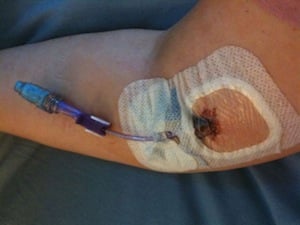
Trick of the Trade: Unblocking the obstructed IV line
A patient’s PICC line becomes obstructed and presents to your ED for care. She is using it for chronic antibiotics for osteomyelitis. You are unable to aspirate and flush it with saline using a 10 cc syringe. [+]
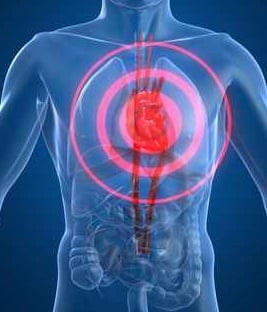
Paucis Verbis: Blunt cardiac injury
Do you always get a troponin for patients who sustain blunt chest trauma? Hopefully your answer is no. Of note, it is also NOT indicated as a screening test for those in whom you suspect a blunt cardiac injury (BCI). It can be normal in the setting of arrhythmias and it can be falsely elevated in the setting of catecholamine release or reperfusion injury from hypovolemic shock. The initial screening test should include an ECG and a FAST ultrasound exam. If you have abnormal ECG findings, then a troponin is warranted (in addition to hospital admission). Below summarizes a suggested [+]
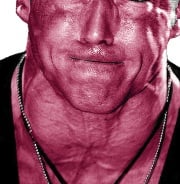
Tricks of the Trade: Valsalva maneuver by using a 10 cc syringe
Last week, Dr. David Johnson shared his trick to elicit a Valsalva maneuver out of his patient. Here’s another trick that I saw one of our EM residents use in an attempt to break a SVT rhythm. [+]
Director of Growth, Strategic Alliance Initiative, Center for Innovation and Digital Health
Massachusetts General Hospital;
Chief Scientific Officer, Conductscience.com
Latest posts by Shuhan He, MD (see all)
- The Discharge Severity Index: Early Research on ED Readmission Risk Assessment - August 14, 2025
- Suboxone and the Emergency Physician: Get Waivered Training - August 12, 2022
- A Tale of Two Epidemics: COVID-19 and the Opioid Crisis - April 23, 2020