


Antibiotics, Myasthenia Gravis, and Risk of Weakness
A 71 year old female presents to the ED with lethargy, fever (39.5 C), and tachypnea (RR 28 rpm). She has a long-standing history of myasthenia gravis (MG) for which she receives periodic IVIG infusions. She is accompanied by her son, who informs you that she had a recent 10-day hospital stay for weakness. A CXR reveals an infiltrate in the left lower lobe. The decision is made to initiate antimicrobial therapy for presumed healthcare-associated pneumonia. But, which antibiotics are safe to use in a patient with severe MG? [+]

I am Dr. Ryan Radecki, author of EM Literature of Note: How I Work Smarter
In a previous How I Work Smarter post by Dr. Ken Milne, he called out Dr. Ryan Radecki, who is the outspoken and prolific author of EM Literature of Note and a premiere mythbuster in EM, specifically around thrombolytics in stroke. For those of us in the blogging world, not everyone knows that he lives a dual academic life working on medical informatics and information design. He is, in fact, funded through an NIH grant from the Agency of Healthcare Research and Quality for a training program in patient safety. Ryan shares his tips for working smarter. [+]

Valproic Acid-Induced Hyperammonemic Encephalopathy
Valproic acid is used for a variety of clinical indications including seizures, migraine prophylaxis and treatment, and bipolar disorder. A metabolite of valproic acid, thought to be propionic acid, has the ability to increase ammonia levels by inhibiting a step in the hepatic urea cycle, which may lead to valproic acid-induced hyperammonemic encephalopathy. As a result, patients treated with valproic acid presenting with signs and symptoms of acute mental status changes, increased seizure frequency, and/or gastrointestinal symptoms should be evaluated for elevated ammonia concentrations. [+]

Blunt Chest Trauma: Validation of the NEXUS Chest Rule
We commonly see patients who have some form of blunt chest trauma. This is the result of motor vehicle collisions, falls, and a myriad of other traumatic events. The decision to perform thoracic imaging can be difficult. Chest xray (CXR) and/or chest CT? In fact, studies have shown that emergency and trauma physicians often disagree 28-40.9% of the time about which patients require a chest CT following blunt trauma. 1,2 [+]

I am Dr. Lauren Westafer, Author of The Short Coat: How I Work Smarter
I first came to know of Dr. Lauren Westafer (@LWestafer) when she started the amazing The Short Coat blog as a medical student. I feel like such a slacker during medical school… She has quickly risen to the esteemed ranks of online medical education because of both the blog and her podcast, FOAMCast, with Dr. Jeremy Faust. Lauren has kindly agreed to share her tips for working more efficiently. [+]

ALiEM Bookclub: When Doctors Don’t Listen
“So what does this ideal medical care look like? The great Tip O’Neill, himself a Boston man, used to say, ‘All politics is local.’ We believe in its corollary, that all medicine is personal. The world of better medicine starts with the individual patient interacting with the individual doctor.” -The October ALiEM Bookclub Selection: When Doctors Don’t Listen1, by Leana Wen and Joshua Kosowsky [+]
Carbon Monoxide Poisoning – It’s That Time of Year Again
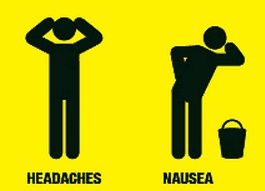
Carbon monoxide (CO) poisoning may be the most common cause of fatal poisonings worldwide. 1 The majority of poisonings occur in the Fall and Winter. It is that time of year when heaters that have lain dormant all summer are flicked on, sometimes in enclosed areas, introducing CO fumes into homes. The pathophysiology is complex, and not fully understood, but all ED physicians should be aware of the signs and symptoms of CO toxicity, and know how to treat it. [+]

EM Match Advice: Making The Perfect Rank Order List
With interview season rapidly approaching in a few months (Nov-Feb), we gathered a few more of our favorite program directors to discuss the hot topic of making the rank order list. We feature Dr. Colleen Roche (George Washington), Dr. Jonathan Davis (Georgetown), and Dr. Brian Stettler (Univ of Cincinnati). Thanks again to Dr. Mike Gisondi (Northwestern) for spearheading this innovative and helpful EM Match Advice series for medical students. [+]
Top 10 Reasons NOT to Order a CT Pan Scan in a Stable Blunt Trauma Patient
The pendulum has swung one way with CT for trauma, but has it gone too far? Liberal use of CT raises concerns over resource utilization, cost, and the consequences of radiation exposure [1,2]. No-one can seem to agree, including trauma surgeons, on guidelines for a more selective use of imaging studies [3-6]. “CT pan scan” is the term, source unclear, which describes the whole body CT (WBCT) imaging strategy used in blunt trauma management. It consists of the following CT studies: [+]

I am Dr. Mike Mallin: Co-Host of Ultrasound Podcast: How I Work Smarter
In this new installment in the “How I Work Smarter” series, we are featuring Dr. Mike Mallin (@UltrasoundPod), who is half of ultrasound education royalty with Dr. Matt Dawson, who was featured last week in this series. Mike’s work is impressive and I often cite and quote his 2014 publication in Academic Medicine entitled “A survey of the current utilization of asynchronous education among emergency medicine residents in the United States” [Pubmed]. Genius idea for a paper, which no one has done before. Mike was kind enough to share his sage words of wisdom. Did you know he has sub-macros for his macros? #MindBlown [+]