


Vomiting in Kids After Head Trauma: To CT or Not to CT?
A 6-year-old male is brought to the emergency department (ED) after falling from the monkey bars at a local playground. Physical examination reveals no scalp hematoma, and the child appears alert and well oriented. You decide to observe him over the next 30 minutes hours to determine if he develops any disconcerting symptoms. After 15 minutes of observation within the ED the patient has an episode of vomiting witnessed by the nurses. The patient’s mother wants to know if this means he has failed his observation period and needs to receive a head CT. Your answer? [+]

Antidiabetic Medications: Hypoglycemic Potential in Overdose
With several new diabetes medications available, it is important to know which ones are likely to cause hypoglycemia after overdose. Based on mechanism of action and reported cases, the likelihood of hypoglycemia after overdose is listed below by drug class. 1 Keep in mind that other drugs can interact with antidiabetic medications resulting in hypoglycemia. The following table applies only to single agent ingestion/administration. [+]

I am Amal Mattu, ECG nerd and author of Emergency ECG Video of the Week: How I Work Smarter
As this series has progress, we have received a multitude of nominations for call-outs. One of the most popular requests was to have Dr. Amal Mattu (@amalmattu) share his efficiency secrets. Amal has blanketed the world of continuing medical education with didactics and workshops on ECG interpretation and faculty development skills. He authors the extremely popular Emergency ECG Video of the Week series and hosts a monthly EMCast podcast for Emedhome.com. He also the Consulting Editor for Emergency Medicine Clinics of North America. He does it all. When I emailed requesting his insights, I was surprised to hear his response. [+]

PV Card: Focused Abdominal Aorta Ultrasound
In this next ultrasound installment in the PV Card series, Drs. Victoria Koskenoja, Heidi Kimberly, and Mike Stone succinctly summarize the focused abdominal aorta ultrasound to assess for an abdominal aortic aneurysm (AAA). These can serve as key reference cards when you do your next AAA scan. Don't miss the last card with tips on optimizing the view and common pitfalls. PV Card: Focused Abdominal Aorta Ultrasound Go to ALiEM (PV) Cards for more resources.
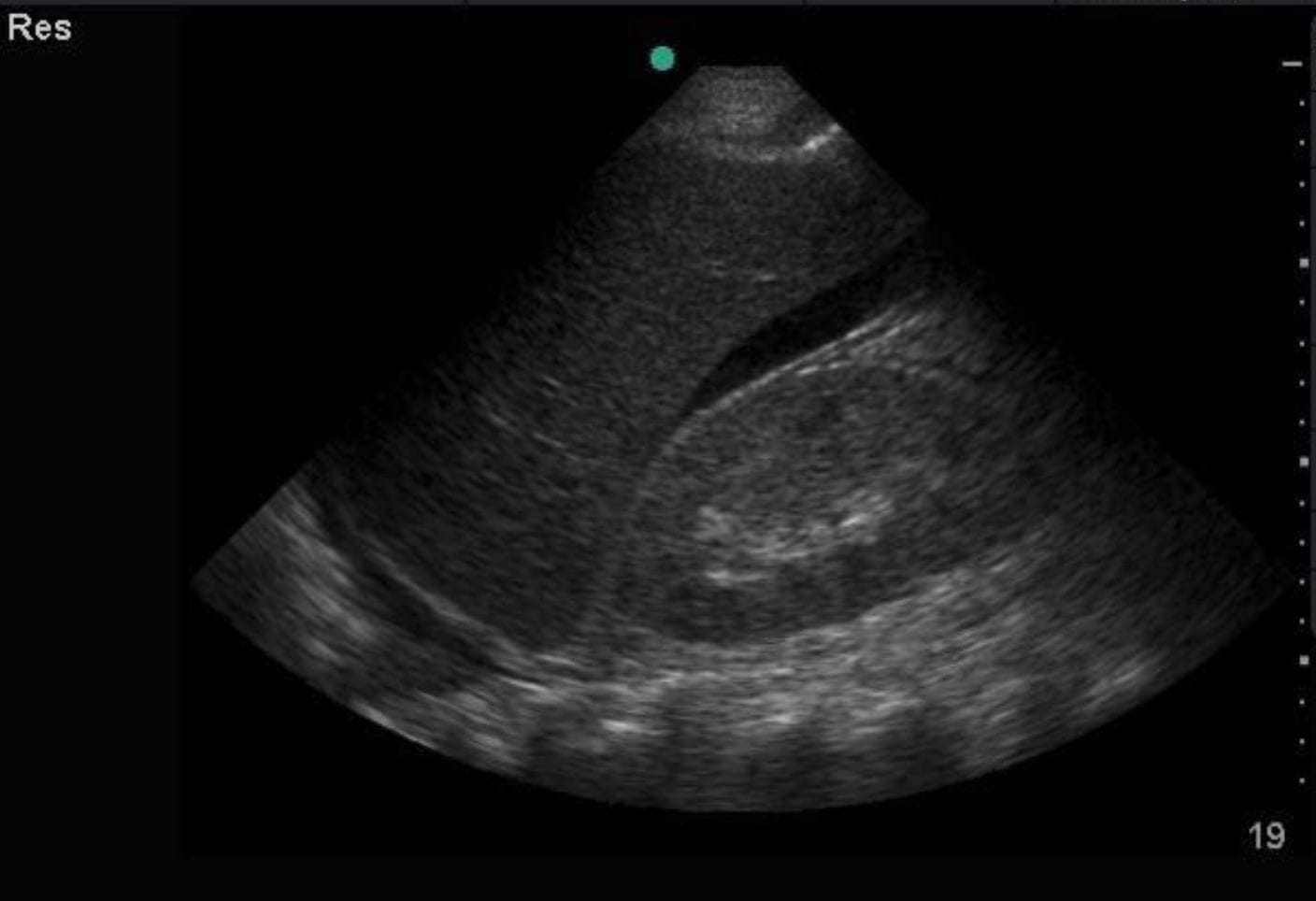
PV Card: FAST Ultrasound
Keeping in line with the recent ultrasound posts this month, Dr. Mike Stone's star team is releasing a series of Paucis Verbis cards on the basics of bedside ultrasonography. Here is the first in the series on the Focused Assessment with Sonography in Trauma (FAST) by Drs. Wilma Chan, John Eicken, and Mike Stone. PV Card: FAST Ultrasound Go to ALiEM (PV) Cards for more resources.
US4TW Case: 28F with Shortness of Breath
Welcome to the inaugural post for an exciting new ultrasound-based case series called “Ultrasound For The Win!” (#US4TW). In this peer-reviewed case series, we will focus on real clinical cases where bedside ultrasound changed the management or aided in the diagnosis. In our first case, we present a 28-year-old female with shortness of breath. [+]

Small bowel obstruction: Diagnosis by ultrasonography
A 64 year old man with an extensive history of abdominal surgeries presents to the emergency department with abdominal pain and vomiting. Because you suspect a bowel obstruction, you bring an ultrasound machine to the bedside prior to the completion of any laboratory testing or other imaging. A curvilinear probe in the abdominal mode setting was used to scan in all four quadrants of the abdomen looking in both the sagittal and transverse planes. [+]

Beta Blockers vs Calcium Channel Blockers for Atrial Fibrillation Rate Control: Thinking Beyond the ED
Intravenous beta blockers and non-dihydropyridine calcium channel blockers are recommended first-line for atrial fibrillation (AF) with rapid ventricular rate (RVR) [1]. In a previous post, Bryan Hayes (@PharmERToxGuy) provided an overview of the data comparing beta blockers to calcium channel blockers for atrial fibrillation rate control in the ED. Here is part 2 of our two-part AF series. [+]

I am Dr. Ken Milne, Creator of Skeptics’ Guide to Emergency Medicine: How I Work Smarter
In this new installment in the “How I Work Smarter” series, we are featuring Dr. Ken Milne (@TheSGEM), is the creator and host of the stellar podcast series Skeptics’ Guide to Emergency Medicine (SGEM). This series focuses on really looking at the best available evidence for how and why we should practice EM. This series consistently puts out quality podcasts about the many challenges we deal with in the clinical arena on a day to day basis. Ken was called out by Dr. Anand Swaminathan in his Working Smarter blog post and kindly has agreed to share his trade secrets on how he works smarter. [+]
MEdIC Series: Season 1 Annual Review
Dear MEdIC readers: It’s been quite a whirlwind this year for the MEdIC team, and we’re so excited to announce that we’re taking a (much needed) summer hiatus this month to refresh. Tune in when we start “season 2” in late September! In an effort to continually improve the series, we would love to invite you to participate in our first annual audience evaluation of the MEdIC series. We want to make sure we always strive to meet the needs of our audience, and we would like you to help us by telling us about how you’ve experienced or used [+]