



MEdIC Series: The Case of the Backroom Blunder – Expert Review and Curated Commentary
The Case of the Backroom Blunder presented us with an interesting scenario that riveted readers across the globe. In this case, Trevor the medical student overhears the conversation of two of his senior colleagues discussing and laughing about a recent resuscitation. The senior members of the team used terms like ‘frequent flyer’, ‘red underpants’, which greatly upsets Trevor. In his opinion: “A caring doctor would never talk like that. And the slang? That’s just awful.” What did the ALiEM community think of this case? Well, read on to gleam the summaries, or go directly to the blog discussion to read what [+]

Trick of the Trade: Insect removal from the ear
Insect removal from the ear is a foreign body removal procedure with unique considerations. First, insects are friable. Have you ever squashed a house centipede? It’s like their 700 legs are spring-loaded to fall off instantly when touched. This characteristic makes mechanical removal by alligator forceps or cerumen loops less reliable. Second, they are alive which means they can move during your attempted extraction procedure. [+]

AIR Series: Endocrinology Module 2014
Welcome to the third ALiEM Approved Instructional Resources (AIR) Module! In an effort to reward our readers for the reading and learning they are already doing online, we have created an Individual Interactive Instruction (III) opportunity utilizing FOAM resources for U.S. Emergency Medicine residents. For each module, the board curates and scores a list of blogs and podcasts. A quiz is available to complete after each module to obtain residency conference credit. Once completed, your name and institution will be logged into our privatedatabase, which participating residency program directors can access to provide proof of completion. [+]
Bleeding and Hemophilia in the Pediatric ED
Bleeding as a chief complaint in the pediatric emergency department is something that many healthcare providers will come across. Some of these children may have inherited bleeding disorders that we must be aware of in order to provide the best care possible. Below is a basic review of hemophilia and what we should know and do in the emergency department. [+]

I am Dr. Matt Dawson – Co-Host of Ultrasound Podcast: How I Work Smarter
In this new installment in the “How I Work Smarter” series, we are featuring one half of ultrasonography royalty, Dr. Matt Dawson (@UltrasoundPod), who has dominated the EM ultrasound world along with Dr. Mike Mallin (who is featured next week!). I am always impressed with how Matt can do it all – create, podcast, publish e-books and journal articles, and email responsively. Take a read of his practical pearls, although now I no longer wonder how he manages to reply to emails so promptly … [+]
MEdIC Series | The Case of the Backroom Blunder
Are you ready?? Season 2 of the ALiEM MEdIC series is about to begin! We are so excited to kick off the ‘school year’ with a riveting new case from our Medical Education in Cases series. Join us now to discuss the case of the Backroom Blunder wherein Trevor, the 3rd year medical student, finds himself reflecting about the use of humor by his colleagues in the resuscitation bay. [+]
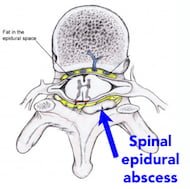
High risk back pain: Spinal Epidural Abscess
Spinal epidural abscess (SEA) is a rare but potentially catastrophic cause of back pain. Classically these patients are described as having back pain, fever, and clear neurologic deficits. In reality, patients often present with less obvious symptoms which often leads to a delay in diagnosis. Missed cases of SEA are a source of significant risk to both the patient and the provider. To improve outcomes and minimize risk, providers must identify and promptly evaluate patients who are at increased risk of developing a SEA. [+]
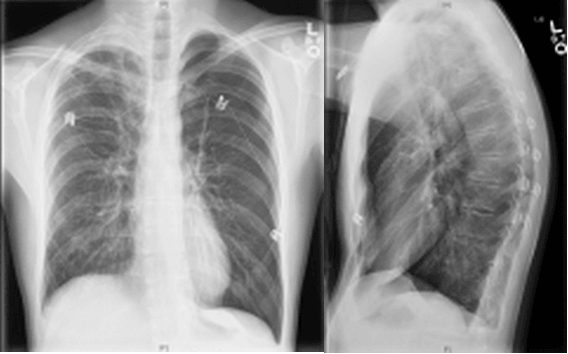
Diagnose on Sight: “I feel like I am having a heart attack”
Case: A 18-year-old male with no medical history presents to the emergency department (ED) complaining of “feeling like I am having a heart attack” which started suddenly 1 hour ago. The patient ate from a food truck the night before and developed several episodes of forceful vomiting prior to arrival in the ED. What finding in this supine chest radiograph aids in the diagnosis? Click on image for a larger view. [+]

I am Dr. Rob Mac Sweeney, Editor for Critical Care Reviews: How I Work Smarter
In this new installment in the “How I Work Smarter” series, we feature Dr. Rob Mac Sweeney (@CritCareReviews), who is the editor for the prolific and very popular blog Critical Care Reviews. Twitter fans nominated him: “Everyone would like to know how you manage to produce such a resource and find the time to breath!” and “Rob never sleeps. Can be no other explanation!” Rob has agreed to share his trade secrets on how he works smarter and seeming finds more time in the day than us mere mortals. [+]
ALiEM Bookclub: A History of Present Illness
“Late that afternoon, Quentin jogged along the Crissy Field promenade without paying much attention to the dogs frolicking on the beach or the windsurfers leaning low on their boards off Fort Point. Since Ralph was on call and not coming home, he reheated leftover spaghetti for his dinner and curled up on their bed with a textbook to study the surgical management of hip fractures. He would have liked to read about the nonsurgical management of hip fractures as well or, more important, about how to approach patients who can’t talk, or what to do when you’ve made an inexcusable mistake, [+]