



MEdIC Series: The Case of the Absentee Audience – Expert & Community Commentary
This month for the ALiEM MEdIC Series, we presented the Case of the Absentee Audience, which depicts a lecturer who experienced a particularly challenging problem with her audience – absenteeism. Her audience was both physically and mentally absent, and as such, the cause of much frustration. In keeping with our mandate with the MEdIC Series, we launched this case last week and waited for the crowd to speak up and help us solve the case. (And boy, did they EVER!) We also asked two esteemed colleagues to prepare some expert consultations on the case. Continue reading to see what everyone [+]

Social Media in the EM Curriculum: Annals of EM Resident Perspective article
This month marks our second ALiEM-Annals Resident’s Perspective discussion. Similar to the ALiEM-Annals Global EM Journal Club series and the first Resident’s Perspective piece on Multiple Mini Interviews, we will be discussing the most recent Annals of Emergency Medicine Resident’s Perspective piece on the Integration of Social Media in Emergency Medicine Residency Curriculum. We hope you will participate in an online discussion based on the paper summary and questions below from now through August 1, 2014. Respond by commenting below or tweeting using the hashtag #ALiEMRP. [+]

I am Esther Choo – Researcher, Public Health Advocate, and Educator: How I Work Smarter
In the first post for the “How I Work Smarter” series, I called out Dr. Esther Choo (@choo_ek), because she is able to juggle so many interests and responsibilities flawlessly. She’s the principal investigator for a study, funded by the National Institutes of Drug Abuse, looking at a national computer-based intervention for women with substance use and interpersonal violence in the ED; Academic Emergency Medicine’s first Senior Associate Editor for Social Media; and star presenter. Esther was kind enough to provide her best-practice tips for this ongoing series. [+]
MEdIC Series | The Case of the Absentee Audience
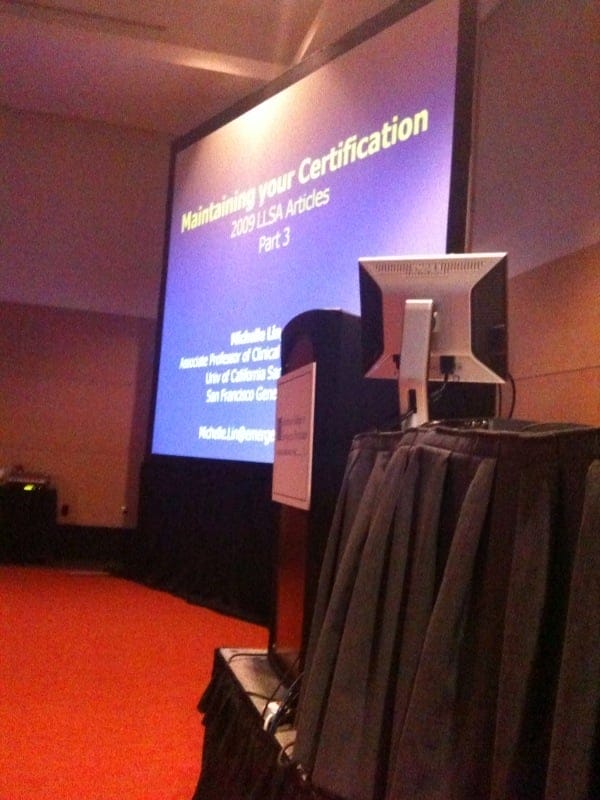
Have you ever been at a lecture where the audience didn’t seem in ‘sync’ with the speaker? Or perhaps as a junior presenter, some of you may have been at a lecture or two that just didn’t seem to work. This month, we ask you to advise Dr. Xiu, a presenter who is experiencing this exact problem. Come out and discuss the Case of the Absentee Audience. [+]
Child Whisperer Series: After the Pediatric Code Blue
“We need to debrief” said the nurse manager after the medical team walked out of the critical care room after pronouncing a child who died after a traumatic accident. The social worker pointed at me (I am a Child Life Specialist) and looked at her and said “It’s our code blue now. We have to wait. We have a job to do”. Which was her way of saying we still had a lot of work to do with the family. At that point I walked in a room with the social worker and devastated parents, where the patient’s brother waited. He looked at me [+]

Diagnose on Sight: Bilateral Leg Rash
Case: A pre-teen girl, living in central California, recently started on fluconazole, now presenting with a bilateral leg rash. What is your diagnosis? Click on the image for a larger view. [+]

Director of Growth, Strategic Alliance Initiative, Center for Innovation [+]

Sternoclavicular Joint Dislocations: Diagnosis and Treatment
A 16-year-old football player presents to the emergency department directly from a game. He was tackled, falling onto his right shoulder. The patient is complaining of right-sided chest pain. On exam, there is tenderness over the right sternoclavicular joint (SCJ) with a prominent medial clavicle. Range of motion is limited in the right arm. What diagnostic studies need to be performed? What treatment is warranted in the emergency department? [+]
I am Victoria Brazil, Academic Lead for Clinical Skills and Simulation at Bond University: How I Work Smarter
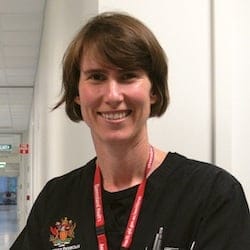
In the first post for the “How I Work Smarter” series, I called out one my favorite, accomplished clinician-educators Dr. Victoria Brazil, because she makes extreme-productivity look easy. Victoria was kind enough to provide her trade secrets, and it is with great pleasure that I share her responses to the questions in this series. [+]
I am Michelle Lin, ALiEM Editor in Chief: How I Work Smarter
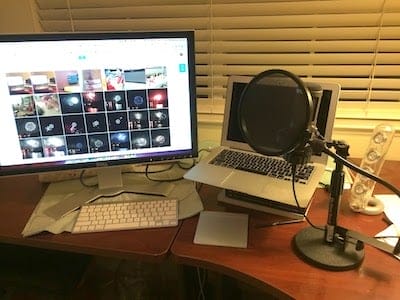
In this inaugural post of the series “How I Work Smarter,” I wanted to share my thoughts and efforts towards working smarter and not always necessarily harder. I have been the Editor-in-Chief of ALIEM since 2009 where I first was only managing myself and now I working with an all-star team of very motivated and capable medical educators in EM. Three moving parts rapidly became thirty moving parts with thirty different deadlines. Here are my responses to the series questions. [+]
New Series: How I Work Smarter
We are all busy individuals trying to juggle various projects, a multitude of responsibilities, and balancing work and home life. “Work smarter, not harder” is often heard to remind us that we should be looking to improve our working styles to be more efficient. It is easier said than done. One place that I have drawn inspiration from is in LifeHacker’s “How I Work” series, which highlights the personal working habits of successful entrepreneurs and leaders. [+]