



September 2013 Update: Expert Peer Reviewed posts
It’s been a month since we started adding expert peer reviews to our blog posts, and we have had a flurry of engaging conversation surrounding the new process. During this time we have worked to develop a sustainable peer review process. In fact there are two ongoing expert peer-review processes: Clinical articles: There have been 10 clinical articles thus far expert peer reviewed on a post-publication basis. See list below. MEdIC series: Dr. Teresa Chan and Dr. Brent Thoma host this monthly series on challenging educational cases with initial posited questions, followed by a summary review which includes expert input (added [+]
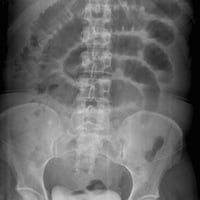
10 Tips for Approaching Abdominal Pain in the Elderly
After seeing your fifth young patient of the day with chronic pelvic pain, constipation, and irritable bowel syndrome, it is easy to be lulled into the mindset that abdominal pain is nothing to worry about. Not so with the elderly. These 10 tips will help focus your approach to atraumatic abdominal pain in older adults and explain why presentations are frequently subtle and diagnoses challenging. [+]

Patwari Academy videos: Evidence Based Medicine (part 1)
Across the medical profession, an essential skill is to be able to understand and interpret original research publications to guide your evidence-based practices. Dr. Rahul Patwari reviews the basics of statistics, specifically sensitivity and specificity, predictive values, probability, and the tradeoff between sensitivity and specificity. [+]


MEdIC series: The Case of the Facebook Faceplant
Medical Education has taken social media by storm. Twitter, Facebook, the Blogosphere… Medical Educators have used these often misused and misinterpreted forms of social interaction to share resources and educate. However, social media is quickly merging our private and public personae. As educators, we must be savvy and up-to-date regarding our learners’ social media usage, since the worlds can often collide. This week we present the case of Greg, a junior faculty member and attending emergency physician, who is experiencing a social media-mediated quandary. [+]
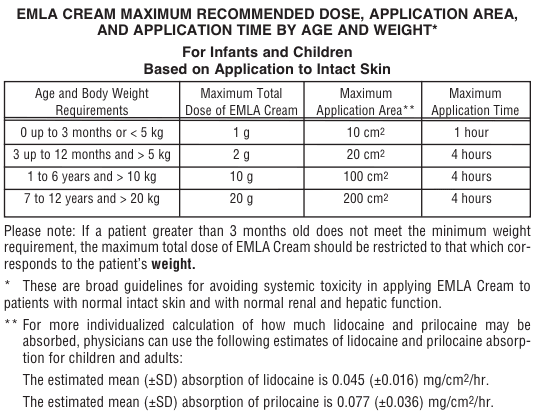
Trick of the Trade: EMLA for Lumbar Punctures
A 9 year-old patient presents with a headache and fever after swimming, along with subjective neck stiffness. Meningitis was of concern especially because the serum WBC count was 25,000 and other inflammatory markers were elevated. Because the patient’s mother had an unpleasant experience with an epidural during childbirth, she adamantly opposed the idea of a lumbar puncture (LP). [+]
Need your valued input: Funding stream strategy for ALiEM
Over the past 4+ years, ALiEM has grown to be an exciting educational blog which focuses on the clinical, educational, and academic aspects of emergency medicine. It has far exceeded any of my expectations and has been an incredibly valuable and rewarding experience for me personally. Since its inception, the site has transitioned from a single-author site to a site with a superstar team of authors who cover a diverse range of clinical (e.g. cardiovascular, critical care, geriatric EM, pharmacology) and educational (book club, MEdiC series, educational pedagogies) content as well as an expert peer-review system. As now the blog’s [+]

Survey: Share lessons from your mentor
Mentorship is critical to the success of people throughout one’s career with regards to productivity, career satisfaction, and professional development. Often one has several mentors who each serve unique purposes such as doing research, writing grants, balance work-life issues, and navigation departmental politics. Being a mentor is often a thankless job. In this survey, thank your mentor by sharing lessons that you have learned from him/her. Great pearls are worth sharing. [+]

Patwari Academy videos: LVADs
Complications from left ventricular assist devices (LVAD) increasingly account for Emergency Department visits. What are LVADs? They are a short-term, artificial, circulatory device which performs the function of a very poorly functioning heart. It is important to understand the myriad of complications that can arise and the general approach to patients with an LVAD. These two short videos by Dr. Rahul Patwari summarize these in a nutshell. [+]

Simulation Trick of the Trade: Paper Mache
Money doesn’t grow on trees, and neither do simulation manikins, not even on simulated trees. So what to do when you are looking for a cheaper, more easily replicated solution to simulation dilemmas? This is the perfect time to fall back on skills developed in childhood during Arts & Crafts hour. Consider paper mache! So easy to use, and guaranteed to bring back childhood memories! [+]
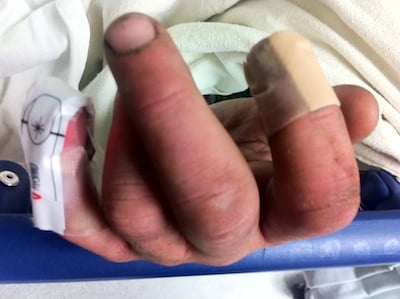
Quick clinical tip: Rotational angulation of metacarpal fracture
Metacarpal fractures are commonly present to the Emergency Department for care. The plain film shown here shows metacarpal neck fractures of the middle and ring finger shown. There are specific criteria requiring closed reduction in the ED (PV Card). Generally ANY rotational angulation requires reduction. Detection of such angulation depends on the clinical exam rather than the plain film. How does one diagnose it? [+]